The New Supertalls on the Skyline
Residential skyscrapers are rising in new markets. What changed?
Supertall residential buildings have had quite a decade. What started as an exclusive group of controversy-laden, city-defining condo towers lining Billionaires’ Row in Manhattan has morphed into a phenomenon that’s redrawing skylines across North America.
The 984-foot-plus tower projects—or 300-plus meters if you like round numbers—aren’t changing just the locations of choice. Oftentimes, developers and designers are now crafting distinct strategies for getting projects across the finish line in a prohibitive development environment.
Heightened standards
“Land is expensive and capital is scarce, so you want to make the best of your underlying asset, which is your ability to build,” said Mitchell Cohen, COO of Westdale Construction Co. Cohen’s company is moving forward with building Forma, a two-tower residential development in Toronto that will include a pair of 73- and 84-story buildings designed by Frank Gehry. Eighty-seven percent of its units have already been sold.
Forma was among the last to be designed by Gehry before his passing last year. The distinct design and impact on the city’s skyline are the biggest selling points for residents and capital partners alike, according to Cohen. It’s more about living in a building designed by the starchitect than being nearly 1,000 feet up in the air.
“A Frank Gehry building isn’t the easiest because (he) didn’t build filing cabinets in the sky, but the city of Toronto really wanted a supertall designed by him,” Cohen shared.
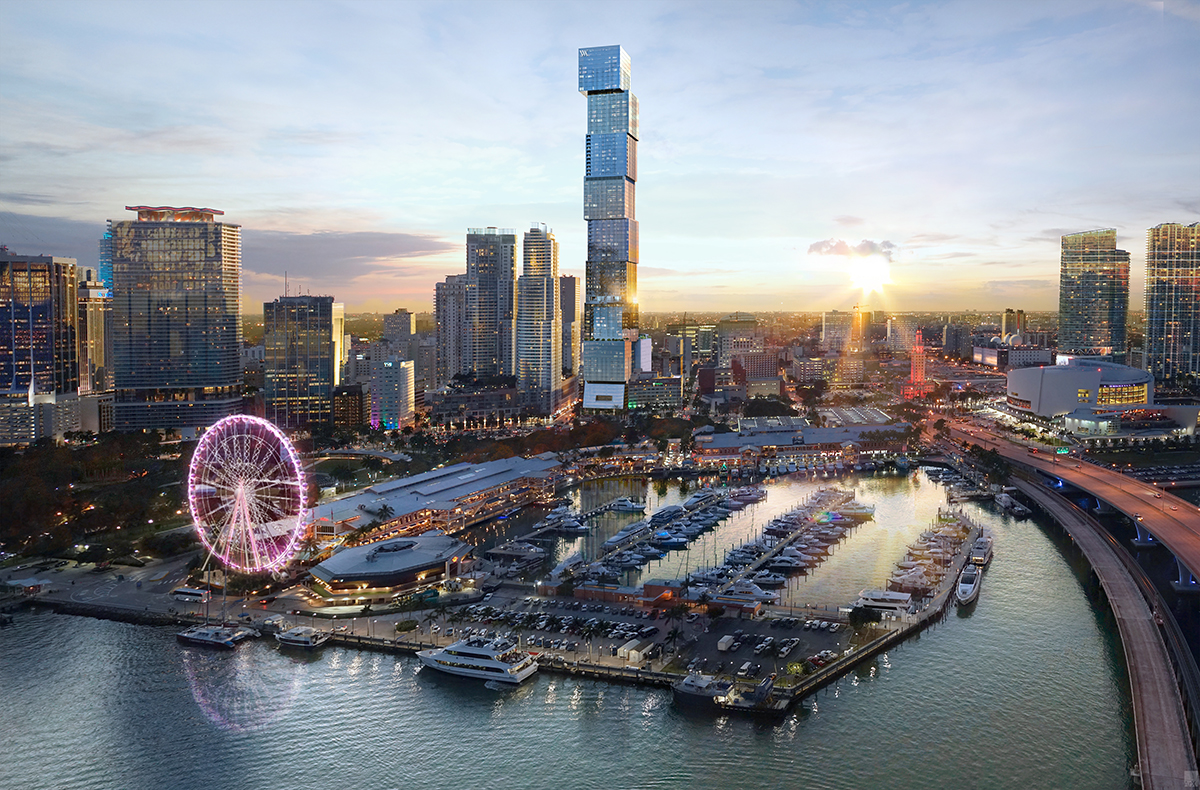
Other developers are adopting a similar philosophy when it comes to branding, leveraging locations and market presence to drive interest. Miami-based Property Markets Group is taking this idea to heart with Waldorf Astoria Hotel & Residences Miami, a 100-story, 1,049-foot-high project. Set to come online in 2028, it’s slated to become the tallest building in the Southern U.S.
If it’s an easy project to complete, nobody is going to remember it.
—Mitchell Cohen, Chief Operating Officer, Property Markets Group
PMG, which has partnered with Greybrook Realty for this project, is leaning particularly into branding, using the hotel brand to attract residents. The strategy also helped capitalize the project. “We had an investor who approached us, wanting to own the hotel in exchange for a significant equity investment in the project,” detailed Dan Kaplan, a managing partner at PMG.
With Delano Residences & Hotel Miami, another recently announced 90-story tower that the firm wants to build along Biscayne Boulevard, PMG gives owners the option to pool their properties and rent them out under the hotel’s flag.
Here, there’s a recognition of the properties themselves serving as investments, alongside places to live. “That decision was somewhat driven by the capital markets, but also by our choice to own hotels for a long time,” Kaplan added.

Towering destinations
With the newest generation of supertalls, it’s more common for condos or rentals to be complemented by office, hospitality, retail or even private clubs.
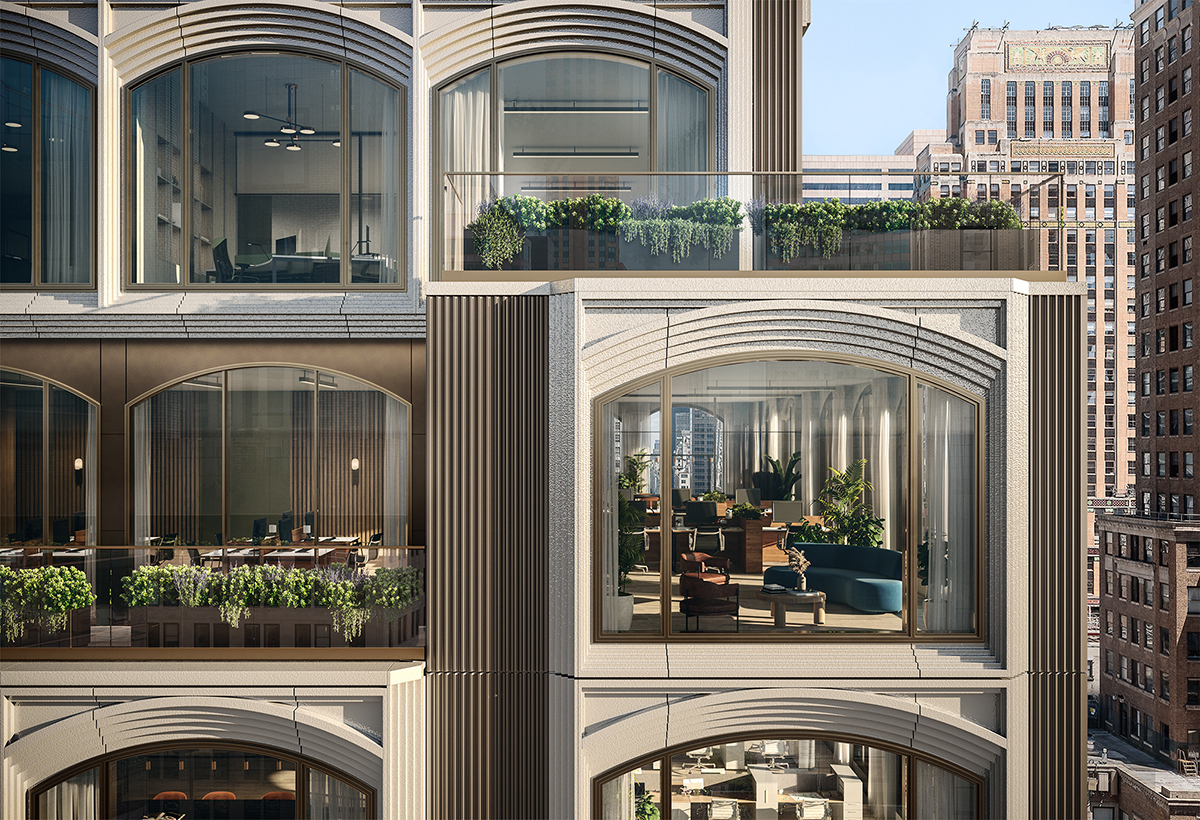
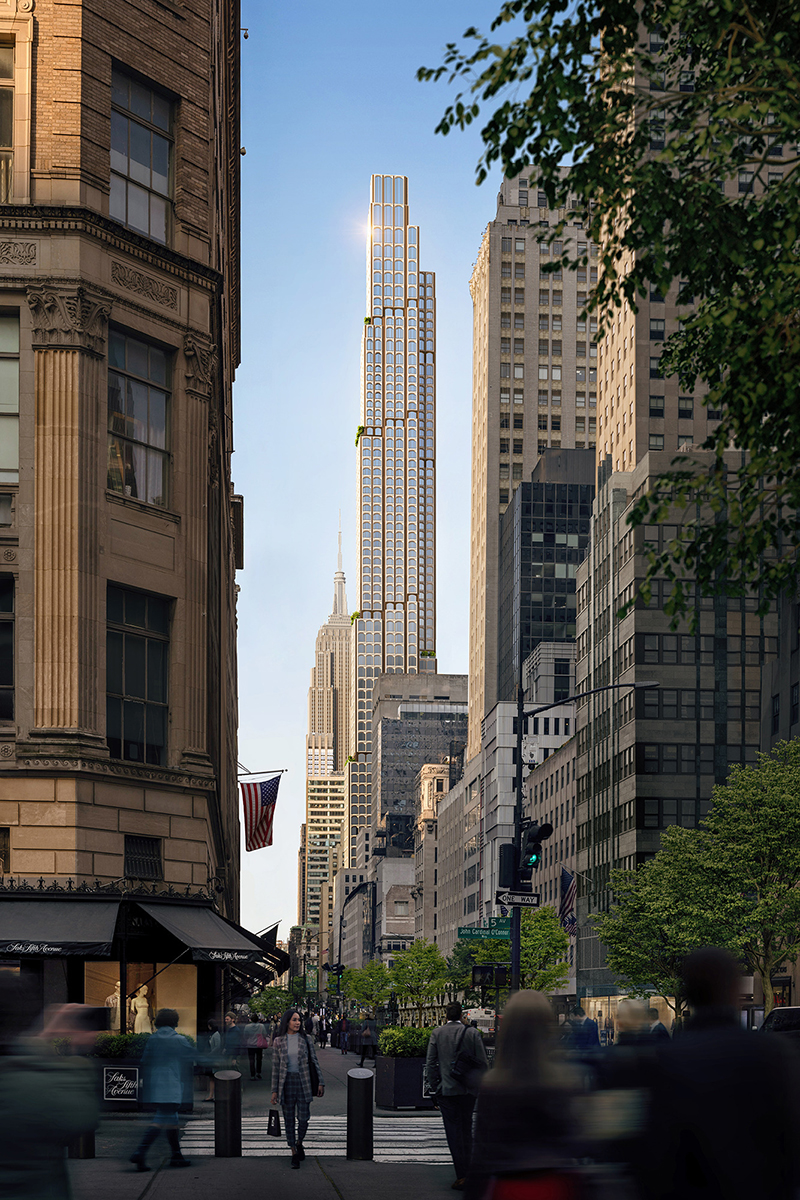
The roughly 1,000-foot-tall 520 Fifth Avenue, New York City’s recently completed supertall residential building, includes a mix of office suites, luxury condos and a private members’ club that’s available for office workers and other nonresidents.
“You get that exclusivity, which is needed for a luxury product, but it also functions as a social center,” noted Rebecca Gromet, a principal at Kohn Pedersen Fox. The architecture firm has designed more than 30 supertalls globally, including Waterline, Austin’s first.
“These (features) are unique to (supertalls) with a residential component. It’s not just the streets of New York that you live in, but the connections you find within the building,” Gromet noted.
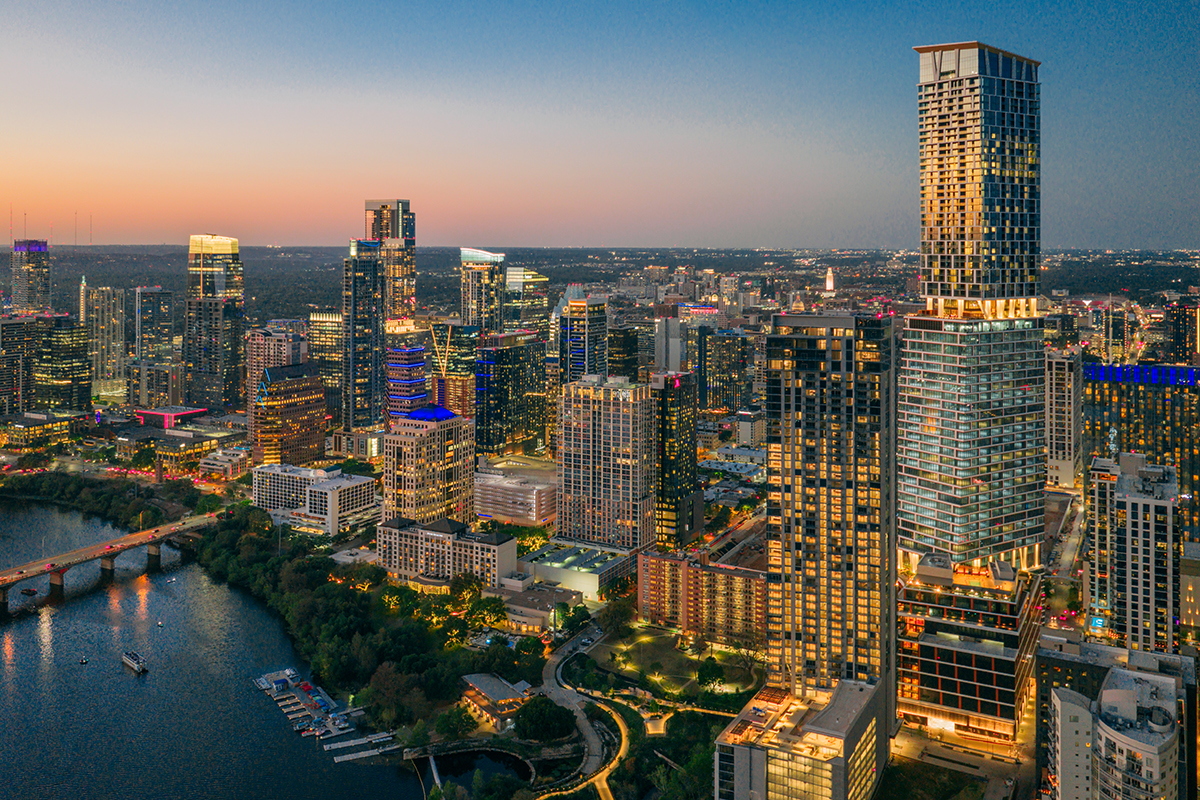
The 1,025-foot-tall Waterline project, developed by a joint venture between Lincoln Property Co. and Kairoi Residential, includes 352 rental units, 700,000 square feet of Class AA office space, a 251-key hotel and 24,000 square feet of retail. Scheduled to open later this year, it is set to become the tallest building in Texas.
Waterline is a set of demand pockets that merge to form a destination, rather than different components that happen to share a roof, reasoned Seth Johnston, executive vice president at Lincoln Property Co.
“Building the tallest building in Texas was never the goal,” Johnston said. “Could the market absorb it? The answer was yes.”
READ ALSO: Why More Multifamily Developers Are Mixing It Up
Tony Kurp, senior vice president of development at Kairoi, sees the mixed-use project’s individual spaces as synergizing. “It’s live-work-play in the most literal sense of the word,” Kurp commented.
Waterline is among the first supertalls to offer so many units as rentals—a decision rooted in the city’s emergence as a tech hub with a rapidly growing and equally mobile population of high-net-worth residents.
“There’s a larger pool of renters than buyers, and that goes from somebody making a hundred thousand dollars a year to somebody making $1 billion dollars a year and everything in between,” Kurp added.
Castles in the clouds
The designs of many new supertalls bear little resemblance to the thin monoliths of old, instead using their height to draw more attention to their exteriors.
When Kohn Pedersen Fox designed the residential part of 520 Fifth, its main idea was to make the apartments resemble high-altitude villas more than traditional luxury condos. The units themselves have all their primary rooms in a corner of the building, something more commonly found in private homes. “Unless you’re in a penthouse or full-floor unit, you’re not going to get that dual aspect in a typical high-rise,” Gromet pointed out.
Facades are doing more work, too. For 520 Fifth, Kohn Pedersen Fox chose glazed terracotta arches nodding to the Beaux-Arts buildings nearby. Gehry’s Forma answers with folded stainless steel, designed to catch and scatter light rather than reflect the sky flatly, as many of Toronto’s existing skyscrapers do.
“Frank always said, ‘It’s a big responsibility, changing a skyline, but we happen to get all four seasons in Toronto, so the light will reflect beautifully off of it,’” Cohen recounted.
Meanwhile, Waterline is the first skyscraper in Austin to be built at a 45-degree angle, giving it a twisting pattern that sets it apart from the city’s grid format. “Not only is it the tallest but it’s also turned in a different direction than everything else in Austin,” Johnston described.
Tall orders
One thing hasn’t changed: the quirks and challenges that come with building residential units this high. Even though the traditional anti-sway mechanisms and elevatoring get optimized, new issues pop up.
Since there was nothing as tall as Waterline in Austin when it was designed, the developers had to work with the Federal Aviation Administration to raise the city’s emergency glide path for aircraft, or else the building would have intersected with it.
For PMG, resistance to a project at this scale came less from the process than from capital partners. And the numbers can certainly be punishing. “If we build an eight-story (building) and make a mistake, it may cost us only $500,000, but a mistake at this height could cost us $5 million,” Kaplan said.
In the end, the difficulty of building residences this high may be a blessing in disguise. “If it’s an easy project to complete, nobody’s going to remember it,” Cohen joked.