How Winter Prep Can Strengthen Multifamily Insurance Submissions
What underwriters want to see before the first freeze.

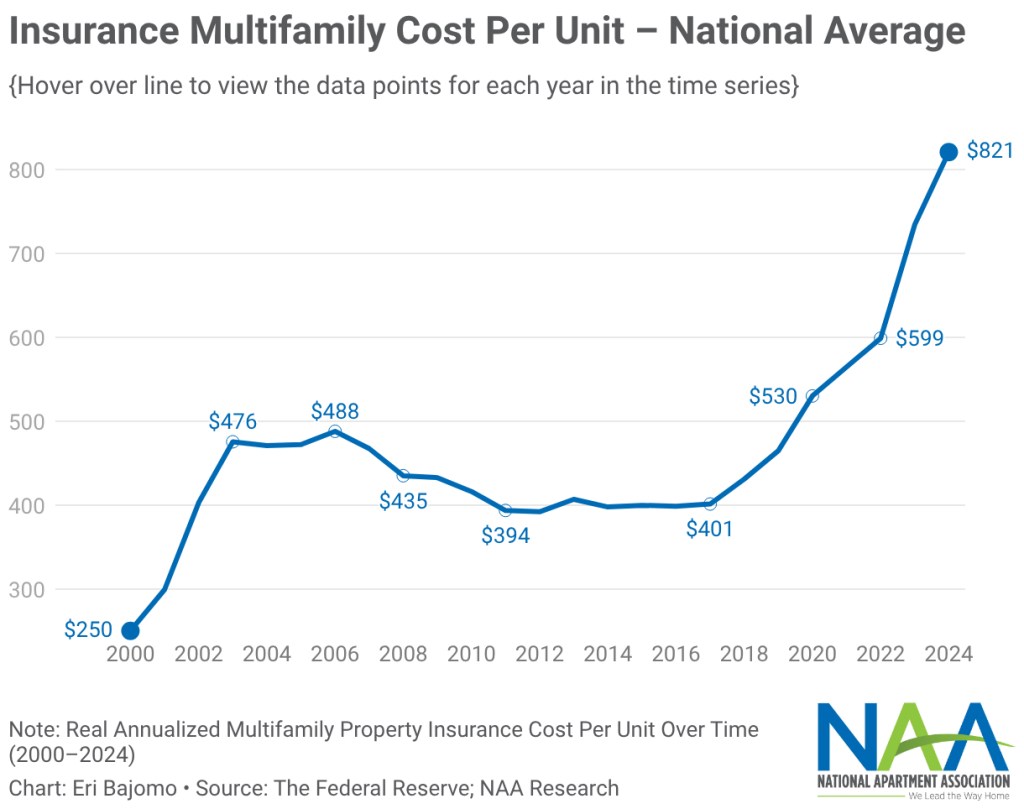
Insurance costs are rising. According to the National Apartment Association,
multifamily expense benchmarks and macroeconomic data show a clear upward trend in insurance costs over the past five years. In fact, insurance is emerging as one of the fastest-growing operating expenses for apartment properties.
When it comes to winterization strategies, insurers want to see how operators manage seasonal risks and how prepared they are. How can multifamily operators directly leverage their documented seasonal preparation to help assess their properties more accurately, secure coverage and negotiate better terms?
MHN talked to multifamily experts about how they’re strengthening their insurance submissions.
Demonstrating preparedness
“Our preparation starts well before a weather event is in the forecast,” said Amy Barricelli, executive vice president of brand & revenue acceleration at RR Living. “We view seasonal preparedness as part of an overall risk-management strategy, with documented preventive maintenance, inspections, emergency-response procedures and clear accountability at the property level.”
READ ALSO: Managing Insurance Costs as Climate Risk Rises
For communities exposed to freezing temperatures, winter preparedness can include inspecting and insulating vulnerable piping, servicing HVAC and boiler systems, confirming heat in vacant units and mechanical spaces, inspecting roofs and drainage systems, preparing snow and ice removal plans, testing emergency equipment and establishing protocols for communicating with residents before and during severe weather.
But in the Southeast and other hurricane-exposed markets, preparation shifts toward stormwater management, roof and building-envelope inspections, drainage, tree management, securing exterior items, emergency power considerations, vendor readiness and resident communication.
“Winter preparedness can’t be one-size-fits-all, especially for a geographically diverse portfolio. From an insurance standpoint, I think the important distinction is between simply saying a property is prepared and being able to demonstrate that preparation,” Barricelli added. “One of the most important opportunities for operators is to tell a more complete story about the asset.” Inspection records, maintenance histories, capital improvements, vendor contracts, emergency plans and documented procedures create a much stronger picture of how an asset is being managed.
According to Barricelli, these investments may not automatically translate into lower premiums, particularly in today’s insurance environment, but they can help an insurer better understand the actual risk profile of an asset rather than evaluating it solely through geography, age or historical loss data.
Bring on the technology
Certainly, technology can help operators move from reactive risk management to earlier detection and intervention. And insurers like it too. Temperature monitoring, freeze alerts, HVAC and mechanical-system monitoring and other building systems can strengthen risk controls, but simply installing the technology isn’t enough. Operators also need processes around the data to make sure every alert generates a timely response.
According to Chad Cooley, managing director of strategic business solutions at Bozzuto, “When we evaluate sensors, remote monitoring and other new technologies, the primary considerations are typically operational efficiencies, energy and water savings and better data to inform decision-making.”
Water leak detection is one area where technology can help reduce the likelihood or severity of a loss. These systems can help mitigate the risk of an event and costs such as the associated deductible and getting back to normal after the disruption.
“Technology is only one part of the equation,” added Cooley. “Well-prepared teams and clear response plans are equally important. Before winter weather arrives, we test heating systems and equipment, inspect plumbing and freeze-prevention systems, stock snow and ice supplies, and review emergency procedures. We also communicate with residents about preventing frozen pipes, maintaining appropriate temperatures and reporting maintenance concerns quickly.”
Improving the risk profile
Knowing who your restoration company is before you need water mitigation is essential. If there’s a winter weather event, other operators are going to be calling too. “Be sure you have those vendors already lined up with a pre-master contract so you get priority service,” said Paul Boatman, vice president of risk management at Prometheus Real Estate Group & chairman of the NMHC Risk Management Committee.
“We have Prometheus Operating Procedures for almost any scenario you can think of. That helps with underwriters who want to see we have a crisis management team,” Boatman noted.
But multifamily insurance isn’t like residential insurance where you get a discount for taking a specific action such as installing fire sprinklers. “Insurers just don’t do that on a mass portfolio,” explained Boatman. Being proactive, however, does help with overall insurance costs, because it improves the portfolio’s risk profile. “Not only will it help overall with premiums but it’s also going to open up more markets because more insurance companies are willing to underwrite your risk. That competition between carriers is going to bring the price down.”
Boatman also stresses the importance of submitting an accurate statement of values for the property with construction and flood information and as much detail as possible about the portfolio. “When the markets trust your statement of values, you’re going to get trust in the marketplace,” said Boatman. “If you have a loss and you’re way underinsured, you’re going to lose that trust overnight. If your submission is missing information, and they don’t trust those values, they’re going to default to the worst-case loss projection, which is going to increase your premiums.”
A strong submission
Demonstrating proactive risk management can determine whether an underwriter quotes a risk or puts it in the decline pile, according to Katherine Santarelli, president of Wye River Insurance, a risk advisory and insurance brokerage firm owned by Bozzuto. “That includes proper contractual risk transfer in vendor agreements and clear protocols for maintenance, snow removal and HVAC systems,” said Santarelli. If a property has experienced a frozen pipe claim, for example, what steps have been taken to prevent another loss? How often is the maintenance team walking the property and checking internal building temperatures?
For properties in the Southeast, underwriters may also look closely at hurricane preparedness and response protocols. “In this new world of AI, climate-tracking tools are giving multifamily owners and operators a more comprehensive view of current and future climate risks at specific locations,” said Santarelli. These tools can help prioritize risk management based on factors like precipitation, wind, temperature, drought, earthquakes and flooding. “Many property and builder’s risk carriers now offer rate discounts for properties that use water detection and security monitoring systems.”
According to Santarelli, the strongest insurance submissions show a proactive, documented approach to risk management. For larger portfolios, consistency across properties can be particularly important. “When it comes to winter weather, underwriters want to see that a property is not simply reacting to problems as they occur but has established procedures in place to help prevent losses.”
Underwriters are looking at the overall story of the risk. Winter preparation is one piece of that, but loss history, property condition, maintenance practices, building systems and how an organization responded to previous claims can all influence how an insurer views an account, according to Santarelli. The more clearly an owner or operator can demonstrate an active approach to identifying and reducing risk, the stronger the overall submission.