The New Line Items Showing Up in 2027 Multifamily Budgets
Which expenses are operators setting aside more money for?
If you pull out an apartment operating budget from five years ago, you’ll find the usual suspects as expense line items: property taxes, insurance, utilities, payroll and maintenance. But in 2027, apartment operators are likely to find a new crop of expenses competing for a place on the spreadsheet – including artificial intelligence training and oversight, fraud prevention, cybersecurity and risk mitigation.
Some of these categories didn’t even exist five years ago, but they reflect new challenges and risks that apartment managers are facing. That means that costs that were once viewed as optional are now essential to the successful operation of an apartment community.
READ ALSO: Managing Insurance Costs as Climate Risk Rises
“These expenses began to percolate up maybe three years ago, but with the onslaught of technology and the bad players out there, whether it’s cybersecurity or fraud, all of these issues are moving so fast,” said Karlin Conklin, principal, co-president & COO of Parktown Living, a property management company affiliated with Investors Management Group. “So, we have to move fast to protect the bottom line of our communities.”
So, what new expenses should you account for in your 2027 apartment operating budgets?
Fraud prevention
Fraud has become a huge problem in the apartment industry. According to the National Apartment Association, the share of fake or inaccurate forms – from driver’s licenses to passports, income forms and bank account statements – provided by prospective residents during the application process can be as high as 50 percent, and 85 percent of real estate professionals surveyed reported that the impact on operations in the past 12 months was either slightly, moderately or highly significant.
Apartment managers are now employing tools to mitigate fraud, including background checks, identity verification, resident screening and third-party fraud detection platforms. Those come at a cost.
Conklin said that her 2027 budgets include $1.80 per unit per month – $4,320 per year for a typical 200-unit community – for fraud detection. “That’s a cost that wouldn’t have been there two years ago,” she said. “But in comparison to eviction (costs), it’s minor.”
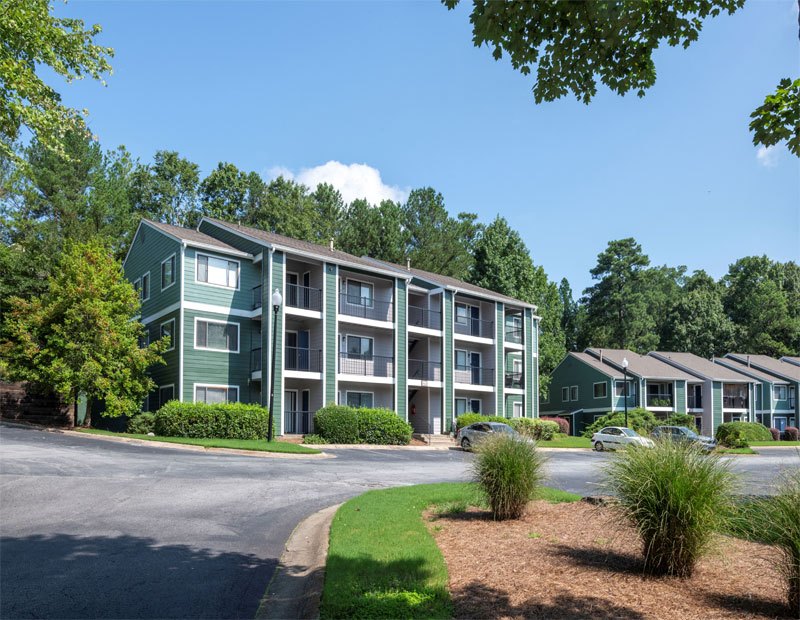
At Wynnwood Vinings, a 320-unit community in Atlanta, Parktown is utilizing an AI-powered screening and underwriting platform that provides advanced fraud detection. “The benefit has far exceeded the cost,” Conklin said, noting that the community’s bad-debt write-offs declined by 29 percent over an eight-month period between 2025 and 2026.
Excelsa Properties is also increasing its apartment budgets to fight fraud. Curtis Holder, the company’s director of asset management, said he expects to spend an additional $1.50 per unit per month on enhanced tools to fight fraudulent applications.
AI
It’s no surprise that apartment managers increasingly use AI for everything from website content to social media posts and email campaigns and to streamline their operations. But that technology has costs that far exceed monthly subscription fees. These include integration costs, data preparation and the cost of human oversight, not to mention the societal costs of AI data centers, which can strain power grids, deplete the water supply and pollute the air around them.
According to Conklin, Parktown uses chatbot technology for each of its properties’ websites that costs $1.37 per unit per month. But the cost is offset by revenue gains. “We’re capturing more people by having that bot, so that cost brings us more leads,” she said.
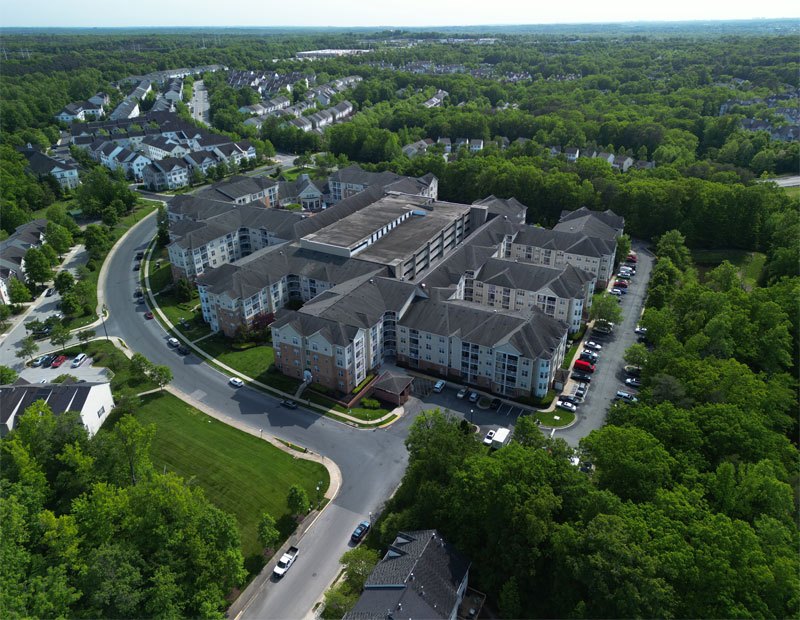
At Concord Park at Russett in Laurel, Md., Excelsa recently replaced a traditional on-site security patrol contract, which cost $7,500 per month, with an AI-enabled camera designed to enhance security by identifying and flagging suspicious activity in real time. Holder said the new system required an initial investment of $65,000 and carries ongoing maintenance and monitoring costs of $2,500 per month. But he said that by making the transition, the community’s monthly security expenses have been reduced by $5,000, generating $60,000 in annual operating savings. “As we plan for 2027, this investment demonstrates how strategically implementing AI-powered technology can improve property operations by delivering measurable and sustainable cost savings,” he said.
Cybersecurity
Cybersecurity is another area of increasing concern to apartment managers due to the risks inherent in operating resident portals and shared community networks, as well as the phishing attempts staff members face daily. “All it takes is a leasing agent receiving something by email and clicking a link,” said Conklin. “So, our costs for cybersecurity and data security have gone up substantially.” She said the cost of cybersecurity will rise in 2027 to $1.79 per unit per month, or $4,296 for a 200-unit community.
“It was a minor amount two years ago,” Conklin said. “Today, it’s a substantial line item.”
Risk mitigation
In addition to surging insurance premiums – the annual cost per unit increased from $502 in 2021 to $777 in 2024, according to the National Apartment Association – insurance companies are increasingly inspecting their insured properties and mandating physical and operational risk controls as requirements for coverage. The requirements could include the installation of leak-detection devices or water shut-off valves, fire suppression devices, roof improvements or sidewalk repairs. And these risk-mitigation strategies come at a cost – often unexpected and not budgeted for.
Conklin said Parktown now has a full-time staff member whose job is to manage these inspections and make sure all the required work is done. That increases payroll costs for 2027.
But there are other industry players now doing inspections and requiring risk mitigation, as well – lenders.
Valery Carter, vice president of operations for RPM Living, said that in the second and third quarters of 2026, the firm had lenders “popping in” for inspections and requiring repairs. “It adds to the maintenance line item because things need to be repaired – but we didn’t underwrite for them,” she said. “So, we have to push back major projects to make up for these big line items now.”
Holder said that Excelsa is increasing apartment budgets in 2027 to cover anticipated repairs in preparation for lenders’ pop-up inspections. “In 2027, this will be a big area and will be a shock to many people,” he said. “But if a lender shows up, we want to look good and not cause them to have any concerns about how we’re managing our properties.”