Why More Multifamily Developers Are Mixing It Up
Mixed-use residential has become a lot more complex (and often more profitable) than apartments with ground-floor retail.
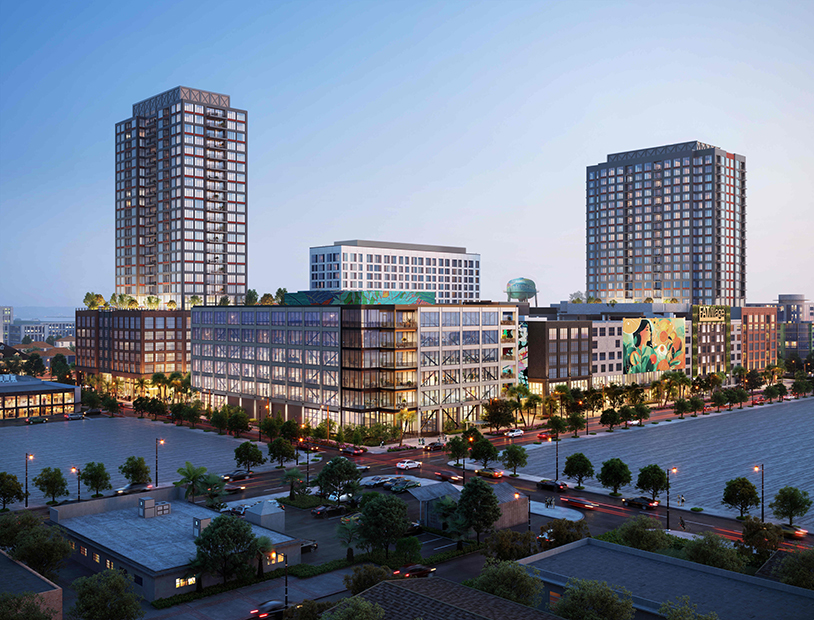
Mixed-use residential is an increasingly popular choice for multifamily developers today, and residential is playing an essential role in more mixed-use plans.
Mixed-use residential can outperform traditional multifamily projects because they create “live-work-play” hubs that combine apartments with offices and retail amenities, offering conveniences that attract a wide renter base and providing diversified income streams that protect investors during market downturns.

Rather than relying solely on apartment rent growth, mixed-use provides multiple demand drivers in one asset, Brian Connolly, founder & CEO at Feasibly, told Multi-Housing News. “In metro areas still working through oversupply, rising operating costs, and selective capital availability, investors are looking harder at projects with durable demand, limited new competition, and a clearer path to stable occupancy,” Connolly said.
Mixed-use projects also provide diversified income from a single basis, noted Michael Tillman, CEO & co-founder of PTM Partners, a developer based in Fort Lauderdale, Fla.
“A well-executed mixed-use project that includes ground-floor retail, hospitality, health and wellness, food and beverage, among many other features, provides an income stream that moves in more than one direction,” Tillman said. “For a long-hold developer or owner like PTM Partners, that matters.”
READ ALSO: How Mixed-Income Housing Drives Neighborhood Revitalization
Where residential mixed-use is gaining momentum
Tillman, whose firm develops in Opportunity Zones, noted that mixed-use is often the right approach for OZs because it creates both the housing and amenities simultaneously: “Urban infill sites in evolving neighborhoods need both, and mixed-use allows you to build that foundation within a single project.”
He noted that mixed-use provides a strong proposition for workforce housing, particularly when it is walkable. “The projects where mixed-use actually solves a community need are the ones with the most durable demand and political durability,” Tillman said. “When you’re building something where a person can genuinely live, work, eat, and access services without a car, you’re filling a gap that exists in most American cities.”
Mixed-use multifamily is popular nationwide, especially in high-growth markets, urbanizing suburbs, transit-oriented districts, university and medical corridors and places with strong job and population growth, noted Ray Lawler, head of Americas at Hines, which has a number of mixed-use residential projects recently completed and underway nationally.
Mixed-use residential projects are especially popular in suburban communities, as they offer people an opportunity to “enjoy the perks of urban living without having to get into a car and without the grittier challenges that modern renters want to avoid,” said David McCullough, principal at San Diego-based McCullough Landscape Architects. “Suburban mixed-use developments can replicate all the best parts of the city experience in a more controlled, comfortable environment that enables residents to do multiple activities and errands in one place.”
The popularity of mixed-use residential is especially strong in markets like Southern California, the Bay Area, Nevada and Hawaii, he said. “Because these regions already support year-round outdoor living, they are a natural fit for mixed-use multifamily developments.”
Ultimately, McCullough said, activation is the key. “Simple adjustments, like creating comfortable seating areas, outdoor workstations, or strategic plant shade, encourage multifamily residents to linger and connect,” he said. “That’s what keeps a development feeling like a neighborhood over the long term.”
At The Edge Collective in St. Petersburg, Fla., Tillman’s company has seen first-hand what activated first floors can do for residential. The Moxy hotel, with its design, events programming, rooftop restaurant and pool, lobby bar, and other retail and dining offerings, has helped create an environment that’s much more compelling for residents, he said.
“Add in the office and food and beverage uses at neighboring 1246 Central Avenue, along with activity along Central Avenue and in the courtyard, and it becomes clear why the residential component we’re bringing in during Phase II is more attractive than a standalone apartment building would be.”
Ground-up vs. adding residential to existing retail
Hines’ Lawler said he is seeing both ground-up mixed-use projects and the addition of housing to existing retail environments., and both project types have advantages.
“Ground-up development gives teams the ability to plan the full district from the beginning, including the public realm, mobility, retail mix, residential experience and long-term phasing,” he noted.
On the other hand, adding housing to existing retail centers can be compelling because those sites often already have visibility, infrastructure, access, parking, a customer base and an established sense of place.

“The opportunity is to evolve them into more complete, daily-use destinations,” he said. “Housing can bring consistent activity, support retailers, improve walkability and create a stronger connection to the surrounding community.”
Ground-up is the right answer when you’re in a genuine urban infill location with an active street grid, Tillman suggested: “You can design the uses from the start to interact with each other and with the neighborhood.”
He pointed out, however, that the advantages of adding residential to existing retail centers are significant, with investors benefiting from a lower land basis, existing infrastructure, and the political goodwill of cities that want a vacancy problem solved.
But there are structural constraints when working within or around a building envelope that wasn’t designed for residential, and retrofitting mechanical, plumbing, and life-safety systems is expensive and unpredictable.
“Contingency budgets on adaptive reuse run higher than ground-up for that reason, and. in my experience, materially higher,” Tillman said.
Ownership complexity can also be a barrier. When retail centers have long-term anchor leases, reciprocal easement agreements and sometimes fractured ownership, executing a unified redevelopment plan is very difficult, particularly if an anchor tenant won’t cooperate.
The symbiotic relationship of residential and retail
Residential is the anchor and the stabilizing force of many mixed-use projects because it provides consistent, daily activity and a built-in population for the restaurants, retailers and services throughout the day—not just during business hours. The steady activity is what helps transform a mixed-use project into a neighborhood.
“Residential components give mixed-use projects a unique staying power,” suggested McCullough. “Having a dedicated residential base can turn a commercial development from a transient shopping destination into a true, living neighborhood.”
Mixed-use components also increase the value of residential real estate. Convenience is a genuine amenity, McCollough and residents will pay more to have easy access to their daily needs, social activities and outdoor spaces built into where they live, instead of a drive away.
“It may seem simplistic, but small things like the ability to grab a coffee downstairs or sit outside between meetings can show up directly in what people are willing to pay in rent,” he said.
What makes mixed-use residential high-performance

Mixed use can also strengthen financial performance. Lawler said. Hines measures indicators such as absorption, retention, achievable rents, retail productivity, foot traffic and long-term demand drivers.
“The best mixed-use communities can create rent premium potential and tenant stickiness, but that performance is earned through thoughtful design, retail curation, operations and placemaking,” he added.
For owners of aging malls and retail centers, adding multifamily has become an increasingly common strategy for creating a built-in customer base that supports restaurants, entertainment and service-oriented tenants while reducing reliance on traditional retail anchors.
“In the right setting, mixed-use creates a more compelling resident experience and a more resilient asset because residents are not just renting an apartment; they are choosing a neighborhood environment,” Lawler said. “That sense of place can support stronger demand, retention and long-term value.”
Mixed-use can be especially compelling in uncertain times, Lawlor said, because the best projects are grounded in everyday demand. But it is not inherently less risky than traditional apartments. Success depends on location, execution and creating an environment in which each use reinforces the others.
“Mixed-use works best when each component strengthens the others,” he said. “It is not about adding complexity. It is about creating a place that is more useful, active and resilient over time.”
LIKE THIS CONTENT? Subscribe to MHN’s Finance & Investment Newsletter
Why mixed-use multifamily is complicated
Mixed-use residential projects, however, are much more complicated to develop than traditional multifamily. Legacy site plans, parking fields, reciprocal easement agreements, zoning, infrastructure, phasing, construction disruption and community concerns all make execution difficult.
“The projects that work are the ones that treat housing, retail, and entertainment as an integrated operating ecosystem, not as separate pieces placed next to each other,” Connolly said.
While the opportunity for ground-up projects is significant, the execution bar is high, Lawler noted, ground-up mixed-use requires the coordination of multiple uses, capital sources, tenant needs and operating models.
“You are not just building apartments,” he said. “You are creating a district, which means thinking about retail curation, public realm, parking, infrastructure, operations and long-term placemaking.”
Lawler also pointed out that cost and capital discipline are important since construction costs remain elevated, financing is more selective and entitlements can be more involved than stand-alone projects.
“That is why experience matters,” he added. “The best projects are those where the vision, phasing, capital structure and operating plan are aligned from the beginning.”

Mixed-use costs more per square foot than standalone residential due to its more complex structural systems, higher mechanical, electrical and plumbing requirements, and more elaborate ground-floor buildout, Tillman noted.
“Projects that penciled four years ago require a lot more work in the capital stack today,” he said. “Lenders underwrite mixed-use more cautiously than pure residential because they’re modeling multiple income streams with different risk profiles.”
Gound-floor retail also has a different absorption curve than apartments, and most construction lenders want to see significant pre-leasing before they get comfortable. “That creates a chicken-and-egg problem: Tenants want to see the building; lenders want to see leases,” Tillman noted.
The capital stack for mixed-use has gotten creative out of necessity. Unlike with traditional multifamily, mixed-use asks lenders to underwrite retail or hospitality components that require different skills, have less standardized comps, and carry more lease-up risk, Tillman noted.
“But mixed-use can offers a stronger project story: more defensible location, more durable demand thesis, and sometimes better sponsorship because mixed-use attracts more experienced developers.”