When Does Modular Construction Really Pay Off?
Drawing on two California affordable projects, EAH Housing’s David Egan expands on when the approach delivers real value.

Modular construction is often pitched as a faster, cleaner path to delivering affordable housing, but that’s just one piece of a complex puzzle, according to EAH Housing.
Since its 1968 inception, the nonprofit has developed and acquired more than 9,000 affordable housing units across California and Hawaii. Recently, it has used factory-built modules on two California multifamily projects with different profiles: Greenfield Commons I, a two-story campus-style community in Greenfield, and Distel Circle, a single five-story development currently underway in Los Altos with a cross-laminated timber component.
Multi-Housing News spoke to David Egan, senior vice president of real estate development and construction, about why EAH Housing chose modular construction in each case and what the differing outcomes reveal about where—and when—modular is the better choice.
READ ALSO: Affordable Housing’s New Playbook
When you decided to pursue modular construction for Greenfield Commons and Distel Circle, what problem were you trying to solve that conventional construction couldn’t?
Egan: The calculus for determining whether or not to use factory-built modular construction at our two projects had both commonalities and differences. At Greenfield Commons I, we wanted to avoid the likelihood of low subcontractor availability given the rural site location and the uncertainty that presents.
On the other hand, Distel Circle was awarded to EAH Housing after a highly competitive RFP process with Santa Clara County, in which the use of creative building techniques was a requirement. Our development experience taught us that Santa Clara County is a highly competitive marketplace where subcontractors have a tendency to demand cost premiums and modular was thought to be an effective risk mitigating factor.
In both cases we wanted to manage subcontract risks and made these determinations early in the design concept stage, which helped inform the units and buildings of each development.
Looking at the two projects side by side, what were the biggest drivers behind their different outcomes?
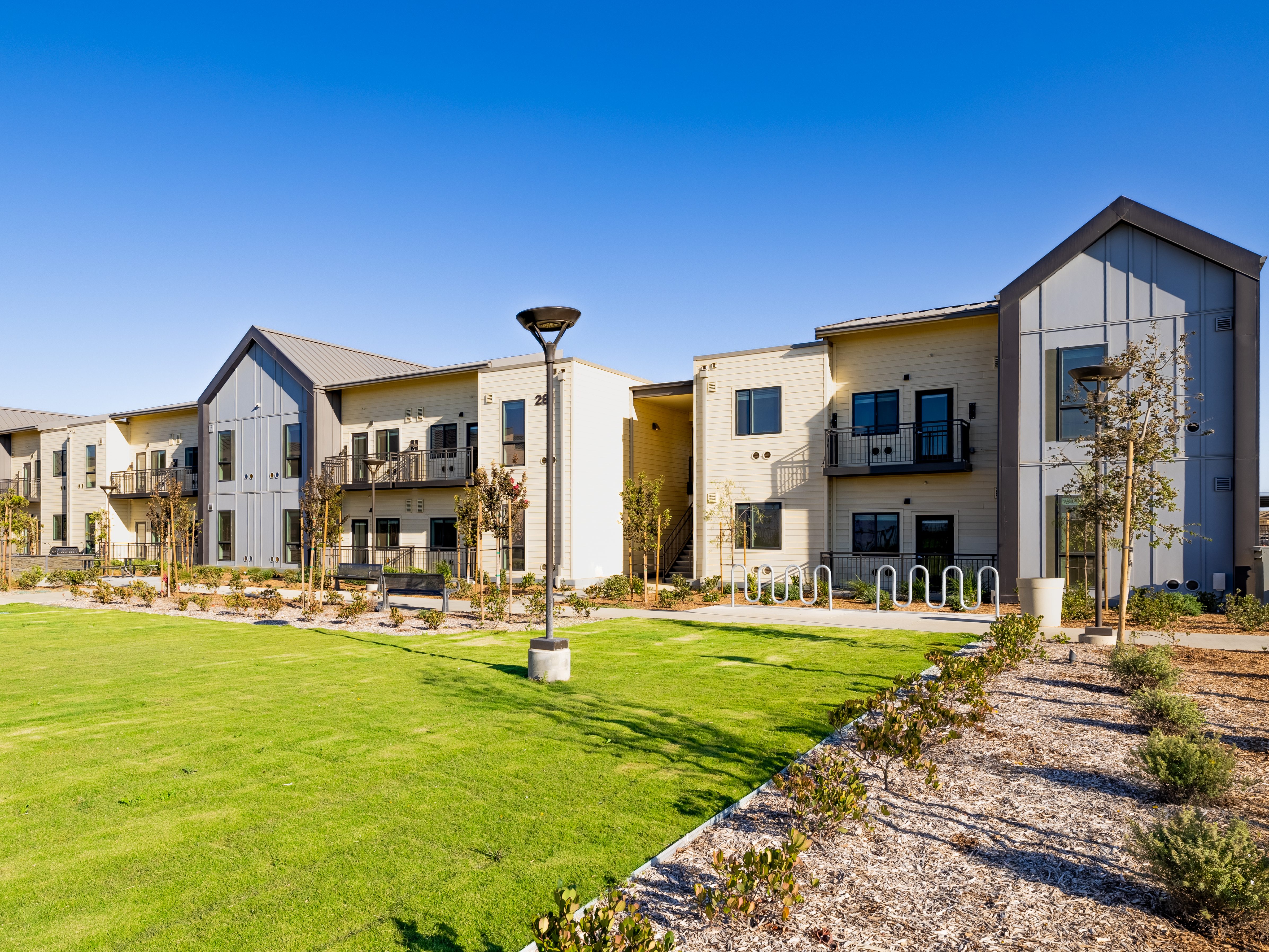
Egan: Greenfield Commons I contained multiple two-story buildings, separate laundry, bicycle and community buildings on a 5-acre parcel, whereas Distel Circle was a single, five-story building on a small parcel.
Greenfield completed roughly three months late with construction costs higher than budgeted. Distel Circle, on the other hand, while still in construction, is projected for completion roughly four months ahead of schedule and remains within budget parameters. Vertically stacked buildings enable significantly faster placement of modular units due to the repetitive nature and efficient movement of the cranes needed to set the modules in place.
So where would you say modular construction actually delivers on its promised efficiencies?
Egan: Our experience with our two projects underscores that modular is not a one-size-fits-all answer. At both projects, the modular units were produced efficiently as promised, but trucking and storage of the modules prior to placement became a challenge. The project design process took a lot longer due to rigorous coordination efforts between the architect of record, modular factory, multiple consultants and the general contractor.
READ ALSO: Underwriting Trust in California’s Affordable Housing Sector
Distel Circle uses modular construction with a CLT ground-floor podium. What did that combination change for coordination and sequencing compared to a more typical approach?
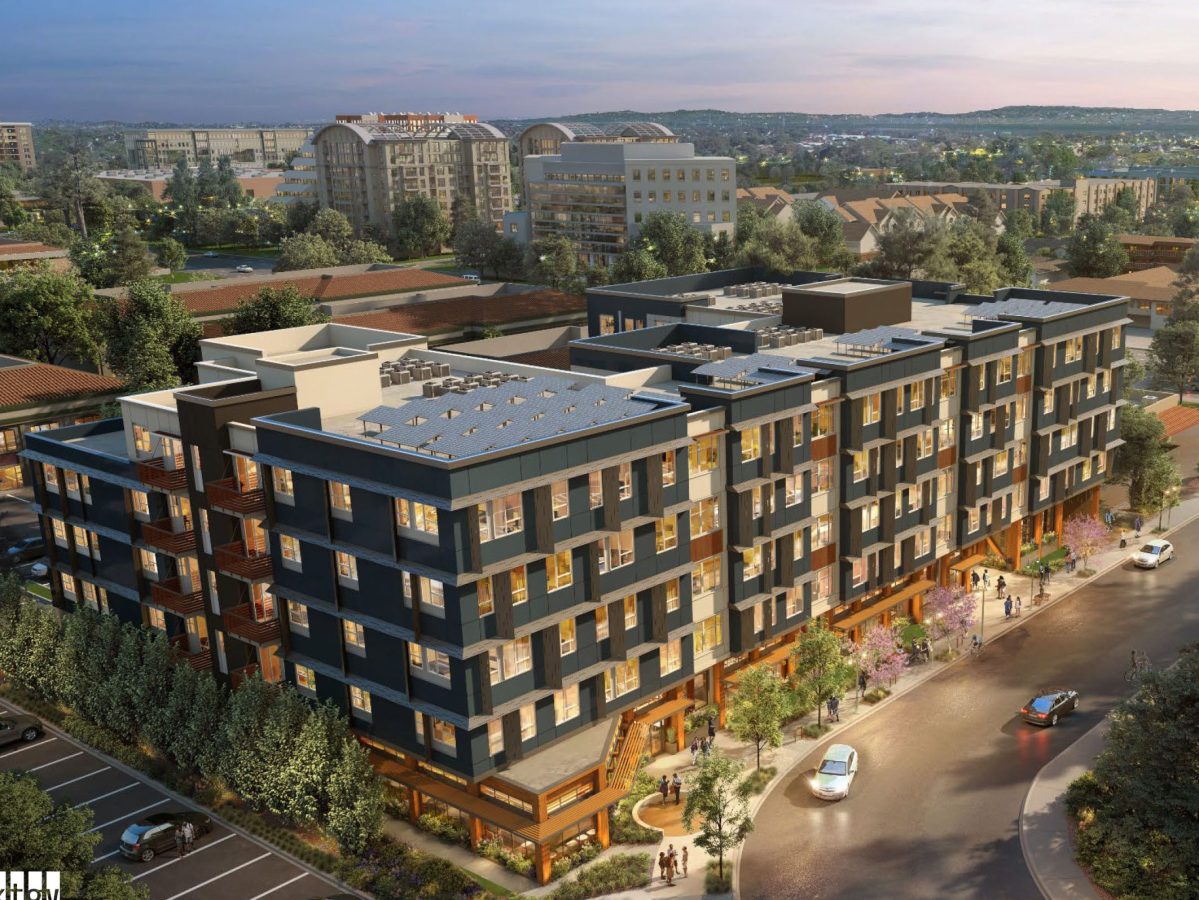
Egan: Combining the two processes presented a coordination challenge to properly combine the unique characteristics of each with the architect and their engineers.
CLT is new to California’s multifamily residential industry and is a renewable and premium product that is more expensive than a traditional concrete podium. It required significant coordination between the CLT consultant, CLT manufacturer, architect and modular factory teams to carefully engineer the podium to properly support the structure.
Tell us more about the importance of early coordination with the modular factory and what happens when that alignment occurs too late.
Egan: Selecting the design team and modular factory early in the project planning phase is paramount to the success of a modular development.
Each modular factory has its unique standards and procedures, so early onboarding to the team creates a foundation of alignment for the design process. Modular factories also tend to have a one-year warranty on the modules themselves, which can expire before a project is completed, so ensuring that timelines are established early helps keep all parties aligned on deliverables.
How did procurement and cash flow shift on these modular projects, particularly around early factory commitments, material deposits and transportation logistics?
Egan: Modular jobs require early commitment to partnerships and factories to slot into their production line. Early material deposits are also typically needed well before construction financing has closed and construction has commenced. Next steps are arranging transportation of the modules to the job site, which should be factored into the development timeline.
READ ALSO: Why 40K Affordable Homes Are Stalled in California
What were the biggest inspection coordination differences you encountered with factory-built components under California’s housing framework?
Egan: Early communication with the local building officials proved beneficial for both projects. Neither of the jurisdictions we worked with were experienced with modular construction, and both benefited from early educational meetings to review local and state inspection requirements. Clear delineations between areas of responsibility governed by the State of California and by the local jurisdictions were essential to the success of these projects, and both municipalities proved to be true partners in the development process.
After these two experiences, what would you do differently next time?
Egan: At a multiple-building site, I would insist that each residential building mimic each other and be linear in design (i.e. no L-shaped buildings), in other words, be the same configuration, for consistency and efficiency.
What’s your advice for developers who haven’t done modular before?
Egan: Focus on realistic goals and determine if the project you envision has the components necessary to be successful. Consider factors such as if the project has efficiently stacked floorplans, and make your decision early in the design concept phase. Also, working with an architect with experience in modules is helpful and allows the development team to rely on their guidance and historical knowledge of modular construction.