Affordable Housing’s New Playbook
Why managing operational risk ensures long-term success.

As affordable housing providers look at the current building environment, one reality is becoming increasingly clear: Long-term affordability depends as much on how we manage operating risk as on how we assemble capital stacks.
In times of volatility—marked by rising costs, insurance instability and shifting policy priorities—three interlocking strategies must move to the forefront of development: resident services, climate resilience and energy efficiency.
At The NHP Foundation, we have reorganized our growth strategy around this reality. Asset management is no longer an afterthought. It is embedded at the earliest stages of development. Our asset management team is involved from the very start of the deal lifecycle, whether evaluating an acquisition, responding to an RFP or shaping a new deal structure, ensuring that long-term operating performance, risk exposure and resident stability are central to every decision we make.
LIKE THIS CONTENT? Subscribe to MHN’s Finance & Investment Newsletter
These three priorities are not optional enhancements. They are core risk management strategies.
Just as importantly, mission-based developers must work in closer partnership with policymakers and city and state funding agencies to ensure these operational priorities are fully recognized—and funded—within housing budgets from the outset.
Resident services: stability as financial infrastructure
Resident services have long been viewed solely through a social impact lens. Today, these types of programs must also be understood as essential operating infrastructure of any deal.
Service-enriched housing stabilizes properties by strengthening residents’ financial footings. Our programs help residents access public benefits, build credit, climb employment ladders and prevent eviction. These efforts translate directly into more predictable rent collection, lower turnover and reduced legal and vacancy costs.
Properties that invest in resident services are better positioned to weather economic disruption and maintain long-term stability and cash flow. In a constrained public funding environment, developers are pressured to leverage more hard-pay private debt that depends on reliable revenue streams.
This is why many organizations are embedding resident services into operating pro formas as core expenses whenever possible.
At The NHP Foundation, we see this firsthand: when residents have access to financial education, rental assistance navigation and crisis support, arrearages decline, evictions are prevented and communities remain intact.
Resident services are not just mission-driven. They are a fundamental risk mitigation strategy.
Climate resilience: protecting assets and communities
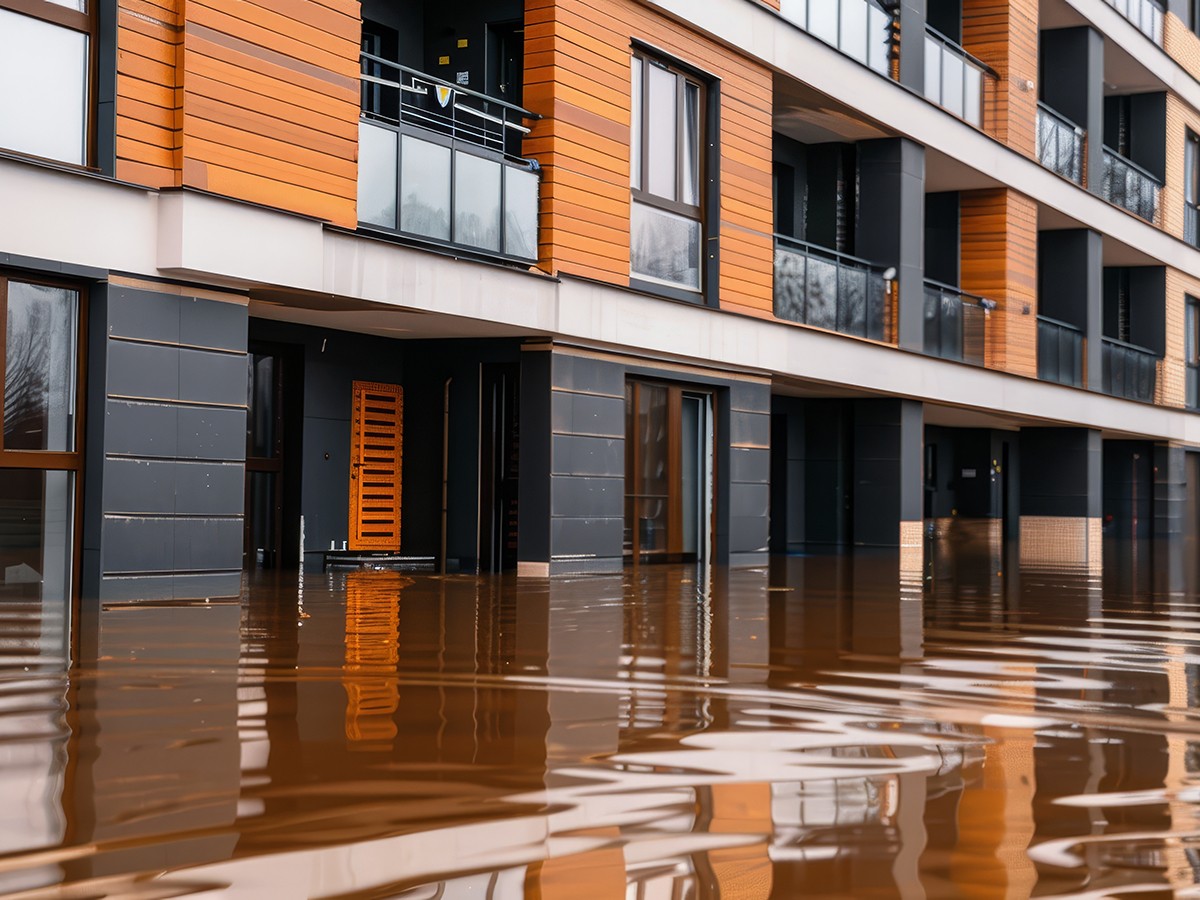
Climate volatility is now one of the most significant risks facing housing providers. From the costs of extreme weather events to rising insurance costs, the financial implications are immediate and growing.
As a nonprofit affordable housing developer, our mission is to provide decent, safe and healthy environments for our residents. This includes climate resilient homes that protect our residents with reliable cooling during heat waves and stable power during storms.
But resilient construction strategies, such as reinforced systems, flood mitigation, backup power and enhanced safety measures, can be expensive. Nonetheless, they are critical to reduce physical risks, improve insurability and protect long-term asset value.
Congress and HUD have recognized the need and funded climate resiliency efforts through the CDBG program, Climate Action Plan and the GRRP programs. In March, HUD narrowed the focus of its Green and Resilient Retrofit Program so there’s more emphasis on recipients who invest in climate resiliency.
The connection is clear: Climate preparedness reduces insurance risk, operating volatility and human vulnerability at the same time.
Energy efficiency: lower costs, stronger performance
Energy efficiency is equally critical to long-term affordability. Rising utility costs continue to strain both operating budgets and household finances, particularly in affordable housing communities.
High-performance building strategies, such as efficient HVAC systems, improved insulation and higher design standards (e.g. Zero Energy Ready or Passive House), help stabilize operating expenses over time. Lower utility costs strengthen property performance while also reducing financial pressure on residents.
When paired with climate resilience, energy efficiency becomes a powerful lever: reducing operating costs while protecting assets against future risk.
A call to action
Mission-based developers cannot do this alone. We must work directly with policymakers, housing agencies and funding partners to ensure that resident services, climate resilience and energy efficiency are fully recognized as essential components of housing budgets.
Organizations across the sector must take a more integrated approach, embedding these strategies into development from day one and engaging asset management early to help plan for long-term performance.
High-quality affordable housing is about creating environments where residents can stabilize, grow and improve their lives. This requires investment in the services that prevent arrearages and evictions, designs that protect against disruption and systems that are energy efficient.
The path forward is clear:
- Integrate resident services as financial infrastructure
- Build for climate resilience from the start
- Prioritize energy efficiency to stabilize costs
We encourage our peers—and the policymakers who shape this work—to do the same.
The future of affordable housing depends on it.
Scott Barkan is senior vice president of development and Ian Sobel is vice president of asset management at The NHP Foundation.