Underwriting Trust in California’s Affordable Housing Sector
CCRC’s Tia Boatman Patterson on what’s breaking deals, what saves them, and how climate and insurance pressures are reshaping the math.
In a sector shaped by both policy and capital markets, leadership often determines whether ambition translates into lasting impact. For Tia Boatman Patterson, housing has never been abstract. It is a generational arc shaped by what policy enables and what communities can sustain.
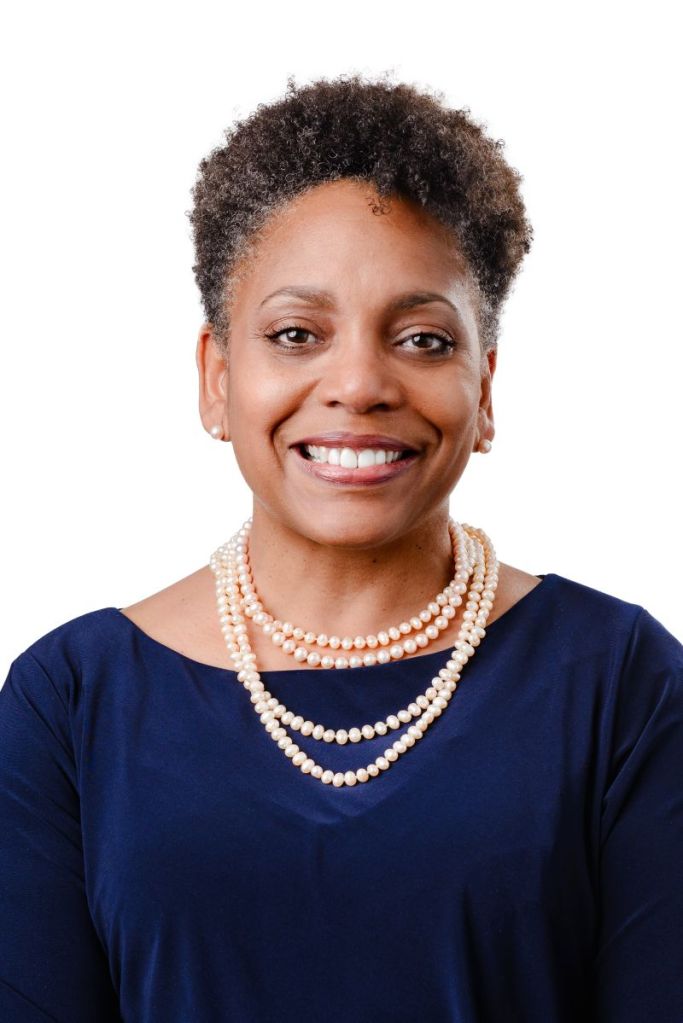
Now serving as president & CEO of the California Community Reinvestment Corp., Boatman Patterson brings a career spanning public service, housing finance and federal budgeting to one of the nation’s most complex affordable housing markets. As a Black woman leading a mission-driven financial institution in California, her perspective reflects both lived experience and institutional insight. Across roles, she has focused on what she describes as “closing the distance between policy and people,” pairing financial discipline with community voice.
Multi-Housing News caught up with Boatman Patterson to discusses what’s breaking affordable housing deals today, what adjustments are helping them close and how climate-driven insurance pressures are reshaping underwriting in California.
READ ALSO: Affordable Housing Trends
When you look back across your career in public service and now nonprofit lending, what core commitment has guided you? Also, was there anything you had to unlearn about leadership when stepping into your current role?
Boatman Patterson: If I look back across my career, from the California Legislature, to leading CalHFA, to the White House, to now serving as CEO of a CCRC, the through-line is this: I have always been trying to close the distance between policy and people. That commitment didn’t appear in a conference room. It started at home. I grew up watching my mother, a single parent, buy our home in the 1970s because federal law finally allowed single women to obtain a mortgage in their own names. That one policy change altered the entire trajectory of our family, allowing my sister and me to go to college. It taught me early that housing policy is not abstract. It shapes real lives and generations.
That lesson followed me into every role. In the California State Assembly, working for four speakers, I learned how policy ambition meets political reality and the importance of centering communities who will never sit at the negotiating table.
As General Counsel at the Sacramento Housing and Redevelopment Agency, I saw where well-intended programs fail if execution falters, how compliance, tenant engagement and local systems make or break outcomes.
At CalHFA, leading statewide initiatives, we grew single-family production to $4.1 billion and preserved and/or created more than 60,000 affordable homes, proof that when public agencies collaborate with lenders, investors and developers, we can scale impact.
At the White House Office of Management and Budget, I learned that strong policy requires both vision and pragmatism, budgeting, forecasting and cross-sector alignment.
And now at CCRC, I’m bringing those lessons together, structuring capital in ways that protect mission, unlock feasibility and build trust with communities and capital partners alike.
As for the lesson I had to unlearn, that would be the assumption that leading a nonprofit would mirror leading a public agency. In truth, nonprofit leadership requires more adaptability, more listening and a willingness to rebuild systems while sustaining momentum. I had to let go of what I thought leadership was supposed to look like, and instead become the leader the organization needed at that moment.
Who shaped your leadership early in your career? What do you hope those you’ve mentored yourself take away from your example?
Boatman Patterson: I come from a long line of strong women who believed in leaving the world better than they found it. That was my grandmother’s charge to me, and it has guided every chapter of my work.
And I was lifted by women leaders throughout my career. When I didn’t pass the California bar on my first try, it was Senator Martha Escutia, then Chair of the Assembly Judiciary Committee, who encouraged me, as another woman of color, not to give up. That moment changed everything for me.
If people I’ve mentored say anything about my leadership, I hope it’s this: ‘She helped me find my voice, trust my expertise, and use my seat at the table to open the door for someone else.’
When you’re making a high-stakes decision, how do you weigh community trust against financial durability?
Boatman Patterson: I make decisions the way you underwrite a lasting deal, by listening first, testing assumptions and asking what has to be true for success to endure.
I start by gathering input, not only from experts, but from people closest to the impact. Working in the White House taught me that ambitious ideas can fail if they’re disconnected from the lived realities of the communities they’re meant to serve. Diverse perspectives aren’t just a value, they are a risk-mitigation tool.
Then I pressure-test: rents, operating costs, insurance exposure, regulatory conditions, sponsor capacity. I look for the weak seams. And only after I’ve understood the downside do I make the call and communicate clearly what we’re solving for and why.
Regarding balancing judgment with community input, I think of it this way: The community voice sets the direction, what will be trusted, what will endure. The financial rigor sets the guardrails, what will stand through cycles.
READ ALSO: Top 10 Markets for Multifamily Transactions in H1 2025
What’s the primary pressure point in affordable multifamily underwriting right now, and what’s most likely to save a deal? How does that dynamic differ between new construction and preservation?
Boatman Patterson: Coverage is the breaking point. Insurance, interest costs and operations are rising faster than rents or subsidies. Appraisals are tightening. The math is unforgiving.
What saves deals is flexibility, mission-driven subordinate debt, deeper reserves and re-underwriting that’s candid about cost and timing risk.
Both new construction and preservation are challenged, but new construction carries more exposure to volatility and interest carry. Preservation can be more stable if the capital needs and reserves are honest.
When evaluating a preservation deal in California, what factors determine whether long-term affordability and financial sustainability can coexist? Where are the strongest preservation opportunities today?
Boatman Patterson: Preservation is as much about stewardship as finance. The keys are a truthful capital needs assessment, future-proofing reserves and ensuring the affordability structure is durable enough to withstand future cycles.
The best preservation opportunities are naturally occurring affordable housing properties and at-risk assets where preservation prevents displacement, and where a thoughtful rehab can stabilize affordability without overburdening operations.
How are insurance costs and climate risk reshaping affordable housing underwriting in California, and what distinguishes projects that successfully close in higher-risk areas?
Boatman Patterson: The Los Angeles fires were a painful reminder that housing policy must align with disaster and climate-resilient policy.
Insurance is no longer a footnote. It is a core underwriting driver. We’re seeing stricter DSCR thresholds, higher reserves and more climate-resilient design requirements. Borrowers who lean into resilience early, with real mitigations, not just narratives, are the ones getting deals across the finish line.
LISTEN TO: Mission Success Podcast—Why Mission Requires Both Courage and Capital
In today’s environment, what distinguishes the sponsors that are still getting deals to closing, and what early warning signs suggest a transaction may stall?
Boatman Patterson: Momentum lives with sponsors who are clear-eyed, collaborative and grounded in their mission. Those who underwrite with humility, communicate openly and build their capital stack early are still closing deals, even in this environment. If the pro forma only works under perfect conditions, that’s the signal to pause.
What’s most misunderstood about community development financial institutions, and where is capital falling short in today’s affordable housing pipeline?
Boatman Patterson: CDFIs are often seen as gap-fillers, but we are actually market shapers. We are the ones who take the earliest risk, test feasibility and create the conditions for conventional capital to follow. We don’t replace banks, we de-risk and unlock opportunity for them, especially in markets where mission drives complexity.
The capital gap is largest in the early stages—acquisition and predevelopment—particularly for preservation. It’s the riskiest and most time-sensitive part of the pipeline, and conventional capital often isn’t structured to move at the speed required.
How do you define durable community impact in affordable housing, and what indicators, several years after stabilization, tell you a project is succeeding?
Boatman Patterson: In my experience, long-term success lives at the intersection of three forces: execution capacity, of both developer and operator; lifecycle resilience, not just the rehab today, but the capital needs tomorrow; and resident experience, safety, dignity and trust. If a property looks cared for, feels safe and performs predictably five years after stabilization, we did it right.
Outside of your professional roles, what restores you and where do you turn for perspective?
Boatman Patterson: I’m restored by the simple things, family, setting aside quiet time to reflect, choosing joy. I’m a lifelong fan of country-western music and line dancing. It brings me joy and reminds me not to take myself too seriously. For perspective, I return to the voices of the women who shaped me, their strength, their example, their insistence that leadership is service.