Why 40K Affordable Homes Are Stalled in California
A new report illuminates the challenges of getting shovels in the ground.
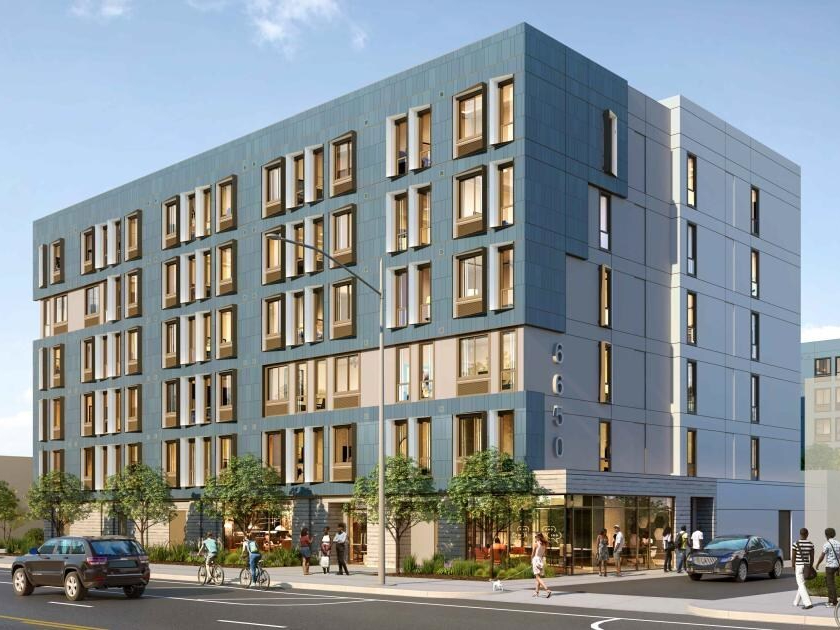
Nearly 40,000 affordable homes across 461 developments are stuck in the near-construction pipeline in California, according to a new report from Enterprise Community Partners. Rentals account for 39,217, while the remaining 633 are intended for homeownership.
More than two-thirds of the total number, around 25,000 homes, have already been awarded funding from at least one state program, but require additional subsidies or tax credits to move forward. Without further state financing, the report warns, California risks losing $7.7 billion in outside investment.
“These developments have already survived the hardest phases of the process: local politics, environmental review, complex financing layers,” Jimar Wilson, vice president & Southern California market leader at Enterprise Community Partners, told Multi-Housing News. “If they collapse now for lack of final state investment, the setback is indicative of a systemic failure.”
READ ALSO: The Right Zoning Can Solve the Workforce Housing Dilemma
According to Enterprise, the rental projects require $1.8 billion in state tax credits and $5.8 billion in tax-exempt bonds in order to move forward. The organization recommended four policy actions that the state should take to help development progress:
- invest in short-term affordable housing funding in the 2026-2027 budget
- pass the 2026 Affordable Housing Bond Act
- make the state’s housing finance system more efficient
- address operational challenges, such as rising insurance and utility costs
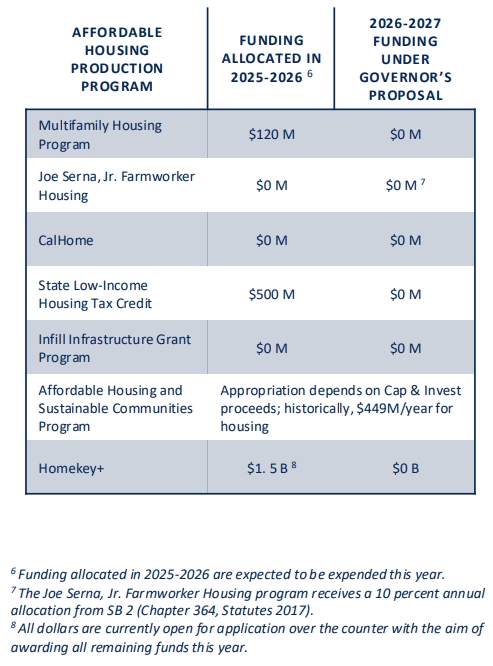
California Gov. Gavin Newsom’s proposed budget for 2026-2027 does not include any new funding for the state’s affordable housing subsidy programs or tax credits, which include CalHome, State Low-Income Housing Tax Credit and Homekey+.
The proposed 2026 Affordable Housing Bond Act, also known as AB 736, would allocate $10 billion for a bond to fund new affordable developments and preserve existing ones. According to Enterprise, California requires a source of permanent funding in order to meet its goal of building 1 million affordable homes by 2030.
Zoom in on Los Angeles
Of the homes stuck in planning, 9,533 are in Los Angeles and Ventura counties, according to the report.
Los Angeles’s Executive Directive 1, signed by Mayor Karen Bass in March 2022, was intended to speed up approvals of affordable housing developments, but the program has not yet led to a meaningful increase in construction starts or completions.
While ED-1 made the first step of the process much easier, it was not intended to address the second significant affordable housing challenge: financing. Experts told Multi-Housing News in a recent feature on ED-1 that without additional state and federal support, the program cannot address the affordable housing shortage on its own.