Can Private Credit Fill Student Housing’s Construction Gap? An Originator Weighs In
S3 Capital’s Steven Jemal discusses how university demand, sponsor strength and delivery risk shape construction lending decisions.

Student housing’s financing opportunity is becoming increasingly concentrated at the top of the university market. Large public institutions with favorable enrollment trends and persistent bed shortages continue to support new development, even as smaller private colleges struggle to meet enrollment targets. For lenders, this bifurcation puts greater weight on school-level data, sponsor strength and execution risk.
Traditional banks’ retreat from construction lending has given private credit more room to fund viable projects, but the margin for error remains narrow.
S3 Capital, a New York-based private lender that provides construction and bridge financing, has originated nearly $11 billion in loans for housing-oriented projects nationwide since 2013, including student housing. In this interview with Multi-Housing News, Senior Managing Director of Origination Steven Jemal discusses how S3 has been underwriting university demand, evaluating borrowers and managing construction risk as private credit expands its role in the sector.
READ ALSO: How Creative Financing Solutions Are Becoming the Norm
How would you describe the current student housing lending environment, and which parts of the market offer the strongest opportunities for private lenders?
Jemal: We think it’s an interesting time to be a private lender in student housing because banks have pulled back from construction in recent years, which has opened opportunities for firms like us. What’s even more interesting today, though, is the significant amount of demand we’re seeing for new housing at some of the largest schools in the country, particularly those with Division I athletic programs.
Many college towns haven’t delivered new purpose-built student housing in decades, and as enrollment grows at these schools, there isn’t enough supply to keep up with demand. It’s also important to realize that today, it’s a bifurcated market: The biggest schools are getting bigger, while smaller, private schools are struggling to hit enrollment targets. We’re focused on the former.
How are higher interest rates and construction costs affecting project feasibility, and how can private lenders fill the gap left by traditional bank financing?
Jemal: The construction financing market has thinned out due to the retrenchment of traditional bank financing over the past few years. As this dynamic has played out, we have been able to step in and fill the financing gap to provide necessary capital for projects.
Higher interest rates and rising construction costs have certainly made it more difficult for deals to pencil. But because we’re a private lender, we’re able to structure tailored solutions that help builders execute efficiently, which ultimately helps alleviate some of the cost burdens. We remain optimistic about student housing specifically, given the captive audience dynamic and the ability to ascertain a clearer demand picture than traditional multifamily.
Beyond enrollment growth, which university-level factors help determine whether student demand is durable?
Jemal: We are focused on large universities that have demonstrated enrollment growth. Smaller, more expensive private schools are seeing a decline in enrollment while the nation’s top public institutions continue to grow. We think this trend will continue and we will likely see more consolidation as the college-age population continues to decline over the coming years.
For us, it’s largely about university policies and project-specific aspects, but it’s also about understanding the intangible aspects. We’ve seen a trend of students moving toward schools that include a vibrant social life and offer a strong, unifying athletics program. It’s also important to not only study the university at hand but the competing universities as well to better understand migration dynamics alongside the school’s peers. Taking the time to dig into the nuances and leveraging that data to be selective are critical to success.
LISTEN TO: Student Housing Unlocked: Inside LV Collective’s Growth Strategy
Which university and market data help you quantify demand, and how do sponsor experience and delivery timing factor into underwriting?
Jemal: With student housing, there is granular, specific data that we can look at to assess supply and demand. We take time to study demographics around the student body to get a better sense of which segment of the market the opportunity is in. We know how many students are enrolled at a given university, how many beds are needed and how many beds there are in each area.
We like the fact that there’s a captive demand base we can circle. Understanding university policy adds another element of clarity, which gives us an opportunity to evaluate which classes are required to be in-person on campus, how many students are on financial aid and how many international students there are.

Apart from the student housing-specific aspects, our student housing strategy is consistent with our multifamily strategy. We target Class A student housing at top universities just like we target Class A multifamily in top-tier markets. As a construction lender, our underwriting concentrates most heavily on mitigating execution risk: the budget, schedule and ultimately the sponsor’s ability to build as advertised. That stays the same no matter the property type.
Delivery timeline is an even bigger focus for us during underwriting. The sponsor’s ability to execute on time and on budget is even more important because the downtime could be a full school year if the schedule falls off track. That’s why we spend a significant amount of time during the diligence process walking sites, conducting reference checks with previous subcontractors and reviewing net worth and liquidity requirements to ensure that we feel comfortable with the sponsor’s ability to deliver efficiently.
What institutional, sponsor and supply-demand characteristics define the student housing lending opportunities best suited to S3?
Jemal: We think the most compelling opportunities are at established institutions with experienced sponsors. We like large, public universities that have consistent enrollment growth, alongside brand power and a strong athletics department. There also needs to be clear demand or a historic shortage of beds that points to a supply-demand imbalance the project we’re lending on will help alleviate. We also think development teams that partner with universities directly create a strong marketing engine, which gives us more confidence.
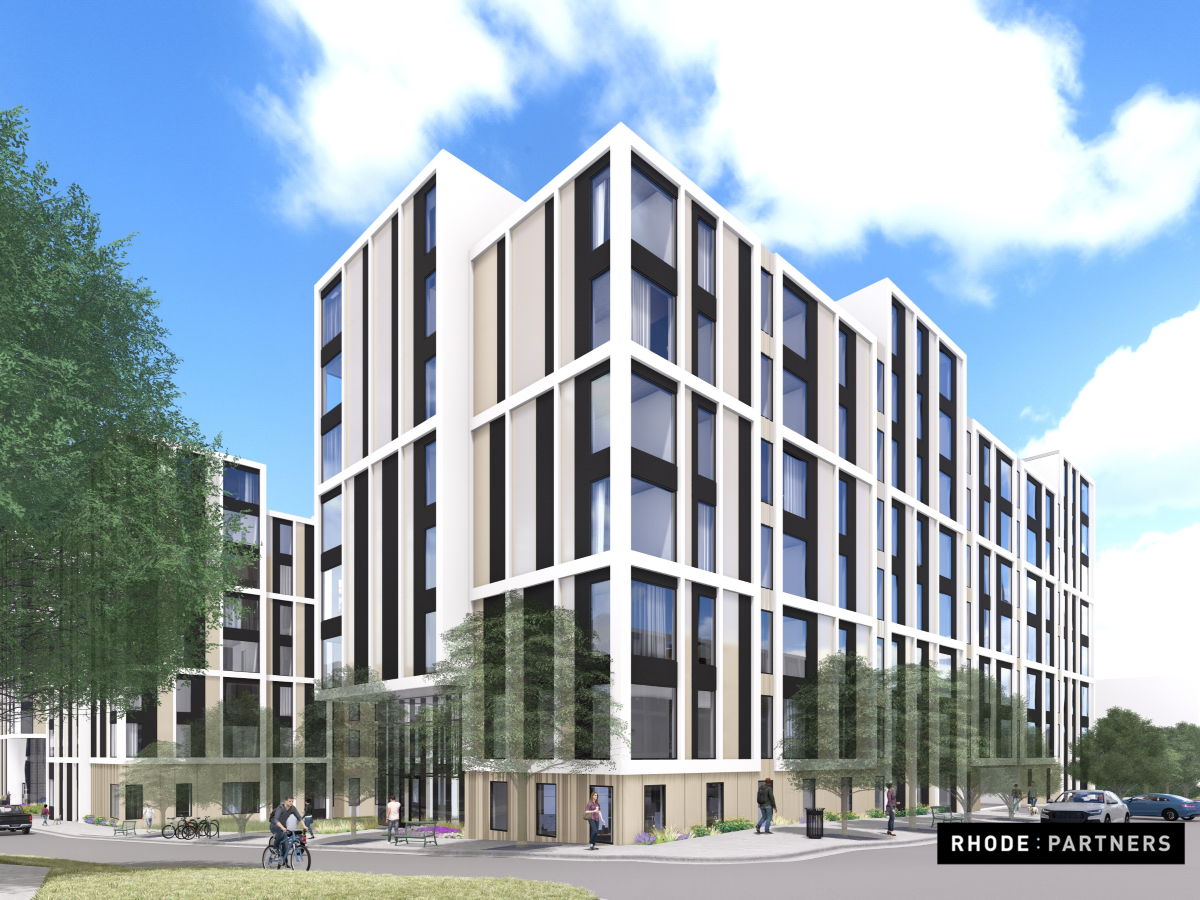
Recent examples include a $116 million loan at Texas State University. TSU recently joined the Pac-12 athletic conference, and at the start of the 2025 academic year broke its all-time enrollment record with 44,596 students, a 9.6 percent year-over-year increase and the fifth consecutive year of record growth for the school. On-campus housing covers just 20 percent of total enrollment, and there is a documented market-wide shortage of roughly 8,000 beds.
This story mirrors the type of supply-demand imbalance we look for in conventional multifamily, but the deficit is even more pronounced.
We also recently originated a $131.5 million loan for a project in Washington Heights, adjacent to Columbia University Irving Medical Center, that will provide purpose-built housing for medical students. CUIMC currently offers roughly 1,400 outdated units for approximately 4,600 graduate students.
READ ALSO: Why Private Credit Has Staying Power
How do you mitigate construction risk before closing and monitor it throughout the loan term?
Jemal: Construction risk can be mitigated through detailed due diligence prior to closing and continuous monitoring throughout the loan term. One key differentiator for S3 is that we have an in-house construction monitoring team that reviews all timelines and budgets with the sponsor and general contractor during the diligence process to ensure we are comfortable with the plans. They also review all milestones and ensure that the plans build in sufficient cost and time contingency to deliver on time and budget.
How do you expect private credit’s role and the student housing development pipeline to evolve over the next 12 to 24 months?
Jemal: We expect to see continued expansion in the number and types of lenders available to lend on student housing projects as private credit’s role continues to increase. Further, as we see larger universities continue to grow in enrollment and their surrounding towns develop, we expect to see developers’ interest in starting new projects increase to meet that demand.