Harnessing AI-Assisted Design During Early Feasibility
How machine-generated insights reveal new pathways and opportunities for yield.

For multifamily developers, due diligence is critical in managing early exposure. While sites may look promising, the zoning nuance, yield ambiguity and limited information often complicate initial decisions. Capital remains cautiously deployed, internal teams are stretched and momentum competes with risk. Exploring front-end design reduces uncertainty, but traditional approaches are often too slow and costly to deploy early in the development process.
Artificial intelligence now offers a practical way for architects to help address these challenges. While AI does not replace professional design experience, AI does support faster clarity by delivering better information earlier in the development cycle, when flexibility still exists and decisions remain reversible.
In multifamily development, AI-supported workflows allow feasibility testing well before conventional schematic design. Early due diligence, site capacity testing and conceptual visualization represent high-leverage moments. Modest investments in analysis at this stage can meaningfully reduce downstream risk.
READ ALSO: 2026 Top Multifamily Architects and Designers
Developers rarely evaluate one site at a time. Multiple opportunities often move forward in parallel,
each competing for attention, capital and internal focus. Traditional schematic design can stretch
across weeks and carry meaningful cost. That reality often sidelines architects during site selection or
delays engagement until site control is secured.
Within HDJ’s design practice, with a major focus on multifamily, one high-leverage impact of AI has
emerged at the front end of the process. Developer decisions made at this stage carry lasting
consequences. Early zoning analysis, site capacity studies and conceptual visualization now move
through AI-supported workflows that allow clients to assess opportunities faster and with greater
confidence before making offers.
Uncovering possibilities
Earlier insight allows development teams to eliminate weak candidate sites sooner, redirect resources
toward more viable options and maintain deal momentum without rushing decisions that shape the
life of a project. In several instances, developers have asked us to revisit sites already deemed “dead.”
AI-supported conceptual planning enabled HDJ to explore alternatives quickly enough to uncover
workable paths that had not surfaced through conventional, time-boxed studies.

The same process can reveal upside as well. On multiple occasions, early concepts have increased
yield. With AI iterations, we find opportunities for more units, more efficient parking and stronger
site utilization than the initial long-hand estimates had predicted. Those improvements can
strengthen pro formas at a critical stage, while options still exist.
As feasibility improves, alignment becomes the next challenge. Internal leadership, capital partners,
community stakeholders and municipalities all want to understand how a project may take shape.
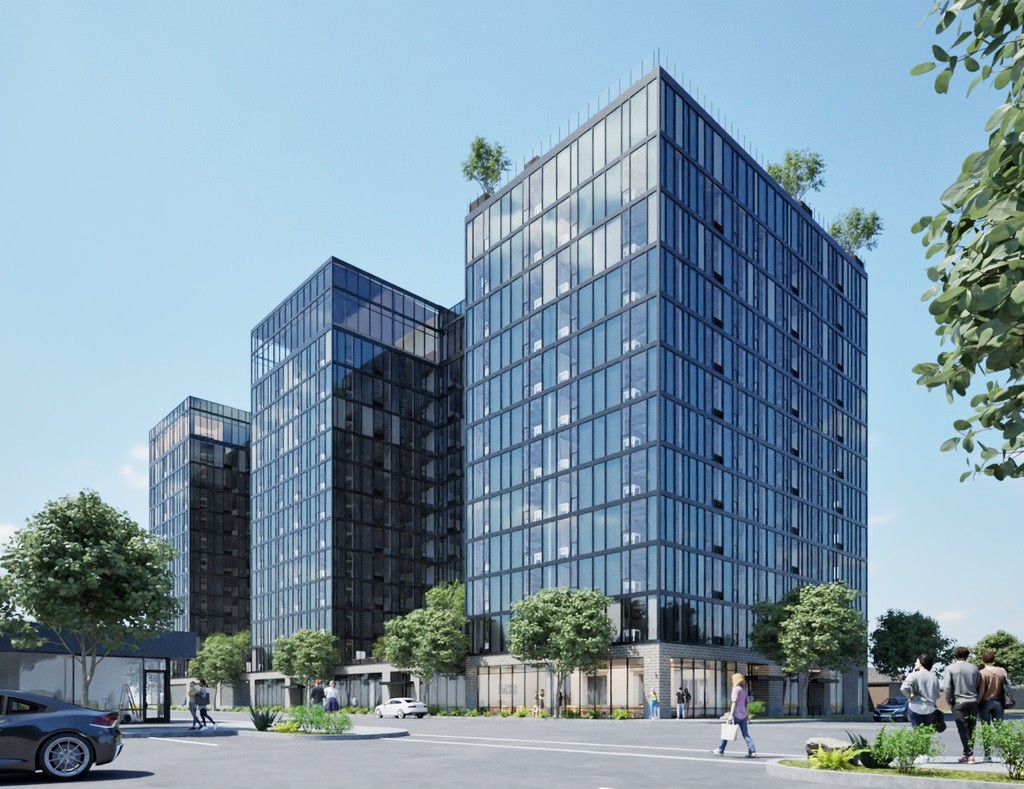
AI-supported concept visualization helps teams navigate competing requirements and communicate
intent earlier. Massing and site imagery, grounded in zoning, scale and physical constraints, bring
concerns to the surface sooner and support clearer dialogue. When visualization arrives earlier,
conversations improve, questions are raised up front and course corrections cost less.
AI is confident, sometimes overly so. Experience remains the multiplier. Zoning interpretations,
entitlement nuances and site constraints require more than speed. They also require judgment.
Effective use of AI depends on skilled prompting, practiced scrutiny and professional oversight.
Speaking as someone who has been doing this work for a long time, the “magic” is not the first
answer from AI. The value comes from knowing what to question, what to verify and what to test
next. That dynamic tends to resonate with senior development leaders because the same principles
apply to their underwriting and dealmaking. While speed matters, disciplined review matters more.
At HDJ, AI workflows are guided by senior architects with decades of experience reviewing zoning
language, recognizing anomalies and pressure-testing assumptions. Interns and emerging designers
work within these systems, but oversight remains firmly in the hands of experienced professionals. AI
accelerates discovery. Experience governs reliability. The combination is what makes AI-assisted
design valuable rather than risky.
READ ALSO: An Award-Winning Approach to Workforce Housing
Early feasibility decisions often hinge on numbers. Unit count and mix, gross and net areas, parking
counts, building heights and other quantities shape development budgets from the outset. When
those inputs remain vague, underwriting becomes conservative by necessity and funding
applications lose strength.
Housing DNA by HDJ™ was devised to generate early conceptual outputs with faster iterations and
more consistent quantities. This information allows development teams to populate estimates and
quantity takeoffs earlier, improving the reliability of pro formas and strengthening time-sensitive
funding submissions. This level of detail is especially valuable when applications require defensible
unit mixes, parking ratios, building square footages and construction budgets rather than
placeholders.
Detecting risks
Early conceptualization should reveal both opportunity and risk. AI-supported design and analysis
can spot constraints that may not appear obvious, while also highlighting inherent advantages that
deserve emphasis. With clearer, earlier data, developers enter land negotiations better informed.
Purchase agreement conversations improve when feasibility, yield ranges and key constraints are
supported by tangible quantities rather than assumptions.
Many design firms now mention AI. Fewer have invested in building integrated workflows that
connect zoning research, site planning, project visualization and data continuity into repeatable
processes and subsequent workflows. At HDJ, developing that level of integration required years of
testing off-the-shelf AI applications across multiple users, then refining how those tools work
together within Housing DNA by HDJ™.
Developer clients have shared that this level of rigor is still uncommon during early planning. The
advantage is not the technology alone, but also the consistency and clarity the system brings to
feasibility, coordination and execution as projects gain momentum.
Across multifamily development, the practical value of AI lies not in novelty, but in leverage. When
experienced teams apply AI thoughtfully at the front end, developers gain clarity sooner and keep
options open longer. Risk can be evaluated, negotiated and managed early rather than absorbed
later.
The result is stronger feasibility, better estimates, more informed negotiation and greater confidence
before capital becomes fully committed. AI-supported design offers compelling upside for
multifamily development. Strong starts often lead to stronger finishes, allowing projects to aim
higher and achieve more.
David Layman is president, chairperson of board & owner at Hooker DeJong Inc.
Please note: To become a Viewpoint writer, reach out to Therese Fitzgerald at therese.fitzgerald@cpe-mhn.com. All Viewpoints are copyright of Multi-Housing News 2026. We do not accept AI-written content.