
What’s Shaping Self Storage’s Next Investment Cycle?
Two Heitman executives examine shifting market conditions and the opportunities emerging as sector fundamentals recover.

Self storage has remained resilient across economic cycles, but performance can vary considerable by market and even by trade area. Today, slowing development, the absorption of recently delivered supply and changing consumer behavior are reshaping self storage market trends, particularly the investment outlook. Millennials are entering their peak storage-use years, while demand from Baby Boomers is providing additional structural support.
These dynamics underpin Heitman’s latest push intro the sector. Drawing on three decades of self storage experience, the global real estate investment management company recently expanded its position in the sector by launching a core-plus self storage strategy and acquiring properties across several states.
Multi-Housing News spoke with Managing Director & Head of Portfolio Management Jennifer Boss and Senior VP & Head of Self Storage Pascal Souvenir about the timing of the strategy, the recovery potential of existing assets, as well as the demographic and operational trends likely to shape the sector’s next phase.
What factors made this an attractive time to expand your investment in the sector?
Boss: We believe this is an interesting time to focus on self storage given a combination of attractive cyclical and structural factors. While Heitman has long maintained an overweight position in self storage, we were net sellers of the storage in 2024 and 2025 due to relatively frothy market conditions following the COVID-19 pandemic.
After a period of elevated development activity, new supply has slowed significantly as higher construction costs, elevated interest rates and tighter financing conditions have made new projects increasingly difficult to justify. At the same time, many existing assets are still working through the impact of recently delivered supply, creating an opportunity to invest before fundamentals fully recover.
From a structural standpoint, self storage continues to benefit from durable demand drivers, including increased adoption and uses, generational tailwinds and longer tenant stays.
Historically, periods of constrained supply have been followed by strong operating performance for existing assets. Looking ahead, we see a similar scenario, with storage rents 40 to 50 percent off construction-justified levels. Combined with asset values that are still below recent peaks, these factors present what we believe is a compelling opportunity to invest in high-quality self storage assets at an attractive point in the cycle.
READ ALSO: Self Storage Financing’s a Local Story
How does your experience in the sector shape the way you source and evaluate opportunities as more institutional capital enters the sector?
Souvenir: Heitman has been investing in self storage since 1996, building nearly three decades of experience across multiple market cycles. Over that time, we have developed sector expertise through operator selection, active asset management and the collection of proprietary market intelligence.
Our partnerships with both leading REITs and a broad network of private and regional operators provide valuable insight into local market dynamics and access to opportunities across the ownership spectrum. We believe this breadth of relationships is increasingly valuable as more institutional capital targets the sector. It provides access to a wider investment pipeline, including off-market opportunities that are often unavailable through competitive sale processes.
Our experience is further enhanced by a proprietary database of more than 600 properties and millions of operating data points collected monthly. This information helps us monitor performance in real time, identify emerging trends, and recognize attractive markets before they become broadly recognized. Combined with insights gained from working alongside multiple operators, we believe this data-driven approach provides unique insights when evaluating opportunities and positioning portfolios for long-term success.
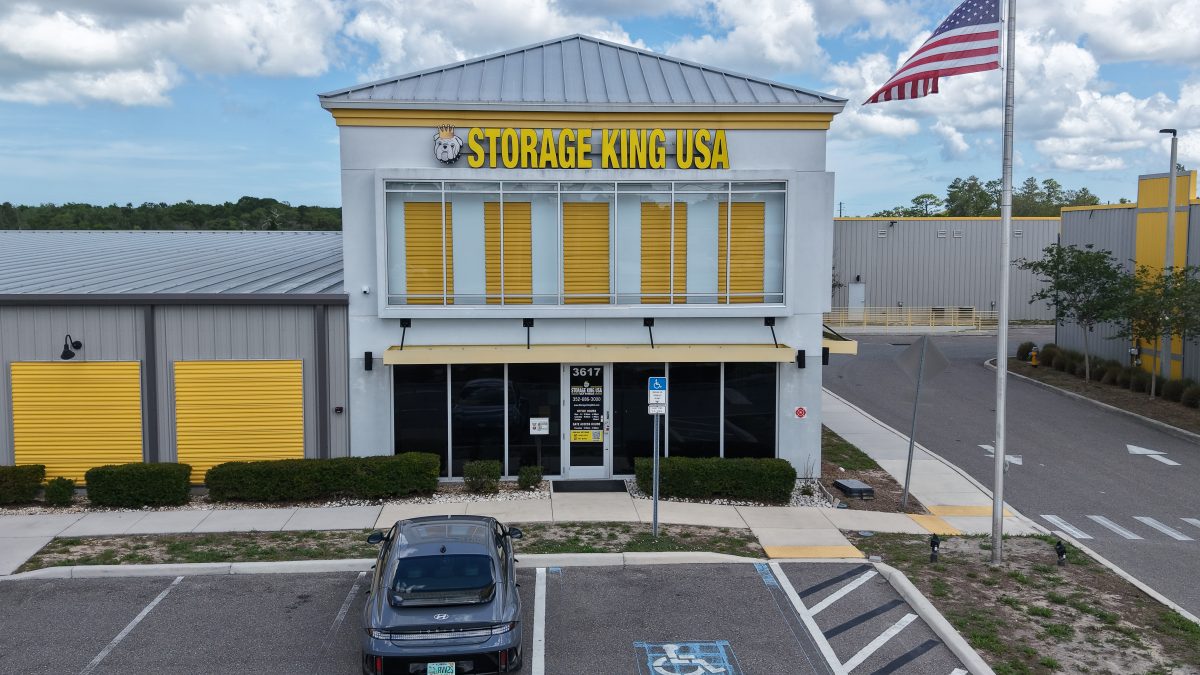
You recently announced the acquisition of a 79-asset self storage portfolio across 16 states. When evaluating a portfolio of this scale, which market-level and asset-level characteristics matter most?
Boss: Geographic diversification, stabilization potential, favorable supply dynamics and embedded value creation opportunities are some of the important factors to take into consideration while evaluating self storage portfolios.
Many assets are operating below stabilized occupancy levels due to the impact of recently delivered supply. As supply is absorbed in those markets, we expect occupancy and rental rates to recover, creating a meaningful opportunity for near-term NOI growth. Markets with limited forward supply are also expected to benefit from improving sector fundamentals.
Embedded growth opportunities beyond organic rent and occupancy gains, including expansion projects, site densifications and unit reconfiguration, can provide additional avenues for value creation over time. Taken together, the combination of geographic diversification, improving market fundamentals, attractive basis relative to replacement cost and multiple paths to NOI growth are some of the key factors that we believe matter most.
READ ALSO: Top 10 Markets for Self Storage Transactions
As new deliveries decline and recently completed facilities are absorbed, what does that mean for occupancy and revenue growth at existing self storage assets?

Souvenir: We have seen a similar environment before. The last time new supply fell to comparable levels was following the Global Financial Crisis, when self storage NOI grew by more than 8 percent annually for five consecutive years, despite a muted recovery in home sales activity.
Today, we are seeing early signs of a similar recovery across our portfolio of more than 600 stores. Properties with little to no exposure to recently delivered supply are generating positive year-over-year rental revenue growth, with some achieving growth of up to 15 percent.
Meanwhile, assets still competing with facilities delivered within the past 12 months continue to face pressure from aggressive lease-up concessions. Encouragingly, portfolio performance has improved meaningfully over the past year, with more than 60 percent of our same store properties now reporting growth, compared to roughly 45 percent a year ago. We believe this momentum is likely to continue as recent deliveries are absorbed and fewer properties face direct lease up competition.
How meaningful will Millennials entering their peak storage-use years be for demand, and how do today’s demographic drivers differ from those that historically supported the sector?
Boss: The Millennial demographic shift will be a meaningful driver of future demand, but more importantly, it reinforces a broader set of structural trends already benefiting the sector. As Millennials enter their peak household formation and family-raising years, access to larger homes has become increasingly constrained by affordability challenges, limited housing supply, and the fact that older generations control a growing share of larger housing stock. As a result, many households are turning to self storage as a practical solution to address their space needs.
Importantly, these users tend to differ from the traditional storage customers. Rather than utilizing storage for short-term transitional events such as a move, many are becoming long-term lifestyle users. These customers are generally less price-sensitive and maintain longer lengths of stay. We are already seeing this trend in our portfolio, where average lengths of stay now exceed 24 months.
At the same time, the aging Baby Boomer population represents another important source of demand. Together, increased adoption among younger consumers, favorable demographic trends and longer customer durations lead us to believe demographic support to demand growth over the next decade could exceed that of the prior 10 years. Consequently, we see the sector becoming increasingly supported by durable lifestyle demand rather than solely by housing market activity and residential mobility.
Self storage has demonstrated resilience across multiple economic cycles. What characteristics of the sector have supported that performance?
Souvenir: We believe the sector’s resilience is driven by three key characteristics: diversified demand, localized performance drivers and operational flexibility.
Self storage benefits from a broad range of demand sources, many uncorrelated to the macro economy, including downsizing, family transitions, storm displacement and other life events. This reduces reliance on any single economic driver.
Demand is also highly localized, with performance tied more closely to trade area dynamics than broader economic conditions. This allows investors to diversify exposure across assets and geographies while limiting concentration risk.
Finally, short lease terms provide operators with the ability to adjust rents quickly during inflationary periods, especially since self storage typically represents a small portion of a customer’s overall expenses.
Housing market activity often receives considerable attention as a demand indicator for self storage. Which headwinds have the greatest effect on asset performance and how do they vary at the local level?
Boss: The headline that the broader market is keyed in on is housing market activity. However, we are seeing strong revenue growth in assets within metros with very weak housing activity so long as new competitive supply is not present.
Consequently, the primary headwind we monitor is new supply. While self storage performance is influenced by multiple factors, revenue growth and occupancy have historically been most sensitive to changes in supply. However, the relationship is not uniform, reinforcing our view that self storage is fundamentally a hyper-local business.
Two assets within the same market can experience materially different outcomes depending on their proximity to newly delivered or planned competing facilities. Accordingly, we closely track supply pipelines down to the trade area level in relation to each property’s customer location data.
READ ALSO: Where Are the Best Self Storage Opportunities?
Looking ahead, what trends will define the next phase of self storage investment, and where do you see the most compelling acquisition and value-add opportunities?
Souvenir: We believe the next phase of self storage investment will be shaped by the sector’s continued evolution and institutionalization, even as ownership remains highly fragmented.
Today, more than half of self storage properties are still owned and managed by small private and regional operators. We believe this remains one of the sector’s most attractive characteristics, creating opportunities to acquire assets with operational upside and enhance performance through more sophisticated management platforms.
A key focus of Heitman’s strategy is identifying off-market acquisitions and recapitalization opportunities where owners seek liquidity but want to retain an ownership stake and participation in future upside. Because these transactions tend to be larger and are generally unavailable to most competing buyers, they are often less competitive and more attractively priced than broadly marketed acquisitions of 100 percent ownership interests in individual assets or portfolios.
Supply will also remain an important theme over the next several years. Higher construction costs, elevated financing costs and expanded return requirements have made new developments increasingly difficult to justify, creating a favorable backdrop for existing assets, paving the way for a recovery in rents and occupancy in trade areas where existing supply levels are reasonable. On the value-add side, we are particularly focused on recently completed assets that have yet to reach full economic stabilization, where patient capital and operational expertise can be beneficial.