Spotlight on 3 Rising Stars in Multifamily Marketing
These leaders share how data, AI, storytelling and human connection are reshaping engagement and growth across the industry.
Over the past years, multifamily marketing has moved beyond promoting available units. As renter expectations have shifted and AI has become part of the equation, great marketing now requires a blend of brand strategy, data, communication and human connection. So, what does it take to stand out in this space?
Emerging leaders bring different perspectives to the table. Sarah Wieman, regional manager at REACH by RentCafe, built her career around creativity, data and performance strategy after entering the multifamily space through lifestyle marketing. Emily Popa, membership & marketing director at Property Management Association of Mid-Michigan, brings an onsite perspective shaped by leasing, property management and mentorship. And Raymond Brown, Peakmade Real Estate’s marketing communications manager, approaches marketing through the lens of communications, brand consistency and scalable systems across a large portfolio.
While their career paths differ, Wieman, Popa and Brown all point to the same shift: great multifamily marketing now depends on more than visibility. It requires strategy that is flexible enough to evolve, messaging that feels personal and execution that brings everyone within the company into alignment.
READ ALSO: Calibrating Multifamily Marketing for Performance
Sarah Wieman, regional manager at REACH by RentCafe
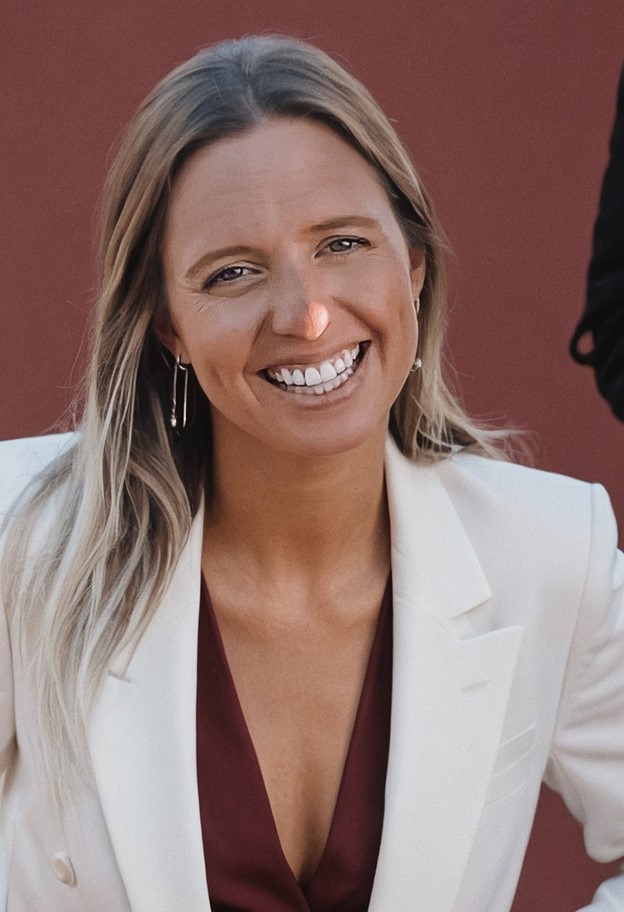
Sarah Wieman’s route into multifamily marketing was, as she put it, “completely by accident.” After working for years in surf and lifestyle marketing, she joined Allan Domb Real Estate in Philadelphia, an experience that helped her understand more about real estate in a year than most people learn in a lifetime. There, she discovered that successful marketing was not just about selling a home, but also about lifestyle and neighborhood.
That entry point became the foundation for a career built around creativity, data and renter experience. Wieman later moved into client-side leadership roles before taking on her current role as Regional Manager with REACH by RentCafe. She has watched multifamily marketing evolve from ILS advertising and mailers into a digital-first, AI-driven discipline and that constant change within the space has kept her engaged.
“Be patient with the learning curve, stay open-minded and never lose confidence in who you are and what you bring to the table,” said Wieman. “That balance is what ultimately sets you apart.”
Her recognition as one of the National Apartment Association’s “20 on the Rise” was especially meaningful, as it not only mirrors her success but also her influence. “It reflected the risks I’ve taken, the questions I’ve asked and the way I’ve pushed for smarter, more innovative marketing strategies,” said Wieman. One lesson that she carries forward is the importance of listening before acting, as every company and organization is different.
What’s been your toughest challenge in multifamily marketing and what did it teach you?
Wieman: One of the toughest challenges has been earning a seat at the table. Marketing in multifamily can still feel like the “Rosie the Riveter” role of the industry—especially as a woman, it can take a lot of persistence to be heard and taken seriously.
What it taught me is the importance of confidence, curiosity and community. Having the right support system, asking thoughtful questions and building a strong network make all the difference. Over time, I’ve learned that when you combine preparation with perspective, you can shift conversations—and ultimately, outcomes.
What does “great multifamily marketing” mean to you right now?
Wieman: Great multifamily marketing today is about having the courage to test, learn and evolve. Average is doing what’s always worked. Excellent is willing to challenge that—leaning into new technology, new strategies and new ways of connecting with renters.
From what I see working across different clients and markets, today’s renters expect instant access to information and more than just an apartment—they’re looking for a lifestyle. The best marketing delivers on that expectation seamlessly, combining strong storytelling with performance-driven strategy.
Emily Popa, membership & marketing director at Property Management Association of Mid-Michigan

Emily Popa entered multifamily in 2015 as a leasing consultant for a new development in Downtown Lansing, after a friend told her that her “bubbly” personality and competitive drive were suitable for the fast-paced multifamily environment. Three months later, she became the property manager for a 75-unit community, which grew to 120 units over time. That was also the turning point in her career, when she understood that the multifamily industry rewards impact and work ethic.
“Realizing that my on-the-ground knowledge and results were valued more than a college degree was a turning point for me,” she said. Over the years, Popa built her career across conventional, student and quasi-portfolios, which gave her a “360-degree view” of the business. She is especially proud of her 11-year path from onsite leasing professional to association management leader, a journey she built by prioritizing industry-specific knowledge over a traditional degree. Later, she earned her NAA CAM credential, became a Leadership Lyceum Eagle and was among the “20 on the Rise” class.
Popa’s career has also been shaped by self-advocacy and mentorship. Early on, she struggled with imposter syndrome because she did not have a college degree, but she learned to become her “own loudest advocate” and leaned on mentors who could see her potential before she fully saw it herself.
What did leading teams early in your career teach you about multifamily marketing?
Popa: Managing a student housing portfolio early in my career presented a unique hurdle: leading a team of my peers. Being so close in age to my employees meant I had to navigate the delicate balance of being a relatable mentor while maintaining the professional boundaries required to hit our aggressive leasing and turn goals.
That season of my career was my greatest leadership masterclass. It taught me that the multifamily business is 100 percent powered by people. If you don’t have the buy-in and trust of your team, the marketing strategy won’t matter. I learned how to motivate different personalities and how to lead with empathy without sacrificing accountability.
Today, I look back on that challenge as the moment I truly ‘grew up’ in the industry—it turned me into a leader who prioritizes culture and empowerment as much as the bottom line
What does “great multifamily marketing” mean to you right now?
Popa: To me, “great multifamily marketing” right now means finding the perfect harmony between cutting-edge technology and authentic human connection. In an era where AI can generate endless content, the difference between average and excellent is the Human Intelligence (HI) behind the strategy.
READ ALSO: Finding the AI-Human Touch Sweet Spot: Marketing Mistakes to Avoid
Average marketing feels like a template—it’s technically correct but lacks soul. Excellent marketing uses AI to handle heavy lifting, but relies on the ‘human touch’ to provide empathy, storytelling and local nuance. We must remind ourselves that we aren’t just marketing units: we are marketing homes and communities.
If we lose that human interaction, we lose the ability to resonate with our audience truly. Great marketing should feel like a conversation with a trusted neighbor, not a broadcast from a bot.
Raymond Brown, marketing communications manager at PeakMade Real Estate

Raymond Brown has been in the industry for the past 12 years, 11 of them at PeakMade Real Estate, where he began as a part-time leasing consultant. Later he moved through a series of onsite roles, including resident director, leasing manager and new development property manager before transitioning to his current position. That operational foundation gave him firsthand insight into leasing, resident experience and the needs of onsite teams.
“Communication is always one of the biggest opportunities in any organization whether that’s across departments, between leadership and onsite teams, or how we show up externally,” said Brown. “That was especially true at a time when employee experience and how you support your teams became so important for retention,” he added.
One of Brown’s most concrete contributions has been leading PeakMade’s partnership with Canva to improve brand consistency across a large portfolio while preserving a local identity for each community. The initiative helped the company scale creative and messaging more cost-effectively, build adaptable annual campaign frameworks and make brand resources more accessible across teams. According to Brown, the partnership saved more than $130,000 across the portfolio, reduced property onboarding time by 99 percent within the first year and reached more than 78 percent active user engagement.
What’s one lesson you learned the hard way that you’d want another early-career marketer to know?
Brown: I think one of the biggest lessons I’ve learned is the importance of challenging things in the moment. Being curious, asking questions and speaking up when something doesn’t feel clear. Early on, it was easy to try to rationalize decisions or avoid pushing back to keep things moving, but I’ve found that seeking clarity up front leads to better outcomes. It creates more alignment, avoids rework and ultimately builds stronger collaboration.
What does “great multifamily marketing” mean to you right now?
Brown: I think great multifamily marketing really comes down to precision at scale and making sure we’re reaching renters based on where they are in their journey. With AI and better data, we can move beyond generic campaigns and really dial into what resonates. We can start to understand each touchpoint and adjust messaging in ways that make sense in the moment, instead of pushing the same content to everyone.
But what separates the teams that stand out is how thoughtfully they use that. It’s not just about ‘doing AI’; you can’t automate everything and expect it to work. The best teams are using it to enhance personalization while keeping the messaging human and aligned with the actual renter experience.