MHN Executive Council: Multifamily Needs to Adapt. Here’s How. (Part 2)
More areas where the industry needs to play catch-up.
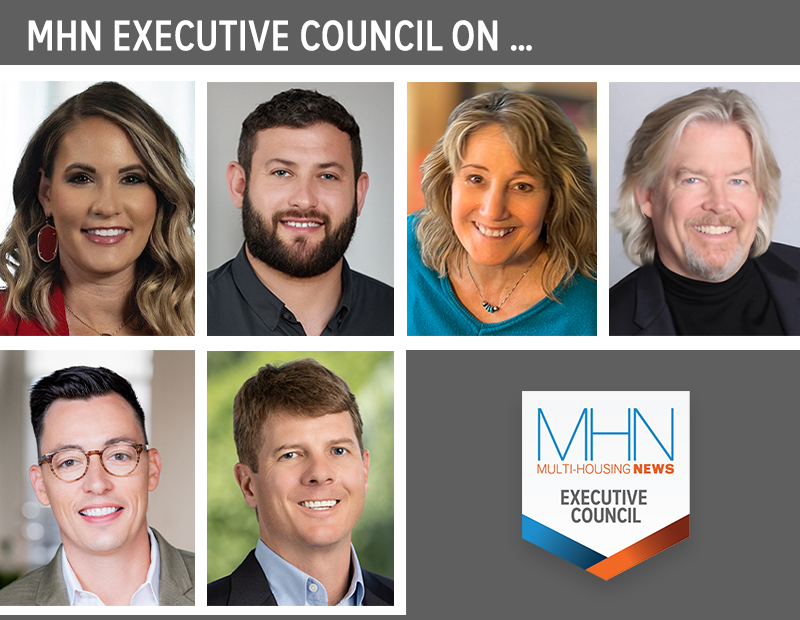
It’s important for the multifamily industry to stay current—whether that’s changing to meet Gen Z renters where they are, or making better use of AI. This month the MHN Executive Council shares more ways the industry needs to play catch up. (Read even more suggestion in part 1.)

Quick Change
One change multifamily professionals need to adapt to faster is the shift from reactive operations to proactive, data-informed decision-making.
For years, our industry has relied heavily on experience, instinct and operational muscle memory. While those strengths still matter, today’s environment—marked by supply pressure, tighter capital, evolving regulation and rising renter expectations—requires faster insight and greater precision.
Data, automation and AI are no longer “future” conversations. They are present-day tools that can eliminate friction, streamline workflows, and surface trends before they become problems. Yet many organizations are still experimenting cautiously rather than operationalizing strategically.
The professionals who will thrive over the next 12–24 months will be those who move beyond viewing technology as an add-on and instead embed it into how decisions are made—from training and compliance to leasing, maintenance and resident experience.
Adaptation doesn’t mean abandoning the human element. It means using better intelligence to empower it.
Multifamily has always been resilient. The next phase of growth will belong to those who are both resilient and agile. —Stephanie Anderson, Senior Director, Grace Hill
Adapting Amenities
In multifamily, there needs to be a shift from asking “Who are we buying equipment from?” to asking “How is this amenity actually operating, and is it really driving value?”
Too often, amenities are treated like capital projects; you build them, install them, check the box and move on. But that’s not how residents experience them. Whether it’s a wellness space, coworking lounge, or outdoor area, what matters isn’t just what you put in the room. It’s how the space feels, how it functions day to day and whether it becomes part of someone’s routine.
When amenities are treated as living, operational parts of the property instead of one-time purchases, you see higher use, a stronger community and better overall performance. That means thinking beyond the upfront spend and paying attention to how the space is maintained, refreshed and adapted over time.
Residents today expect more than square footage. They expect spaces that work for their lifestyle, and operators who recognize that shift will have the advantage —Danny Dulkin, President, Consulting & Development, LIVunLtd

Values-Driven
One change multifamily professionals need to adapt to faster is the shift in expectations coming from Gen Z renters.
This generation is values-driven. They’re asking more questions about energy efficiency, environmental impact, affordability, transparency, and community design. Features that were once considered “extras”—sustainability initiatives, shared spaces, smart-home technology, walkability—are increasingly baseline expectations.
At The REMM Group, we see this as an operational evolution, not a trend. Energy-saving systems, thoughtful density, co-living concepts, and environmentally responsible upgrades aren’t just marketing points—they influence long-term asset performance and resident retention.
Gen Z isn’t simply renting an apartment. They’re evaluating whether a property aligns with how they want to live.
Adapting faster means designing communities that are operationally efficient, environmentally responsible and financially sustainable—while still delivering strong returns.
That balance will define the next decade of multifamily. —Susan McPeak, Corporate Ambassador, The REMM Group
Strategic Approach
Over the past six years, the pool of experienced, high-performing property managers has narrowed dramatically. What was once a relatively quick hiring process has become increasingly competitive and prolonged. Salaries have increased, open positions remain unfilled for longer periods and the overall depth of available talent has thinned.
This shift requires a more proactive and strategic approach to human capital. Retention can no longer be reactive. Firms must invest in structured incentive programs, competitive compensation packages and enhanced benefits, while also offering clearly defined career paths that give on-site teams a reason to stay and grow within the organization.
Equally important is building a pipeline before a vacancy exists. That means developing talent from within, implementing formal training programs, and recruiting promising professionals from adjacent industries who can be trained and developed for multifamily leadership roles.
Companies should also maintain an active awareness of the competitive landscape. Top-performing managers are always in demand, and organizations that thoughtfully and professionally cultivate relationships within the marketplace will be better positioned to attract strong talent when opportunities arise.
This is not a short-term cycle that will simply correct itself. As an industry, we must become more deliberate, strategic and forward-thinking in how we recruit, develop, and retain the professionals who ultimately drive property performance at the site level. —Richard Doetsch, Director of Asset Management, Hudson Valley Property Group

Need a Refresh
Multifamily stakeholders often correlate timelessness and success with a property’s design. In actuality, there’s little in life that lasts 10, 20 or 30+ years without a refresh. And playing it safe for the sake of longevity fails as a winning design strategy in the long run.
Designing for everyone with the illusion that it’ll last longer equates with designing for no one. Designing with a specific intent and creating an environment that perfectly caters to a target demographic will always deliver the biggest return on investment. —Josh Kassing, SVP, Mary Cook Associates
Be Flexible
One of the biggest shifts multifamily professionals need to adapt to is speed and flexibility. With heightened competition for quality assets, multifamily investors have to move faster and underwrite more decisively. At the same time, ongoing market uncertainty means rigid business plans no longer work. The most successful investors will be those who build flexibility into their strategy — whether that’s through repositioning older assets, pursuing adaptive reuse, or accelerating value creation through renovations rather than waiting on ground-up development. —Justin Land, CEO, Merchants Mortgage
Interested in joining the MHN Executive Council and sharing your insights? Email Jessica Fiur.