How Mixed-Income Housing Drives Neighborhood Revitalization
From New Jersey to California, mixed-income communities are turning underused commercial sites into vibrant neighborhoods.
Across the U.S., previously overlooked or obsolete commercial assets or neighborhoods are being reimagined as mixed-income, housing–anchored districts that reintegrate economic, social and community value into neighborhoods that have been long starved for investment.
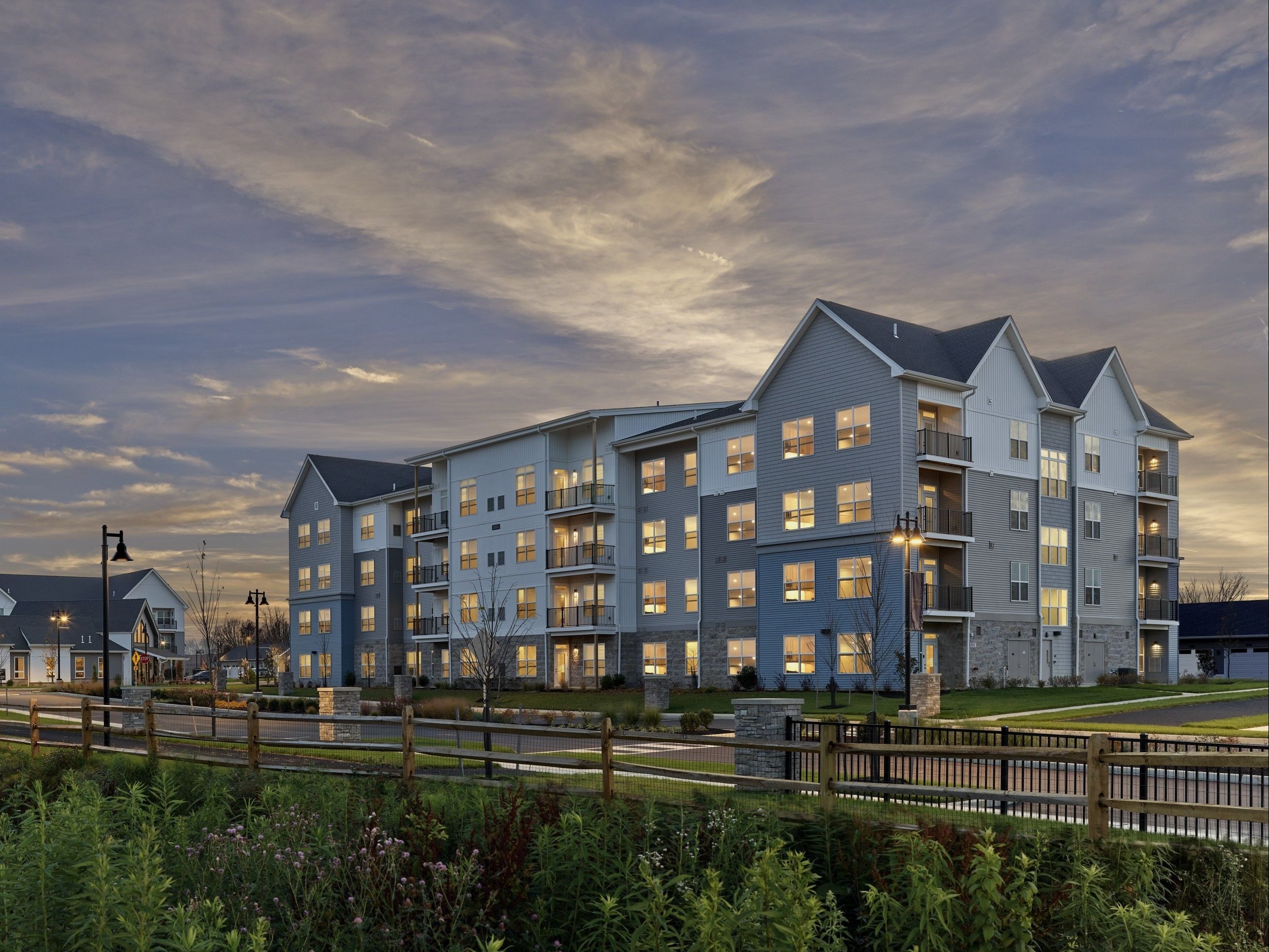
Retail corridors that once served as commercial anchors, industrial sites sidelined by changing logistics models and aging developments are now the backbones of ambitious mixed-income redevelopment strategies. In most cases, residential density is the catalyst that makes a broader redevelopment effort work.
That shift is no coincidence. National multifamily construction reached its highest level in decades in 2024, with roughly 608,000 units completed, according to the National Association of Home Builders’ analysis of the Census Bureau’s Survey of Construction, underscoring acute demand for mixed-income housing near transit and major employment hubs.
READ ALSO: Reimagining Everett: From Industrial Past to Residential Future
At the same time, adaptive reuse projects delivered nearly 25,000 apartments in 2024 alone—a 50 percent increase from the prior year—and nearly 180,000 units are currently in the reuse pipeline, with office‑to‑apartment conversions now accounting for more than 40 percent of all adaptive reuse projects, according to a 2025 RentCafe report.
The case studies below—spanning the Northeast, Mid‑Atlantic, Southeast and West—illustrate how housing has become the centerpiece of mixed‑use redevelopment, supported by both market drivers and public‑sector policy. In each instance, multifamily and mixed‑income housing serve not just as components of larger plans, but as anchors that unlock retail, office, civic and community centers.
Northeast: adaptive reuse and economic repositioning
In a region long shaped by aging building infrastructure, the transformation of the former Burlington Center Mall in Burlington Township, N.J., into The Crossings demonstrates how mixed‑income housing can reframe once‑decaying suburban sites as vibrant properties. Acquired in 2019 by Clarion Partners and MRP Industrial, the $600 million-plus redevelopment is already generating jobs and tax revenue, but its broader legacy is tied to its growing residential presence.
At the heart of that presence is a 500‑unit community developed by Jefferson Apartment Group. The property encompasses 20 buildings ranging from four‑story elevator buildings and walk‑ups to townhouses. Twenty percent of the units are designated as affordable, constructed to the same standards as market rate, and integrated throughout the site. Amenities include clubhouses, swimming pools and walking trails that knit the community into the broader master plan.
Jefferson Apartment Group’s first development in New Jersey was in Mount Laurel, about 10 minutes down the road from the new site. “As we completed that project, the opportunity at The Crossings came across our desk,” recalled Drew Chapman, senior vice president & development partner at JAG. “The two were eerily similar in many ways, and we found the southern New Jersey market to be quite diverse. With limited supply, we believed we could be successful ‘doing it again.’ “
More than just a one-off housing delivery, the residential phase is expected to bring economic benefits to the neighborhood. Chapman noted that the projected 750 new residents will benefit nearby retail and strengthen the area’s appeal to employers seeking accessible rental housing without the burdens associated with homeownership.
JAG has partnered with AEI, an architecture firm, and IMC Construction, both repeat collaborators. Also on board are institutional capital partners that Chapman credits for smoothing the delivery process in a market long constrained by limited housing supply.
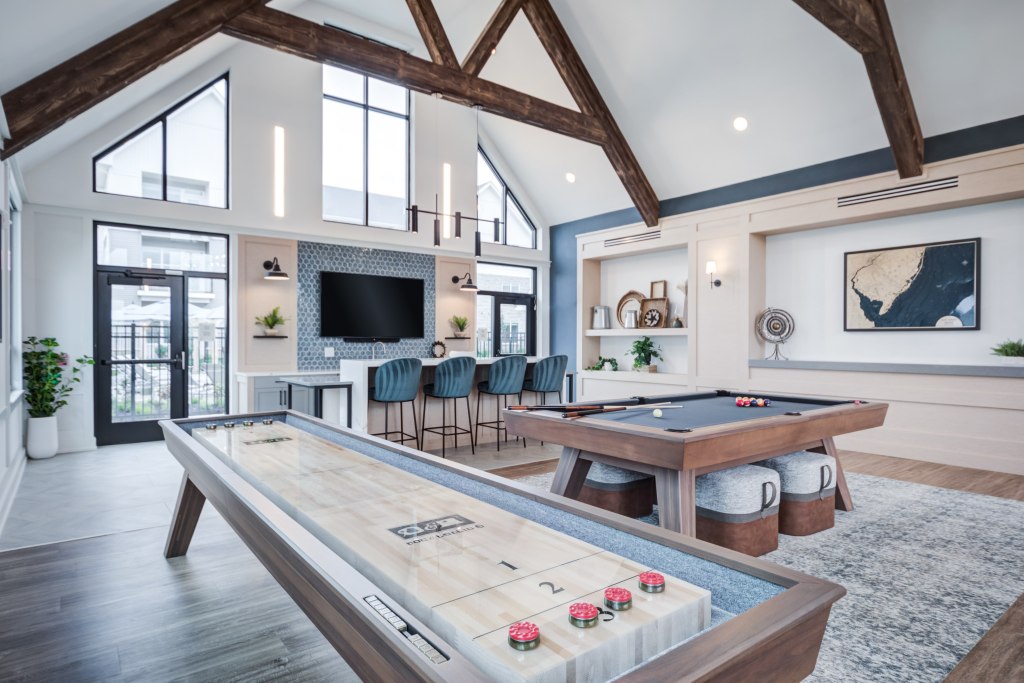
Amenities include clubhouses, pools and walking trails that knit the community into the broader master plan. Image courtesy of Jefferson Apartment Group 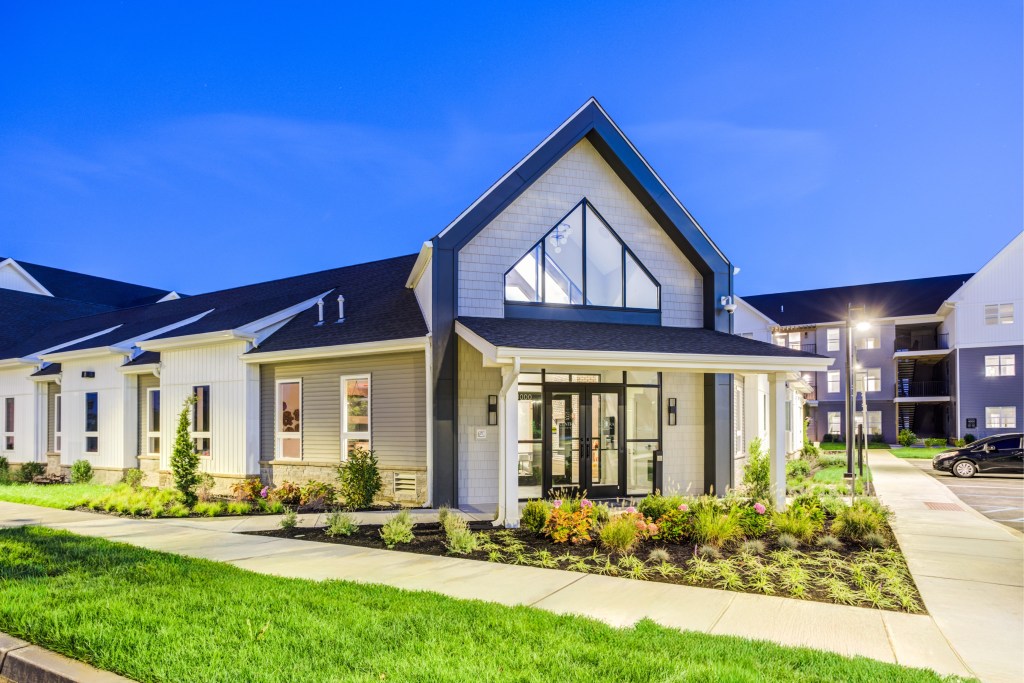
The project also features a welcoming clubhouse at the heart of the community. Image courtesy of Jefferson Apartment Group 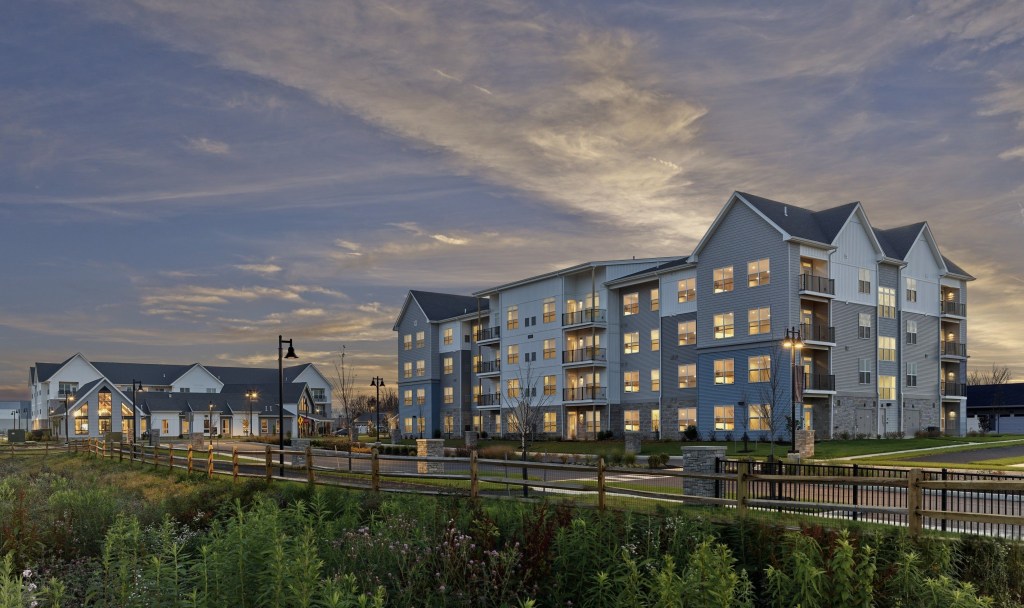
The Crossings demonstrates how mixed income housing can reframe once suburban sites as vibrant, long term assets. Image courtesy of Jefferson Apartment Group 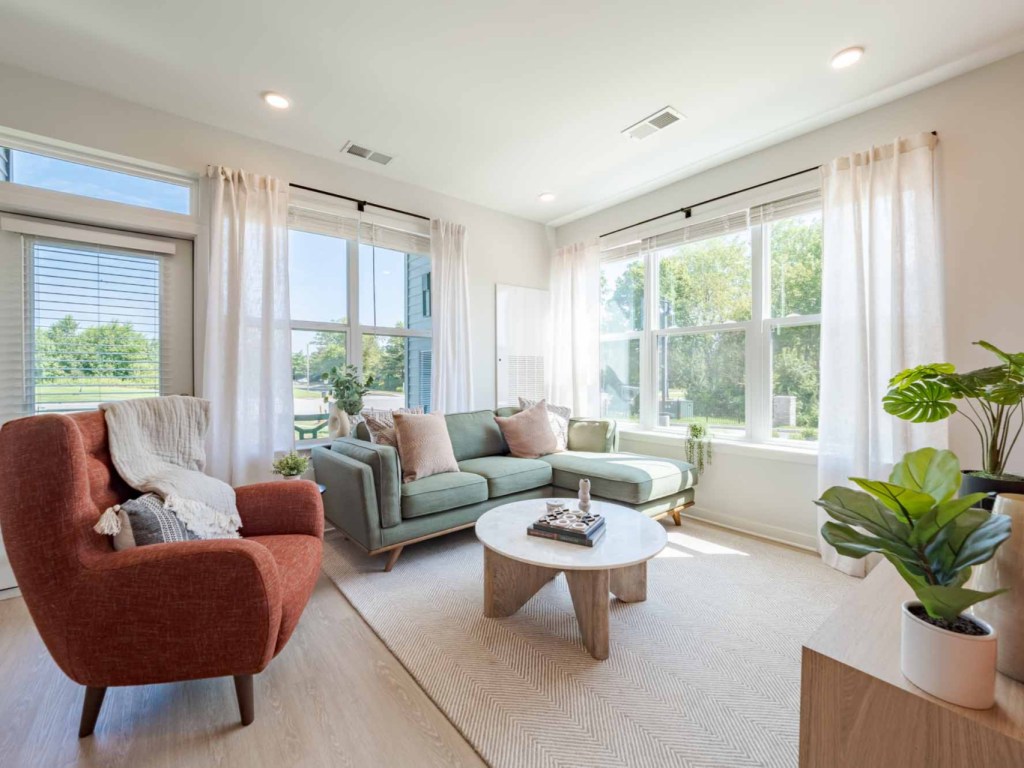
The Crossings transforms a former mall site into a vibrant 500-unit multifamily community with integrated affordable housing and modern amenities. Image courtesy of Jefferson Apartment Group 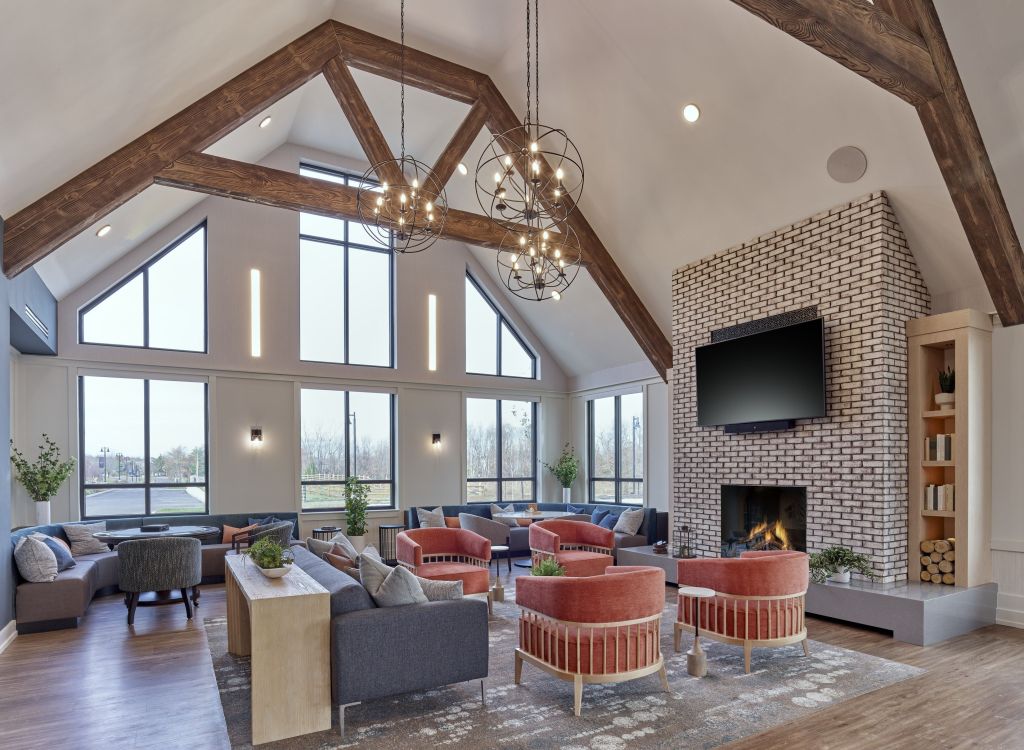
JAG has partnered with architecture firm AEI and IMC Construction in design. Image courtesy of Jefferson Apartment Group 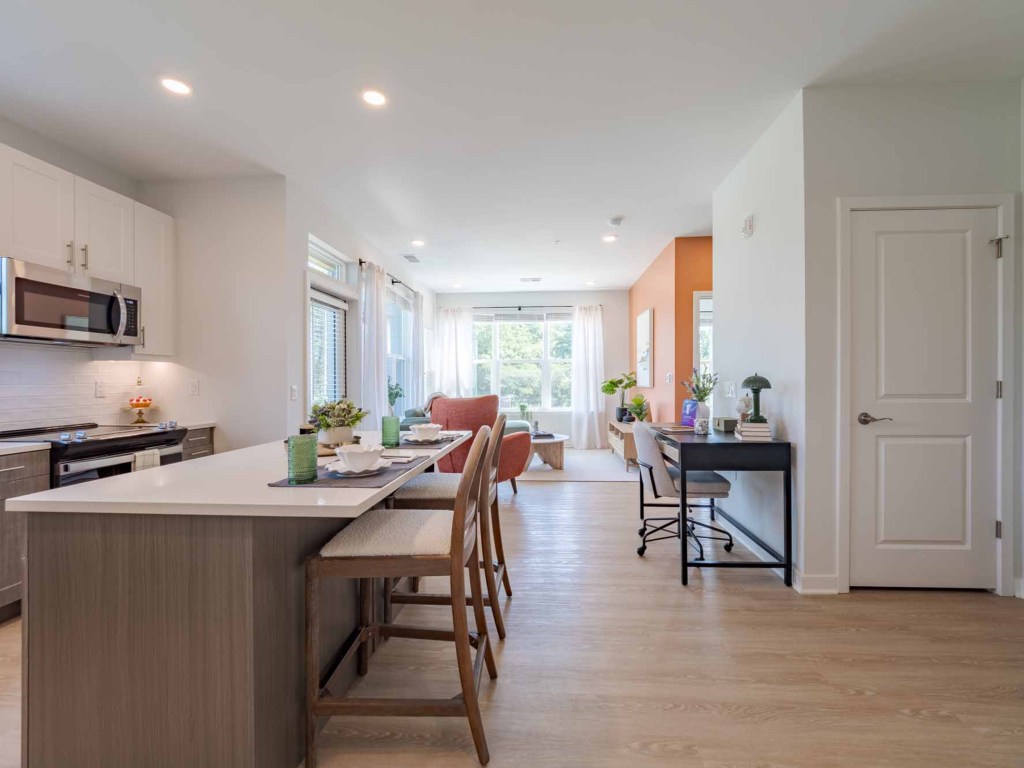
The project features bright, contemporary kitchens designed for everyday living. Image courtesy of Jefferson Apartment Group 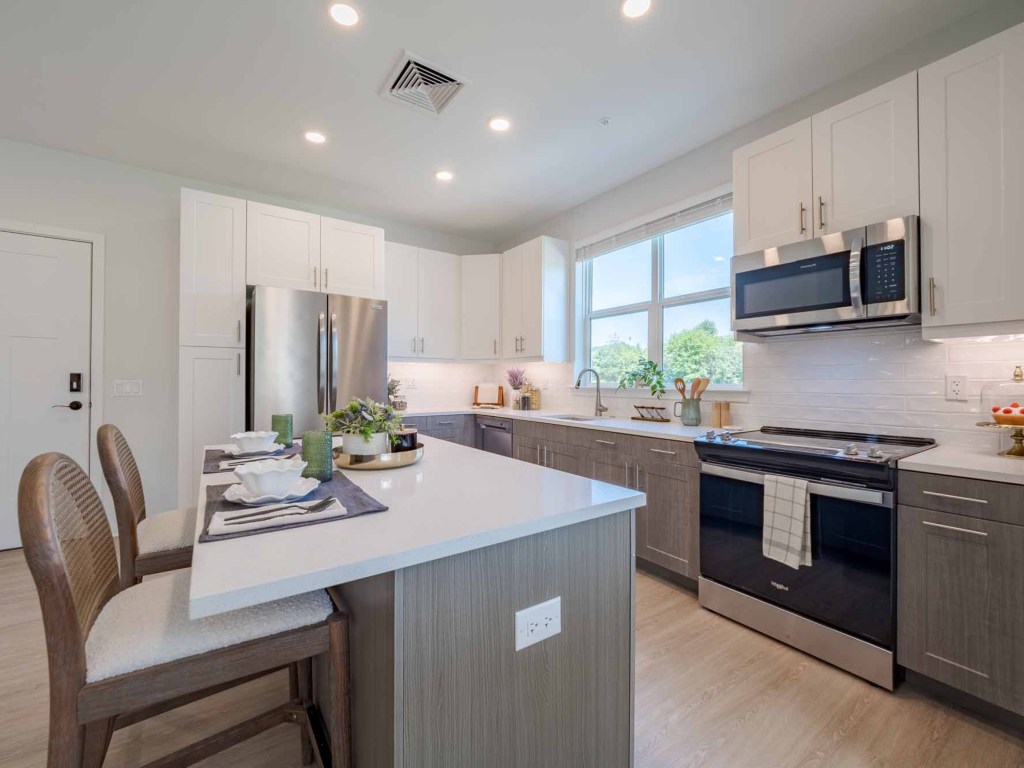
Units are amenitized with market-rate finishes. Image courtesy of Jefferson Apartment Group
If The Crossings illustrates suburban mall repositioning, the Willets Point redevelopment in Queens, N.Y., represents the ability to revive decrepit urban industrial land through housing construction. Backed by Queens Development Group, an entity formed by a joint venture between The Related Cos. and Sterling Equities, the $3 billion transformation of the 62‑acre site adjacent to Citi Field is one of New York City’s largest mixed‑income redevelopment efforts in decades.
“Willets Point is proof of what can happen when the public and private sectors come together,” said Frank Monterisi, executive vice president at Related Cos. “This historically underutilized area is being transformed into a flourishing mixed‑use neighborhood, anchored by the largest 100 percent-affordable, new construction housing development in New York City in 40 years.”
At its core is a residential program to deliver roughly 2,500 affordable units, about 1,100 of them in the first phase. Units are being built to market‑rate standards, paired with amenities like gyms, activated rooftops, gardens, and in‑unit washers and dryers in larger homes. Monterisi emphasized the intentionality of the design: “We are building quality housing for real people,” he said.
Delivering that vision required extensive groundwork. Developers remediated more than 200,000 tons of contaminated soil, elevated the site above the 100‑year floodplain and coordinated infrastructure improvements, as well as constructing new streets and open‑space plazas. With remediation complete, the first 880 units are slated to open this spring, and a third building with 220 units for low‑income seniors is planned.
Housing at Willets Point is designed to function within a larger ecosystem that includes retail, public space, a new school and Etihad Park, a 25,000‑seat stadium for Major League Soccer’s New York City Football Club. A focus on cross‑agency coordination and mutual priorities has been central to getting the development across the finish line, Monterisi noted.
READ ALSO: How Municipalities Can Speed Up Housing Development
“This generational investment in the borough is expected to generate $6.1 billion in economic impact over 30 years, creating 1,550 permanent and 14,200 construction jobs, laying the foundation for a thriving community infrastructure and a strong future for Queens,” Monterisi said.
The region’s shift toward redevelopment anchored by mixed-income housing extends beyond megaprojects. In Orange, N.J., Gateway Merchant Banking is transforming the former Orange Memorial Hospital into a $350 million mixed-income development with 1,005 units—up to 20 percent affordable—alongside retail, municipal space and preserved historic structures. In Rochester, N.Y., the Gateway Building adaptive reuse will deliver 129 mixed-income apartments for households earning 30 to 80 percent of AMI paired with ground-floor retail.
Suburban markets are following suit. In Avon, Conn., Beacon Communities is converting an underused office park into a 100-unit mixed-income community, largely affordable and supported by public financing. Together, these projects underscore a clear trend: mixed-income redevelopment is not a complement to revitalization—it’s the engine.
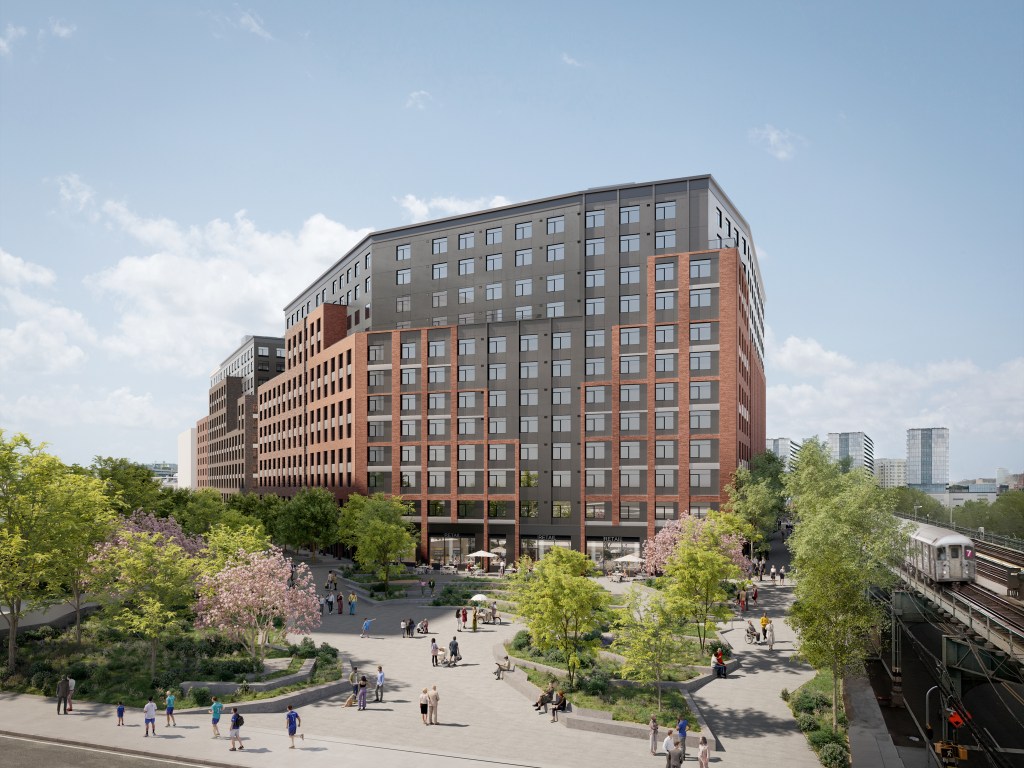
Supported by Queens Development Group, the $3B, 62-acre project near Citi Field is one of NYC’s largest mixed-income redevelopments in decades. Rendering courtesy of Queens Development Group 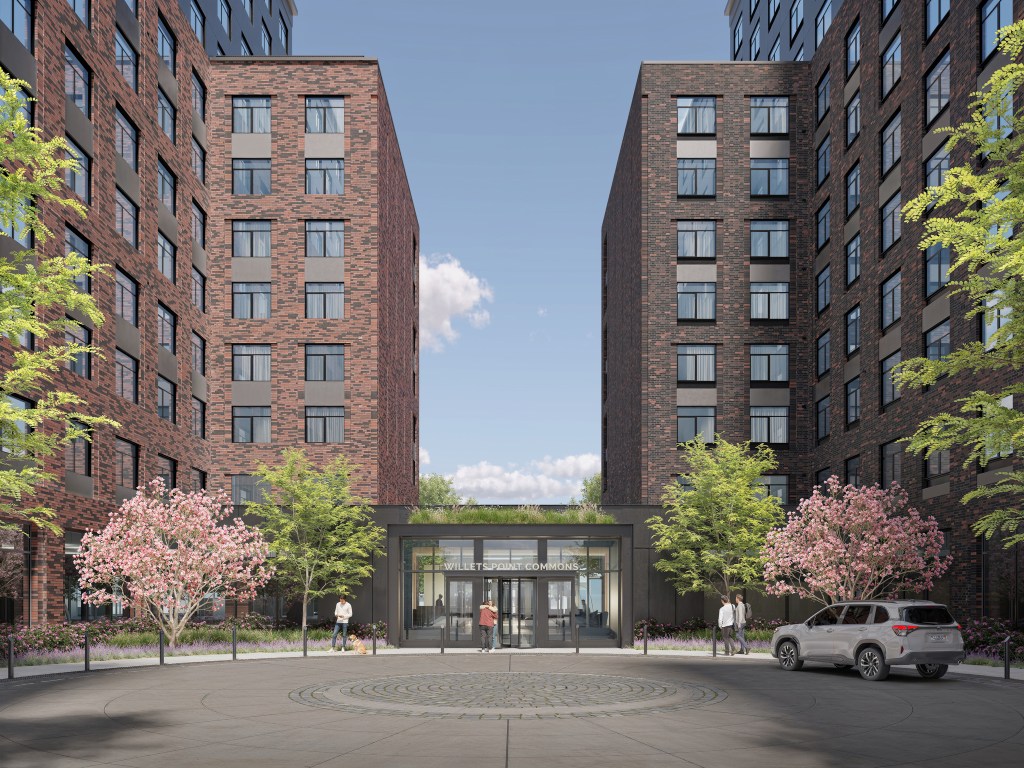
The project centers on delivering roughly 2,500 affordable homes, starting with 1,100 in phase one. Rendering courtesy of Queens Development Group 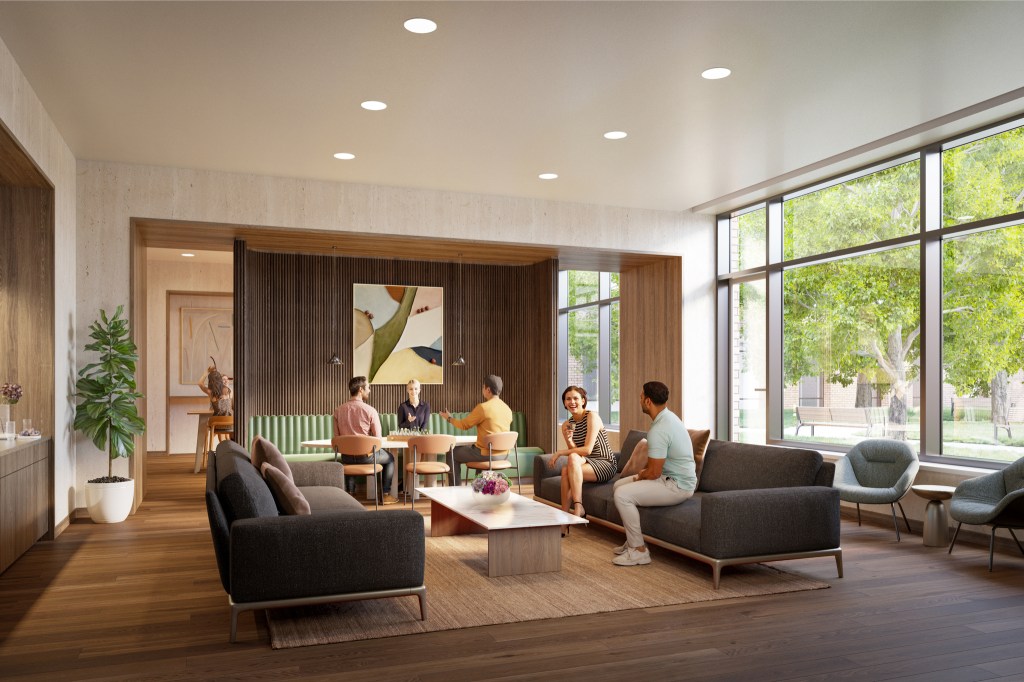
New Willets Point residences include on-site coworking spaces as part of the area’s redevelopment. Rendering courtesy of Queens Development Group 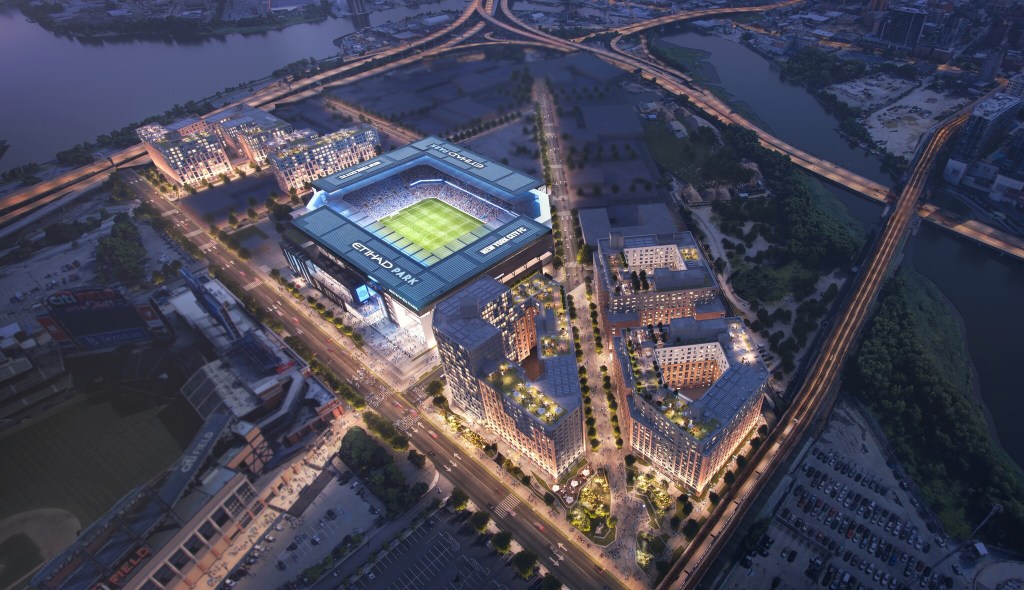
Etihad Park, NYC’s first purpose-built 25,000-seat soccer stadium next to Citi Field, is set to open for the 2027 MLS season. Rendering courtesy of Queens Development Group 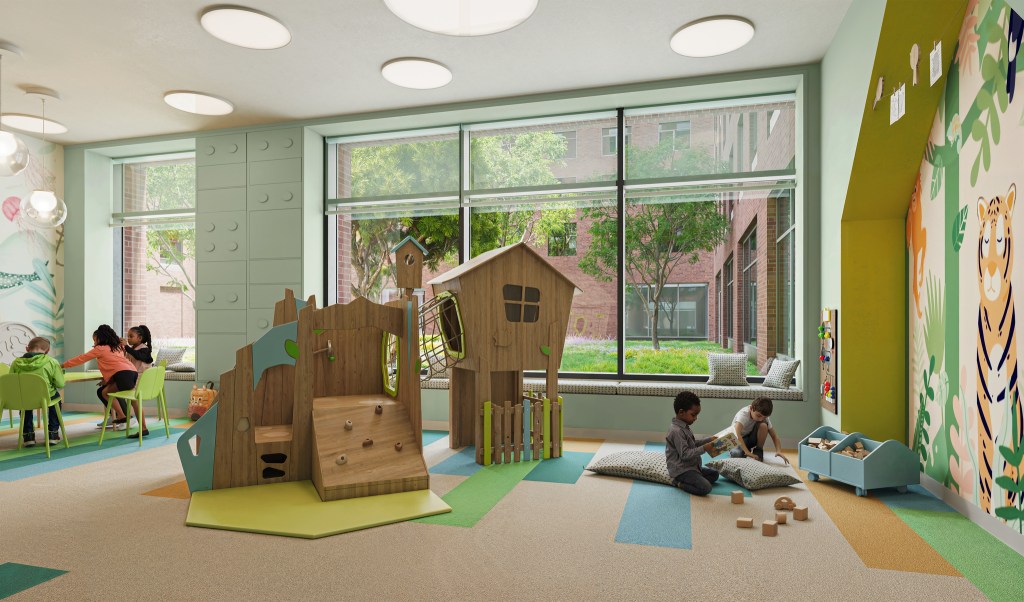
The project will also feature a playground for kids and storage lockers. Rendering courtesy of Queens Development Group 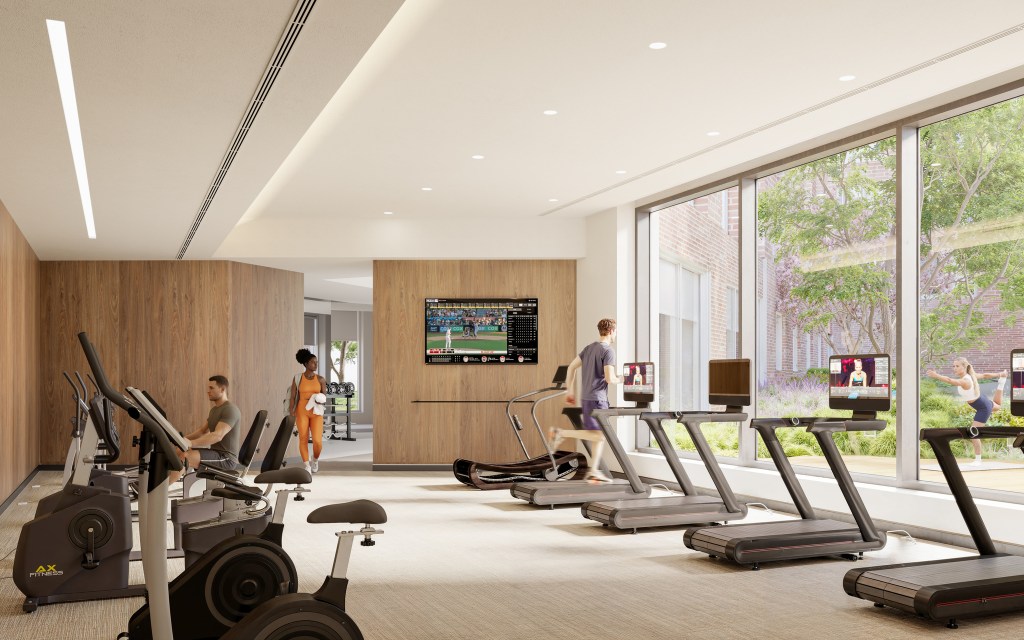
Units meet market-rate standards and include top-tier amenities like gyms or rooftops. Rendering courtesy of Queens Development Group
Mid-Atlantic: revitalization and public-private coordination
In West Baltimore, Md., decades of disinvestment left lasting scars on neighborhoods once served by public housing and retail corridors. Reservoir Square—led by MCB Real Estate in partnership with Atapco Properties, MLR Partners and Blank Slate Development—is a compelling example of how mixed-income housing‑led redevelopment can help reverse those patterns.
The project replaces a distressed site once derisively known as “Murder Mall” with a phased, mixed‑income district. Phase one centered on delivering 120 for‑sale townhome lots in collaboration with Ryan Homes, designed to reintroduce homeownership and attract future private investment.
That strategy is already showing traction, with roughly half the homes completed and additional units under contract. Future phases will bring approximately 200 apartments, including workforce housing, alongside substantial retail, office space and a long‑sought priority identified through robust engagement.
“What we heard from the community was that they desired a high‑quality grocery store,” said Theresa Stegman, vice president at MCB Real Estate, noting that aligning housing delivery with retail timing was critical. “Had we built the retail on day one, the grocer would have closed right after opening without the housing market to support it.”
Public stakeholders have played a defining role in the project as well. Early seed funding from the Maryland Department of Housing and Community Development enabled demolition and infrastructure work, while the City of Baltimore and quasi‑public partners helped structure financing and secure anchor tenancy. Those coordinated efforts have already translated into measurable results: West Baltimore has seen a nearly 60 percent reduction in neighborhood vacancy since 2017, significantly outpacing citywide trends and signaling early stabilization.
The investment impact is also evident in key indicators such as poverty and area median income. The area was categorized as “severely distressed” by 2015 Census data, with a poverty rate greater than 30 percent. “Today, the census tract is no longer even considered distressed,” Stegman added.
Just south of West Baltimore, the Baltimore Peninsula (formerly Port Covington), a once underutilized industrial waterfront, is being transformed into a 14 million-square-foot mixed-use district anchored by mixed-income housing. Initially led by Weller Development Partners with backing from Sagamore Ventures and Goldman Sachs—and now evolving with Hines in a more prominent role—the project reflects a broader shift in large-scale redevelopment strategy.
The district’s first residential buildings, such as Rye House and 250 Mission, have already delivered several hundred units including affordable housing. Those projects brought more than 500 households on site and established a critical residential base. Future phases, including Locke Landing, will expand the mixed-income housing pipeline with apartments, townhomes and condos.
READ ALSO: Beyond 9-to-5: How Office Conversions Are Reviving Downtowns
In Washington, D.C., Brookfield is building The Yards on the Anacostia River, a 42‑acre former federal industrial site into a waterfront neighborhood with approximately 3,400 multifamily units, 1.8 million square feet of office space and 400,000 square feet of retail. The mixed‑use plan embeds mixed-income housing and affordability across multiple phases.
Brookfield Properties’ Vela (Phase II) delivered 379 units including 76 affordable homes at approximately 50 percent AMI, and the 101 Tingey Street building, currently advancing through zoning approval, will bring 127 100 percent affordable units and retail space. These purposeful inclusions reflect a broader regional trend of housing not just being an add‑on, but a focal point of placemaking on large redevelopment parcels.
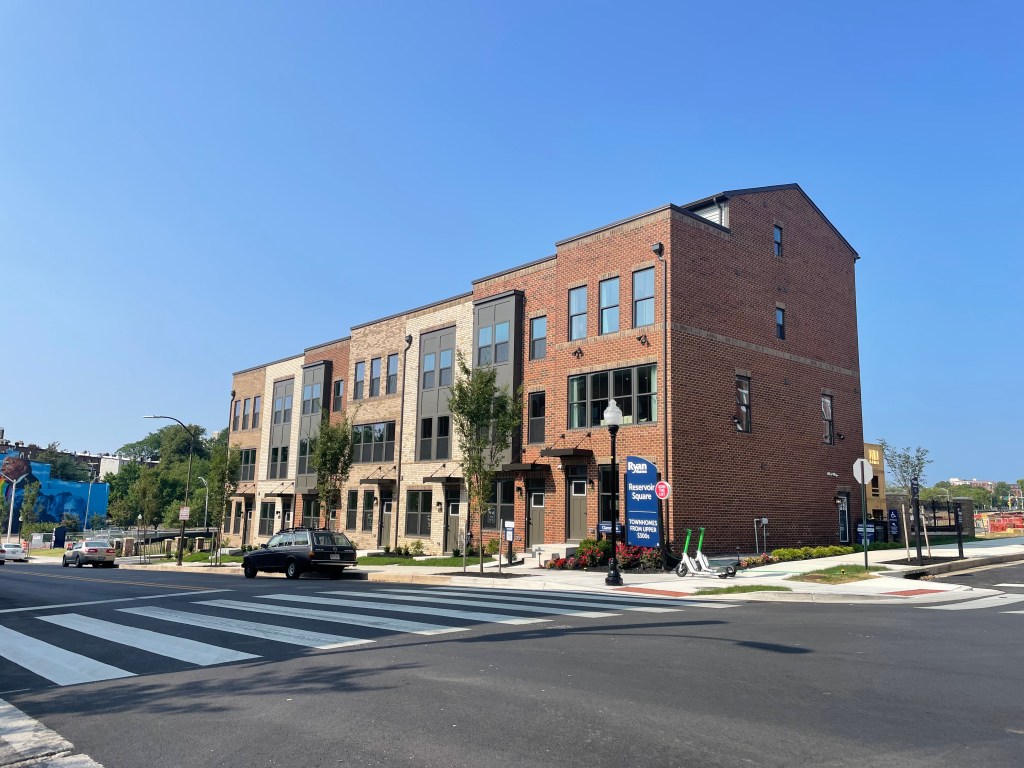
Formerly public housing and the ‘Murder Mall,’ Reservoir Square is being redeveloped with offices, homes, retail and public spaces. Image courtesy of MCB Real Estate 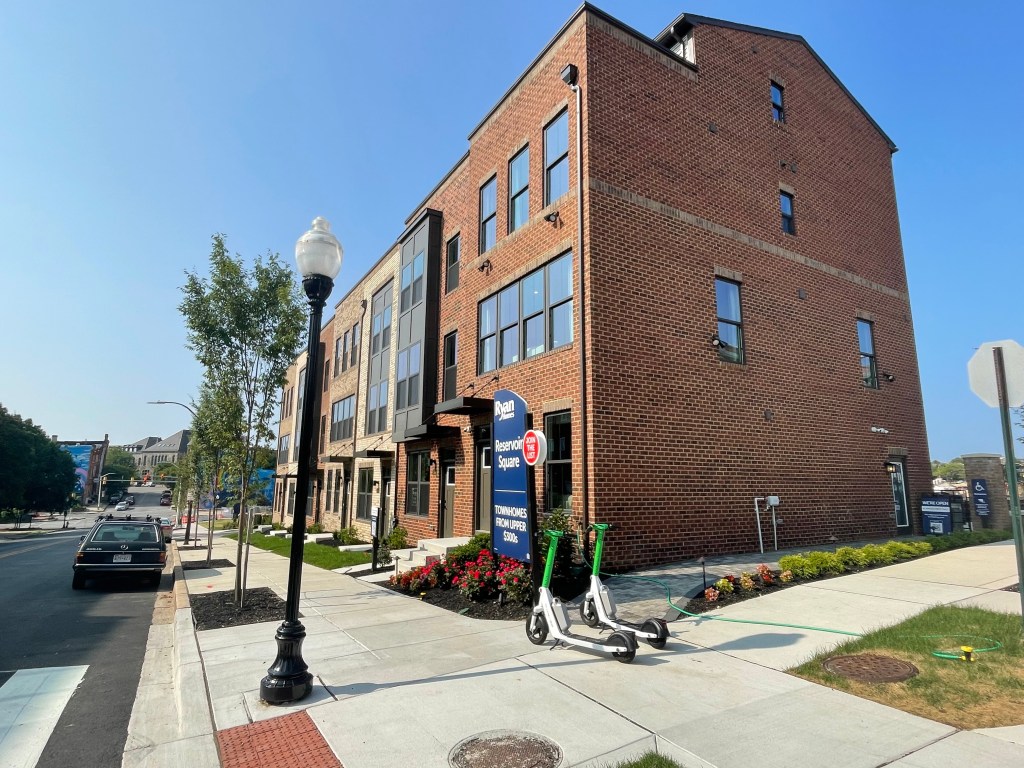
Spanning eight acres near public transit, Reservoir Square is a bold, large-scale redevelopment project. Image courtesy of MCB Real Estate 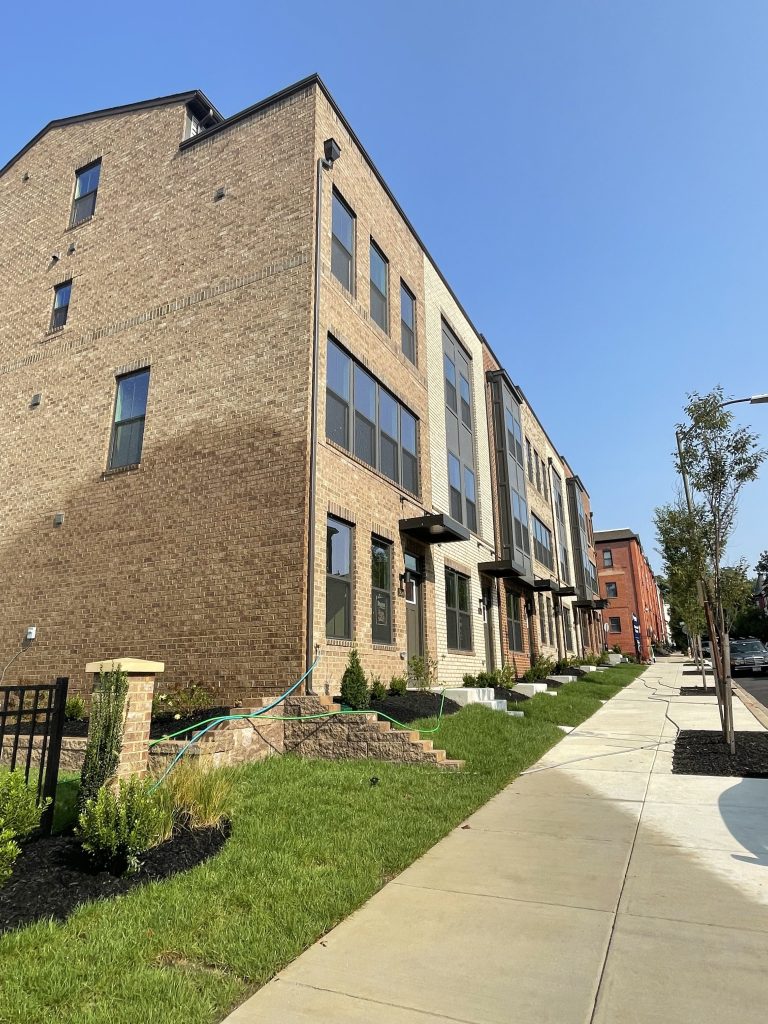
The development of Reservoir Square is spearheaded by MCB Real Estate, Atapco Properties, MLR Partners and Blank Slate Development. Image courtesy of MCB Real Estate 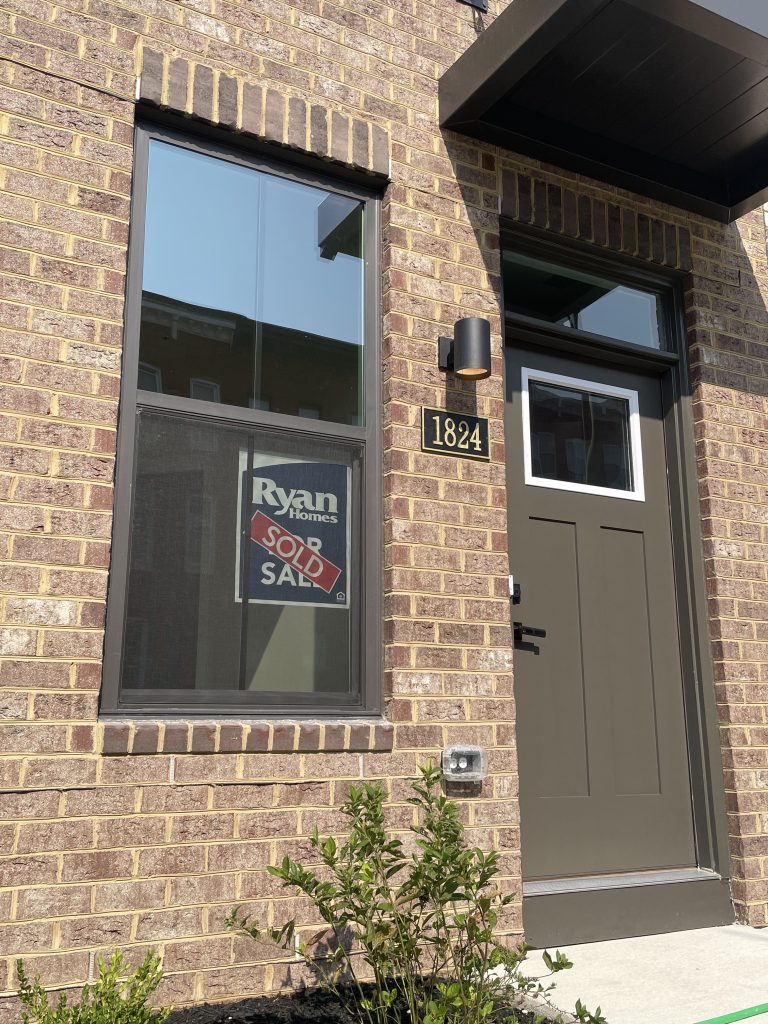
The project shows how smart capital, flexible planning and public-private partnerships can transform a distressed site into a thriving community. Image courtesy of MCB Real Estate
Further south in Norfolk, Va., the $1 billion redevelopment of Calvert Square and Young Terrace is designed to replace decades‑old public housing with a vibrant, mixed‑income community. Led by Gilbane Development in partnership with the Norfolk Redevelopment and Housing Authority and the City of Norfolk, the 55‑acre project will deliver more than 1,000 homes, incorporate green space and expand walkability and neighborhood amenities.
Across the Mid‑Atlantic, these case studies reveal a common thread: Housing‑led redevelopment can stabilize neighborhoods long affected by disinvestment when paired with strong public‑private coordination, phased deliveries and meaningful community engagement.
Southeast: community-driven transformation
In Atlanta’s historic West End neighborhood, the long‑anticipated redevelopment of the West End Mall embodies the region’s drive to reposition defunct retail into community‑centered, housing‑anchored places. Opened in 1973 as a suburban shopping hub, the mall declined over the decades. Multiple stalled plans which showed that retail‑only visions alone would not align with neighborhood needs.
Through a partnership between BRP Cos,, The Prusik Group and public‑sector stakeholders including the Atlanta Urban Development Corp., the 12.5‑acre site is being reimagined as One West End, a 1.7 million‑square‑foot mixed‑use, mixed‑income district. Roughly 900 multifamily units are planned, with an affordability structure that includes 70 percent workforce housing, 20 percent at 50 percent AMI and 10 percent at 80 percent AMI. Also in the mix is student housing tied to nearby Atlanta University Center institutions.
“We were drawn to this site because it offers a rare combination of strategic location, exceptional connectivity and a strong, long‑standing community,” said Meredith Marshall, co‑founder & managing partner of BRP Companies. “Beyond its logistical advantages, the area has a rich cultural history and a vibrant community.”
Andrew Katz, principal of The Prusik Group, explained that deep data analysis shaped the residential strategy: “When we looked at the local demographics, we saw a community with diverse income levels, household types and life stages. That reality informed our decision to design a unit mix with a significant portion of units capped at 50 and 80 percent of area median income.”
Community engagement has guided everything from the residential composition to commercial tenant preservation plans. Early milestones include Planet Fitness West End signing the first official lease, ensuring continuity of a beloved legacy business throughout the first phase of construction.
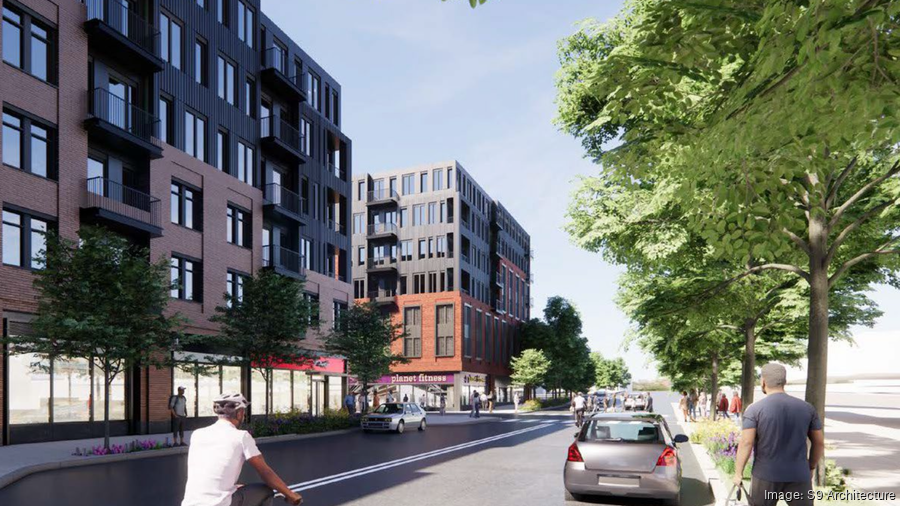
The 1973-built Mall West End is being transformed into One West End, a $450 million mixed-use project shaped with community input. Preliminary rendering by S9 Architects 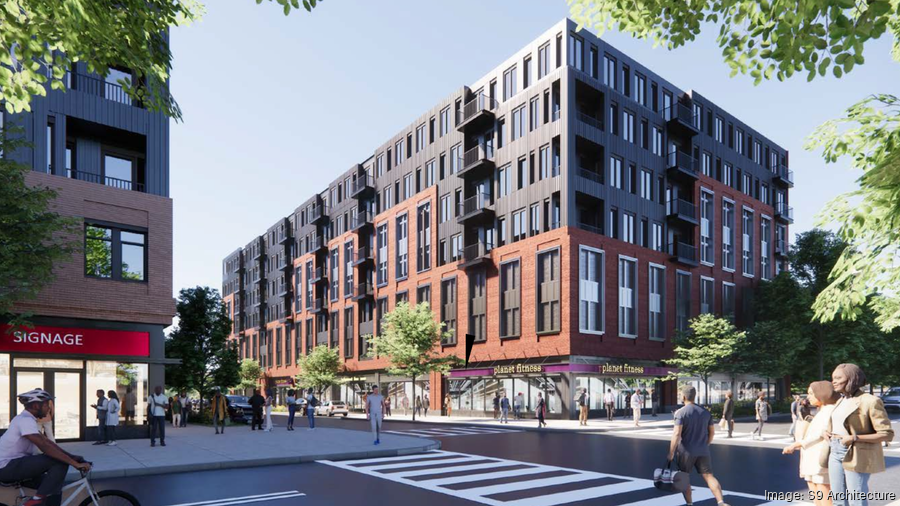
Actual construction is scheduled to start in West End in the fourth quarter of 2026. Preliminary rendering by S9 Architects 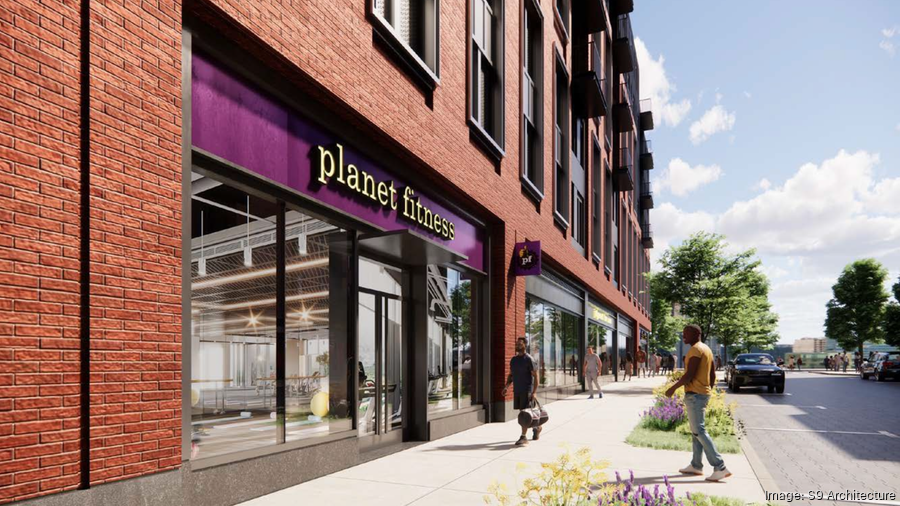
Planet Fitness has agreed to lease roughly 20,000 square feet of space at One West End. Preliminary rendering by S9 Architects
Similarly, the Mill Creek Redevelopment Project in Huntsville, Ala., is anchored in housing and its ability to benefit the surrounding community. Led by the City of Huntsville and the Huntsville Housing Authority and guided by McCormack Baron Salazar, the multi‑year, $350 million initiative replaces aging public housing at Butler Terrace and Johnson Towers with a new mixed‑income community.
Backed by a $50 million Choice Neighborhoods Implementation Grant from HUD, Mill Creek will deliver more than 700 units across five phases—including workforce, family and senior housing—as well as essential services like medical clinics, childcare and retail. Infrastructure enhancements include Mill Creek Park and improved streetscapes, visually knitting the project into the surrounding neighborhood.
Elsewhere in the Southeast, cities are rethinking underutilized sites as mixed-income housing opportunities. In Atlanta, Gorman & Co.’s Sweet Auburn Grande redevelopment is transforming a long-vacant, fire-damaged former Walgreens site. The finished product will be a denser, mixed-income community that expands housing choice while reinvesting in a historically significant urban district.
West Coast: infill, law and housing as catalyst
The West Coast’s infill renaissance is exemplified by the 600 Foothill project in La Cañada Flintridge, Calif., where regulatory evolution and design intention combine to deliver a high-quality mixed-use, mixed-income housing development. Jonathan Curtis, managing member of Cedar Street Partners, notes how the site’s walkable downtown context—flanked by such civic anchors as a post office, high school, churches, and retail—make it ideal for mixed-income housing that supports daily life without heavy car reliance.
The five-story, 128,000-square-foot 600 Foothill integrates 80 multifamily units, including deed-restricted affordable homes, with 7,300 square feet of office space and 16 short-term stay suites. “We structured the program so the non-residential pieces complement the neighborhood, rather than compete with it,” Curtis said. That helps ensure the residential portion remains calm, livable and pedestrian-friendly. Two subterranean parking levels with 192 spaces preserve the street edge for walkability.
The project also became a landmark builder’s remedy case under California law. A March 2024 Los Angeles County Superior Court ruling ordered the city to process the project under the Housing Accountability Act, clarifying pathways for mixed-income development in jurisdictions out of compliance.
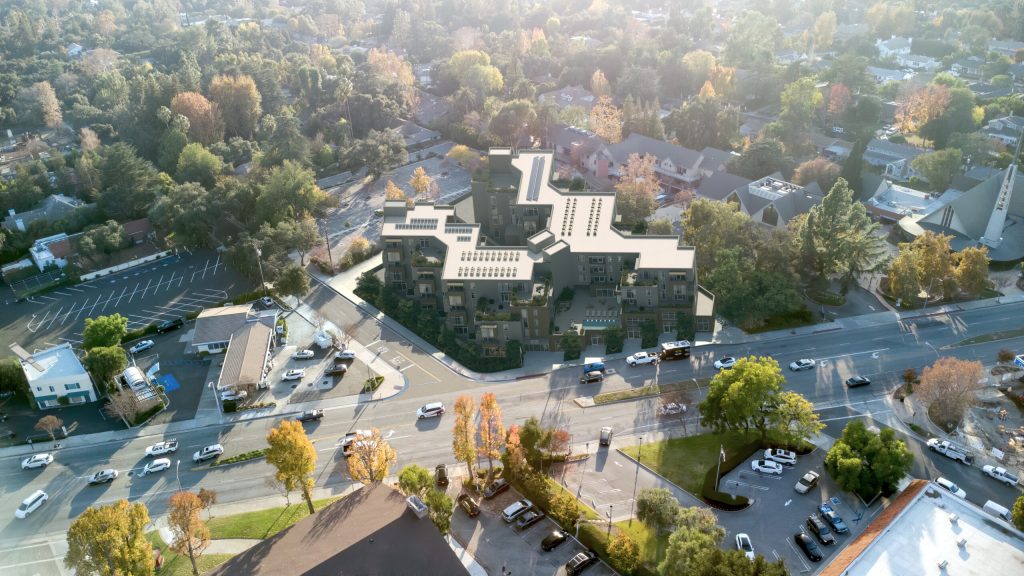
The five-story, 128,000-square-foot 600 Foothill project includes 80 multifamily units, featuring deed-restricted affordable homes. Rendering courtesy of Cedar Street Partners 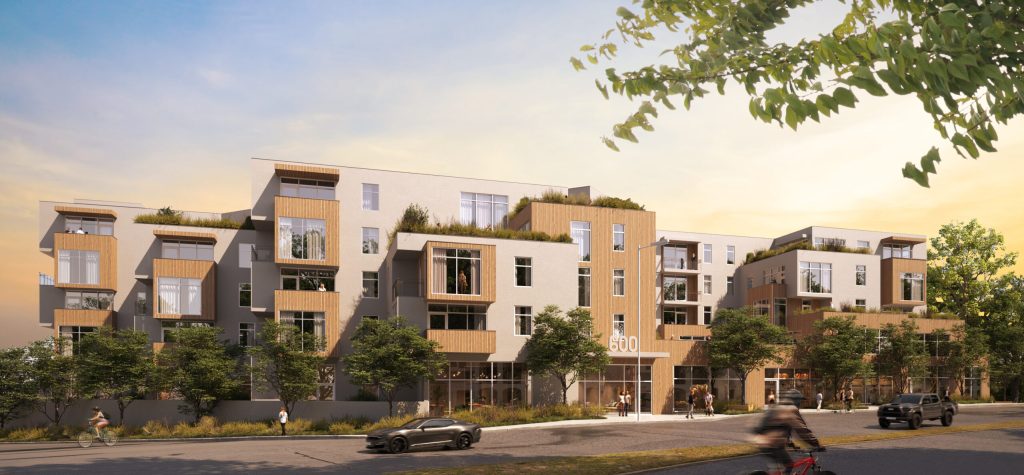
A March 2024 court ruling required the city to process the project under the Housing Accountability Act, setting a precedent for mixed-income development. Rendering courtesy of Cedar Street Partners
Beyond 600 Foothill, the West Coast has seen similarly ambitious, housing-driven transformations. In Seattle, the Yesler Terrace Redevelopment is converting a historic 30-acre public housing site into 5,000 mixed-income housing units, replacing older public housing and adding streets, parks and community spaces.
In South Orange County, Calif., the Village at Laguna Hills is transforming an aging 68-acre mall into a mixed-use village with 1,500 apartments—including 200 deed-restricted moderate-and low-income units—office space, a hotel and public parks, demonstrating how mixed-income housing can anchor large-scale redevelopment.
Adaptive reuse projects and office-to-apartment conversions are also reshaping urban cores. Portland’s Pepsi Blocks converts a former bottling plant into roughly 1,130 residential units, with some affordable zoning incentives, alongside 450,000 square feet of office and 30,000 square feet of retail. Metro Los Angeles and San Francisco are seeing multiple underused office buildings converted into mixed-income housing under the Affordable Housing and High Road Jobs Act of 2022 and Senate Bill 6, the Middle Class Housing Act of 2022. Notable examples include the 35-story ARCO Tower in downtown Los Angeles, Jamison Properties’ 695 Vermont project in Koreatown and San Diego’s 101 Ash Street, all designed to provide units for a mix of income levels.
Across the region, these projects illustrate a broader trend: Underutilized and infill sites are no longer afterthoughts. but catalysts for resilient, inclusive neighborhoods, with mixed-income housing at the core of urban redevelopment strategies.