Will Multifamily Investment and Development Volumes Grow in 2026?
Walker & Dunlop’s survey at the NMHC meeting aims to answer these questions and many others.

Sentiments have remained largely positive across the multifamily sector. Cautious optimism permeated the atmosphere at the annual National Multifamily Housing Council meeting, which took place in January.
Executives at some of the largest owners of multifamily properties held the belief that macroeconomic conditions are on the mend for the sector, expecting an uptick in construction and investment activity throughout 2026, according to a Walker & Dunlop survey that polled 118 participants at the NMHC meeting.
Nearly 80 percent of respondents believed apartment construction activity would either increase or retain its current pace, while just 20.3 percent reckoned a decrease might be around the corner. This sentiment mirrors NMHC’s own December survey, which also revealed that most participants considered the construction outlook to be positive.
Current questionnaire respondents held strong opinions on investment, with just 1.7 percent being uncertain about what the future might hold. More than half, 62.7 percent, expected multifamily acquisitions to increase in 2026, while 35.6 percent believed the opposite to be true. Should this prediction come true, it would mark the third consecutive increase, as according to a Yardi Matrix report, the annual multifamily volume grew in 2024 and 2025.
READ ALSO: Multifamily Cap Rates Stabilize as Investor Sentiment Strengthens
Of note was the sentiment surrounding rent performance, especially as it relates to the Sun Belt having 36.4 percent of participants in agreement regarding its potential to shine in 2026, placing it on equal footing with the Northeast. The Midwest was also a strong contender, believed by 22 percent to have great rent growth potential, followed by the West (3.4 percent) and other regions (1.7 percent).
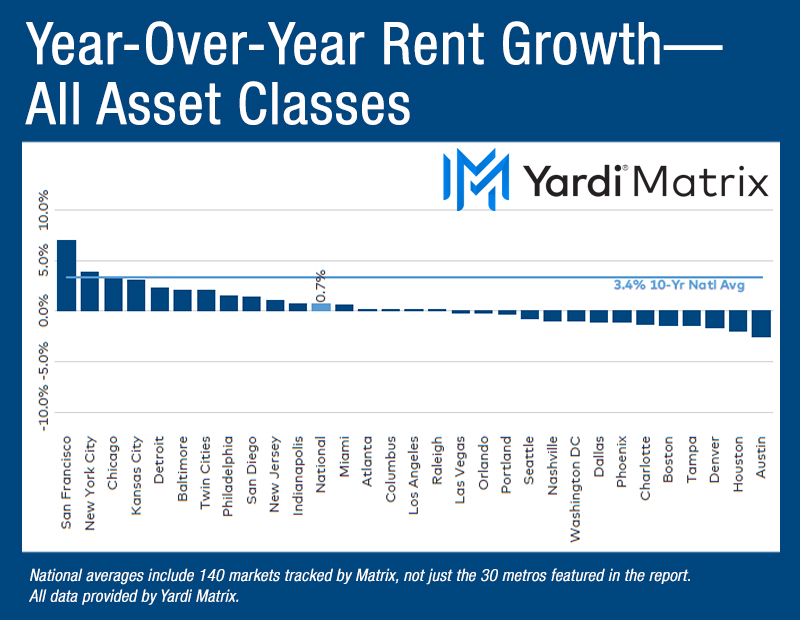
The Northeast and Midwest’s potential for growth was echoed by Yardi Matrix’s rent forecast. Still, a more cautious approach emerged for the Sun Belt, as the region still has a glut of supply to be absorbed which may continue placing downward pressure on advertised rates.
Speaking of supply, the consensus among survey respondents was that HUD played a key role in supporting inventory expansion. More than 91 percent of participants considered the agency to be either effective or very effective, while nearly 7 percent had a neutral approach. Only 1.7 percent believed HUD to be somewhat ineffective.
Policy changes continue shifting multifamily investment and development outlooks
In fact, HUD’s role in development might even exceed expectations with the passing of The Housing for the 21st Century Act, which gives the department more agency in shaping state and local zoning regulations.
While sentiment regarding particular sector issues was buoyant, a more reserved and cautious outlook emerged for multifamily macroeconomic conditions, nearly dividing respondent opinion in half. Almost 52 percent of participants postulated that these circumstances may improve, while close to 45 percent held contrarian opinions. The remainder was uncertain.
What remains certain is that change is just around the corner with President Donald Trump’s nomination of Kevin Warsh as chairman of the Federal Reserve. While Warsh still requires a Senate confirmation, industry leaders such as Paul Rahimian, CEO of Parkview Financial and Brian Connolly, founder and CEO of Feasibly, previously told Multi-Housing News that this nomination may spur development, should rates go down and the economy stabilize.