The New Jersey Architect Carrying the Blueprint Forward
Vincent Myers of DIGroup reflects on growing up in architecture, finding purpose in civic design and leading with care.
Editor’s note: This interview has been edited for length and clarity. The full conversation is available on our YouTube channel.
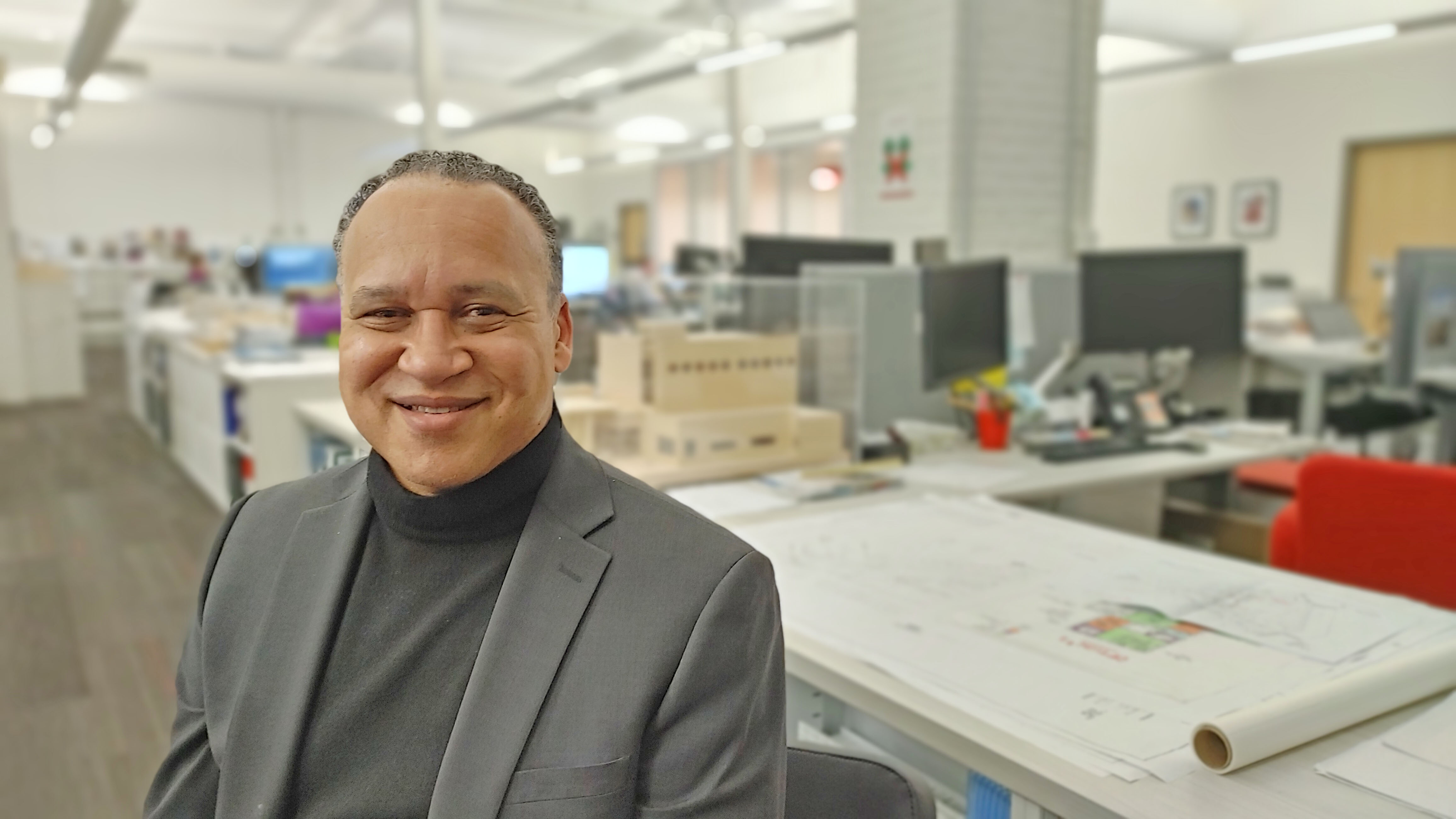
“Architecture is the mother of all arts,” believes Vincent Myers, co-founding principal & president of New Jersey–based DIGroupArchitecture. As the firm marks its 20th year, Myers reflects on a career shaped as much by legacy as by architecture.
Raised in the orbit of his architect father, Myers grew up seeing buildings not simply as structures, but as instruments of opportunity. That early influence stayed with him. Later on, he built DIGroup into a minority-owned practice focused on preschools, higher education facilities, libraries, research laboratories, medical centers and senior care communities—spaces that he often describes as “architecture for a change” and “places of independence and dignity.”
Recognized last year with the American Institute of Architects’ Diversity in Business Leader award, Myers continues to lead with a focus on service and long-term impact. In this interview with Multi-Housing News, he reflects on mentorship, responsibility and the kind of legacy he hopes his work will leave behind.
Your father was the first African American architect in New Jersey. How did growing up around that legacy shape the way you see architecture, not just as a profession, but as a tool for representation and community-building?
Myers: When I was growing up around my father, I really saw him as a unicorn. It took me a really long time to understand and appreciate exactly what was going on because it was all very dynamic. It had to do with exposure. What I mean by that is that so much of a young person’s life is centered on how much they’re exposed to different things. In this particular instance, the exposure [had to do with a] wide variety of things, including the fact that he was one of the first Black architects in the state of New Jersey. At a young age, I didn’t understand that.
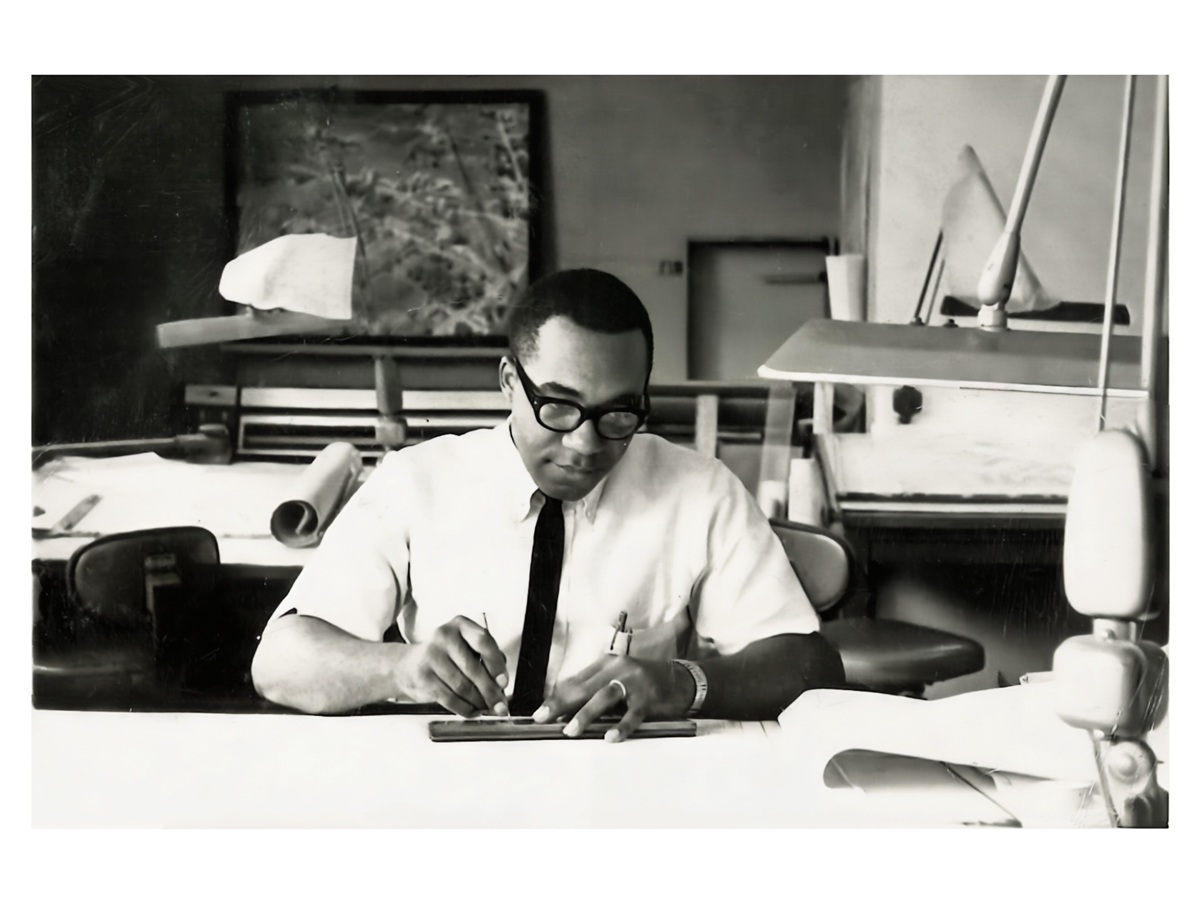
When I think back in terms of the uniqueness of my experience, I show people a picture of him working on a drafting board and with a round light shining on him. I was only four or five years old. It’s those kinds of things—where I was playing on the floor and he was doing his work—that I didn’t know what meant [at that time].
When I reflect back on that, not only was it exposure from the standpoint of just a very solid father, but also the exposure to the profession and to art, exposure to ultimately running a business. He owned his own business in Princeton, N.J. When that’s around you for a very long time, you kind of take it for granted. You don’t really understand exactly what’s going on, but certainly as an African American man I appreciate that more.
Exposure is confidence-building, it’s that uniqueness. It’s powerful when I see younger people trying to get involved in architecture. I’m probably one of the luckiest people in the world because I had that exposure. I saw it all in front of me from a very early age, and then it wasn’t until after I got out of college that everything started to make total sense to me in terms of how lucky I was.
What does it mean to you to be able to create pathways for the next generation of Black architects and Black-owned architecture firms?
Myers: I’ll go back to my father. Something he taught me was involvement. He was constantly involved in supporting nonprofit organizations. It’s one of those things I didn’t really understand [growing up], but I sort of mirrored that when I got out [of college and into the world]. And I still am very involved in nonprofit organizations.
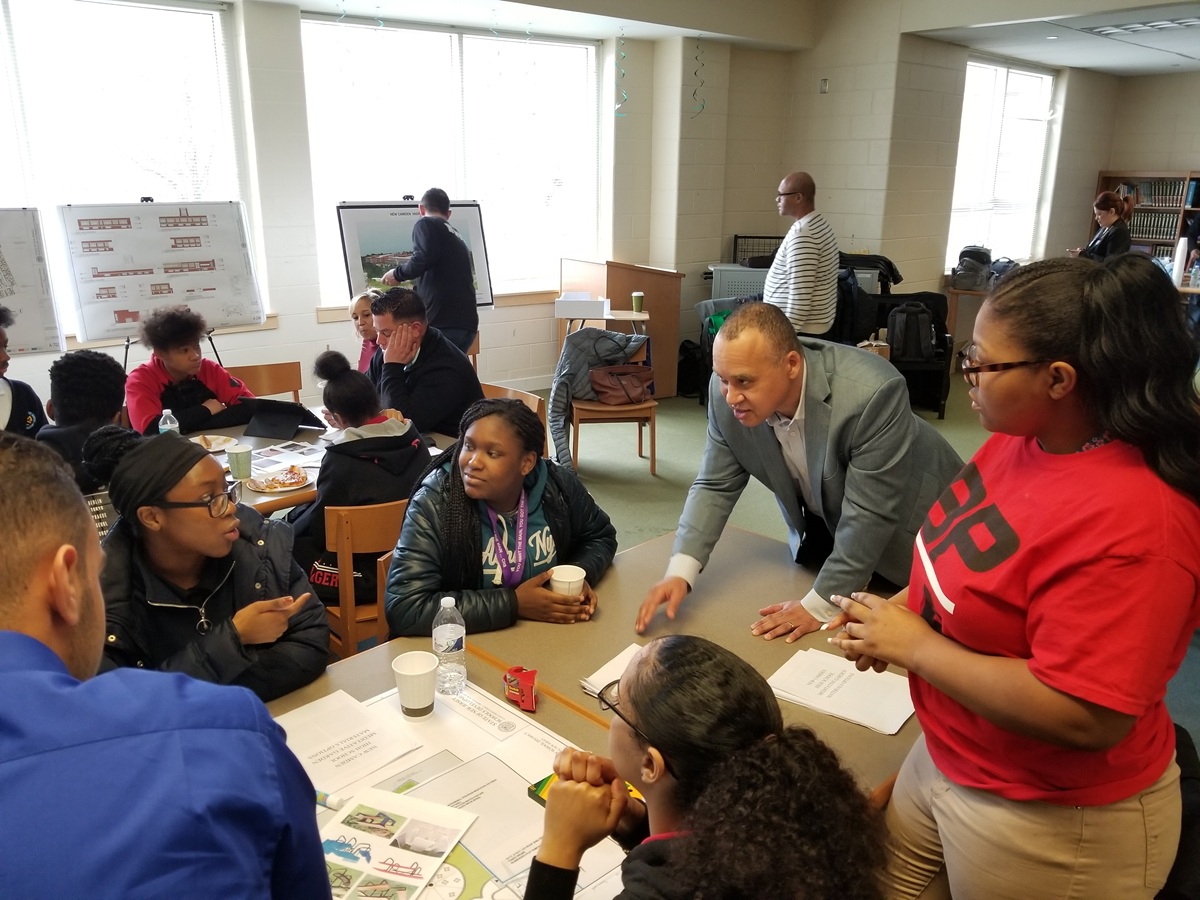
One of my favorite organizations that we’re involved in firmwide is Architecture, Construction and Engineering or ACE. It’s a national program, but it has a New Jersey chapter. This particular program helps disadvantaged youth in high school gain pathways to architecture, construction and engineering.
When we first started getting involved in it back in the early 2000s, my father and I would go to the schools in East Orange, N.J., and teach about architecture. There were several different high schools in New Jersey that were part of the ACE program, but we adopted these sponsored schools that had mostly African-American students, and you basically work with the students and have them design or build a project. At the end of the year, there was a competition and scholarships were given out.
It was fantastic because everything came full circle. I was there with my father. He died four years ago, and ACE started giving out a scholarship in his name. Every year, I participate in the selection of the individual that will get the scholarship.
READ ALSO: Senior Living Trends
Today, many of your projects sit at the intersection of education, health and community life. How have your personal values and life experiences influenced the kinds of projects you choose to pursue?
Myers: I think it has so much to do with me individually and my partners, collectively—the kinds of work that we find really rewarding, the kind of work we do really well, the kind of work where we feel as though, to some degree, there’s a real appreciation. Part of our mantra and our commitment is to support the communities where we work. And so, when we are able to go into communities and do work, we explore ways that we can add value to those communities and to those people. And it takes different forms. We are aware of what our role is.
Speaking of your role and your partners—your company emerged from the merger of four different entities, which can often dilute culture or vision. How have you protected shared values and long-term goals through that evolution?
Myers: Back in 2000, the state of New Jersey was sued by a legal entity because the state didn’t allow fair access to schools that were on par with suburban districts because the level of educational facilities wasn’t the same. Newark or East Orange or Jersey City, Camden or Trenton were all the poorest cities in the state of New Jersey, even though Trenton is a state capital. The schools hadn’t been touched for a very long time, they were left in a state of disrepair. So, the state of New Jersey was sued over this because those school districts in those poor cities didn’t have access to funding. They couldn’t raise taxes to get schools done. The state had to then dump money into the school systems.
Around that time in New Jersey, the architectural community was relatively small, meaning we all knew each other, by large. There were a couple of firms that started talking about the challenges of getting any of the work in the areas where we had already established contacts and had proven ourselves to be interested in doing that kind of work in the poor communities for those school districts. [These firms] didn’t have any money. That collective had a lot at stake because we were all small-size firms, for the most part.
The state of New Jersey had this program where only the largest firms in the state would get the largest school projects, and the smaller firms wouldn’t get anything. And we met and formed a group called NJK 12 Architects. We kept our individual firms and set up another firm to exclusively pursue that work. We ended up being the second-largest recipient of contracts in the state of New Jersey because, at the time, individuals within each district had a vote in terms of who they wanted to work with. Once we got the unlimited pre-qualification rating through the state of New Jersey, we could get the biggest projects, [all because] the people in the districts knew who we were.
A friend of my father’s, who he had worked with for years, asked if we were interested in joining the collective. My father was very forward-thinking and through that we were able to be successful. I joined the collaborative when we became Design Ideas Group, the precursor of DIG, back in 2006.
Our story was about collaboration. The type of work that we were interested in doing [had to do with] the history of the state of New Jersey. The state of New Jersey is still one of our biggest clients. Imagine four different firms with different cultures. We recognized in our minds that achieving one culture out of four firms takes time. That original idea of coming together and creating work in the poor school districts has never been stronger. Our most rewarding work has always been civic-based projects, those kinds of projects that help motivate people to do different things.
Over time, you became increasingly active in the senior living space. What spurred that interest?
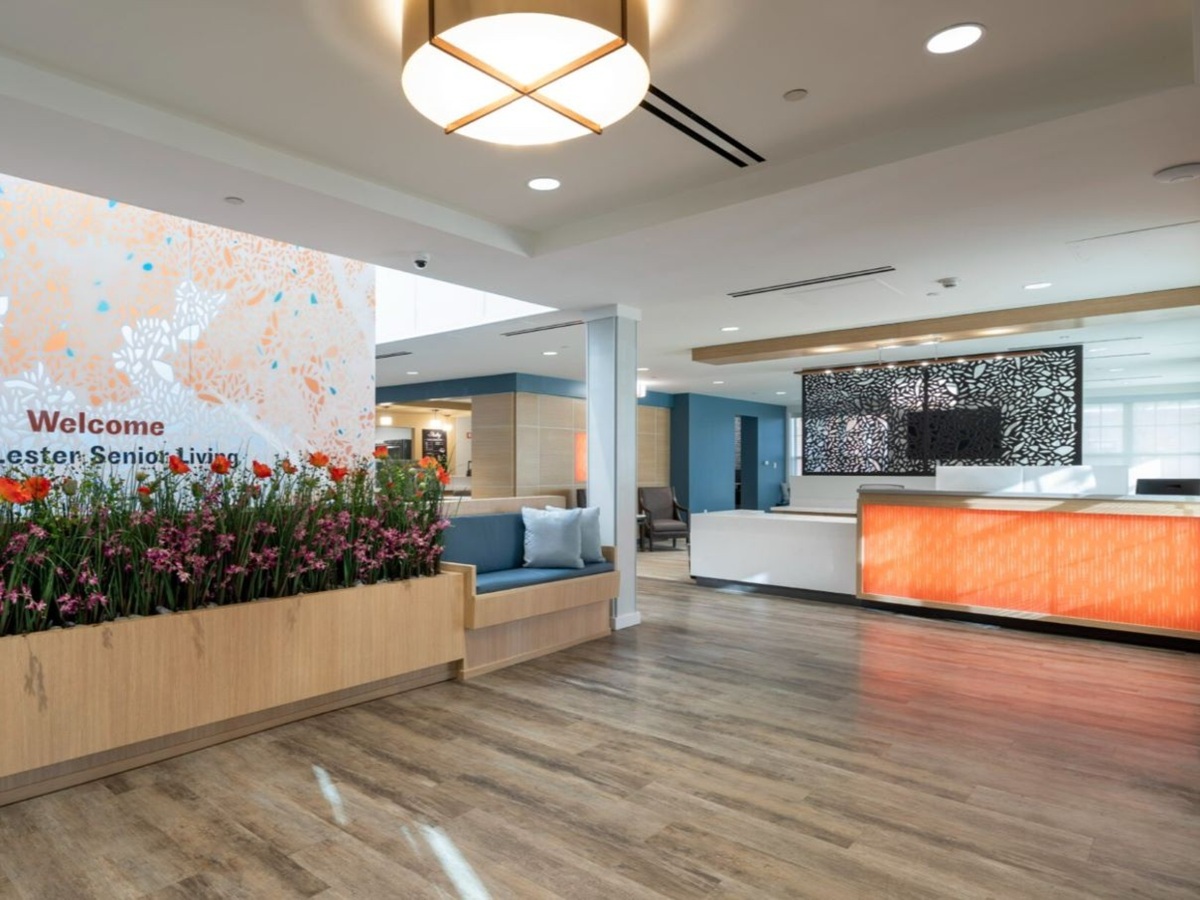
Image by Nicholas Venezia, courtesy of DIGroup Architecture
Myers: I’ll tie my father back into the story. When I was in middle school, there was an organization called Presbyterian Homes and Services, which provided senior care, independent senior living, housing for seniors etc., in the state of New Jersey. They were one of my father’s clients. When I was just a kid, he took me over to the CEO at the time, Paul Cheesbrough. I was just amazed that my father would meet these people and be in conversations with them. I thought it was fascinating how, as a Black person, he was able to communicate with white people.
During college, I worked on projects that my father was involved in with Presbyterian Homes and Services. For one of them, I delivered the plans to a 12-story affordable housing high-rise in Plainfield, N.J. [Later], I did the renovations to that same tower that I was delivering plans for when I was in college. It all went full circle, right? That shows the relationship and the history of time spent. I’m 65 years old now and I think it’s an amazing time to grow old in this society, meaning that you can still be viable and working. People used to retire at 55-60 years old and go to a retirement community. At 65, I can still come to work every day because I have my work ethic engrained in me, as do my other partners.
And so, what’s interesting about this particular market sector that we’re involved in is that we grew that business into a multi-state endeavor. We are doing work in Mississippi, Arizona, North Carolina, South Carolina, Florida, you name it.
READ ALSO: Adaptive Design: Not Just for Senior Housing Anymore
As a Black-owned minority business enterprise working on civic and institutional projects, how do you see representation influencing how these spaces ultimately serve their communities?
Myers: For us, every project is unique on its own. Every project that we work on is an opportunity for expression to create, first and foremost, spaces that energize people, spaces that unite people. There are very subtle ways [to do that] through an abundance of light and the colors and materials that we choose. These are all important factors to making those spaces a celebration of life, quite frankly.
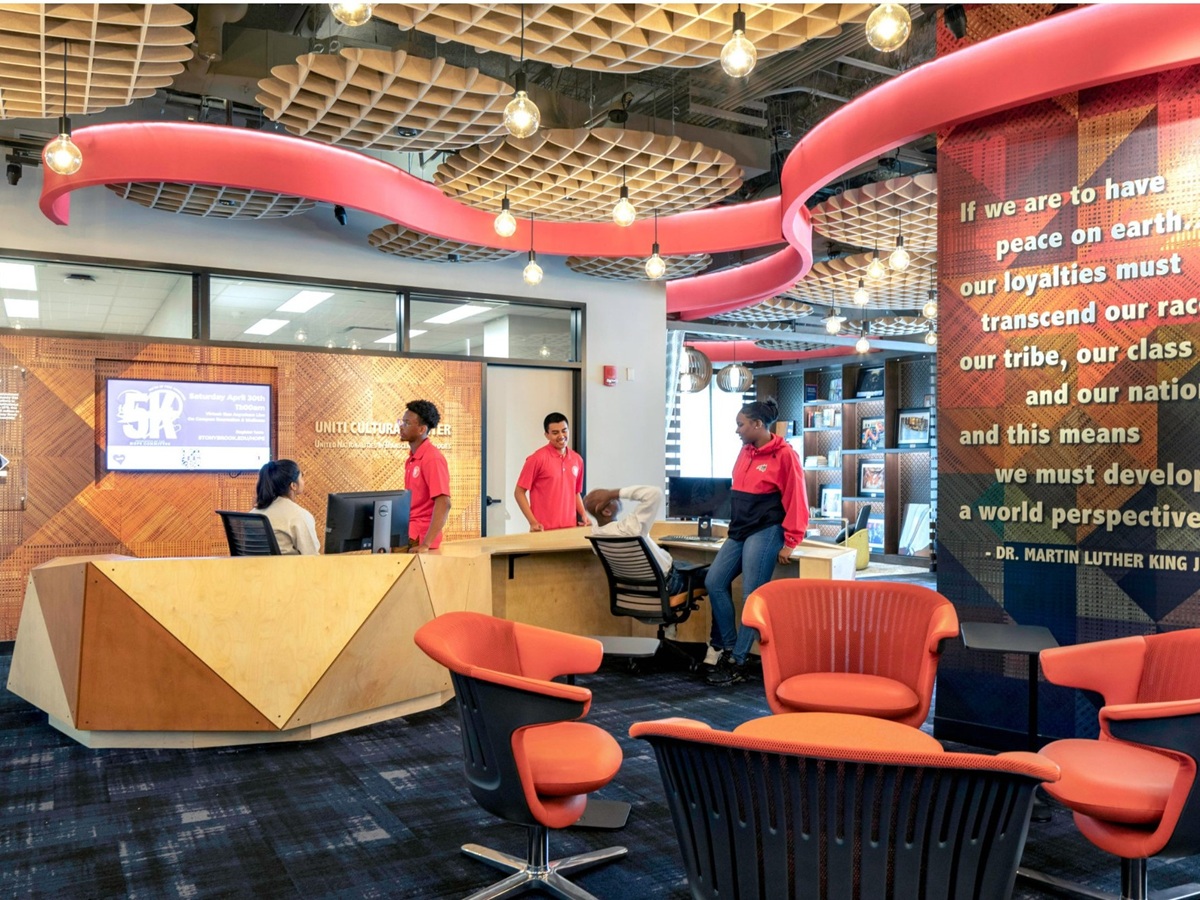
In some instances, there’s sort of a local, particular need or something special about a community or a building that we’re designing. Our goal is to find out what that is and what that means. In the case of the UNITI Cultural Center at Stony Brook University, you’ll see exactly what I’m talking about: Every piece of furniture, how the lighting was designed, the furniture, the bookcases, the reception area, all the pieces of furniture within the space—it’s magical. Our job is to kind of find out what that need is. Our goal is to find that story and see how we can represent it.
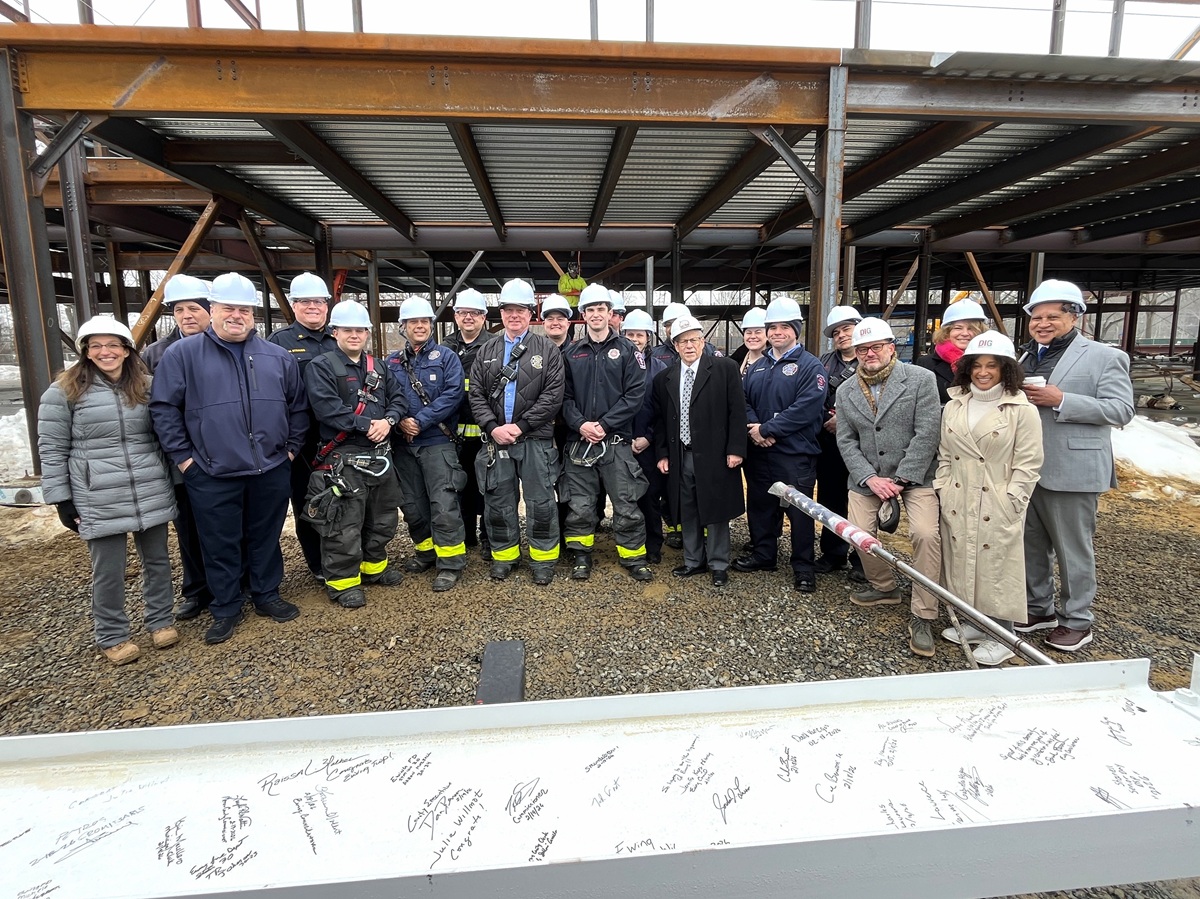
We’re [currently] doing a library in Long Branch, N.J., and we’ve connected to the heart and soul of the community. [Another project of ours is] the Ewing Senior and Community Center in Ewing, N.J., which is right next door to Louis Kahn’s Bath House. Kahn’s Bath House is historic—people come from all over the world to see it. Ewing Community Center is about 80,000 square feet and there are two-story sections of it that include storytelling which tie back to the community.
Tell us more about how your belief that a business should reflect the community it represents is translated into practice in your projects.
Myers: When we became DIG or Design Ideas Group in 2006, it was a merger of several companies. One of the stories that we like to talk about is that we weren’t an MBE firm at the very beginning. That was a conscious decision and it was an evolution because it paved the way not just for minorities, but women within the firm, who represent the core of the leadership going forward.
[That decision] was an outward expression to let people know who we are and what we stood for: diversity, equity, inclusion. There is a diversity of people that are merging into communities and workplaces. I’m very proud of the fact that, when we’re going into a boardroom, it’s powerful and rewarding to see that our firm is represented by that diversity.
When you know there are women and minorities at the table, there are smart people doing the right things for the community. When we are the architect of record or the architect assigned to a library or our project, we go out into the community and see on people’s faces ‘Wow! Who is this firm?’ [This] helps decision makers too, because they’re community leaders and it helps their constituency when they have people working on projects that will be within their community. It’s a very strong signal, it’s added value to the equation.
READ ALSO: Why Less Is More in Multifamily Design Today
Looking ahead, what changes would you most like to see in how communities are designed, and how does that vision connect to the legacy of Black architects who came before you?
Image courtesy of DIGroup Architecture
Myers: There needs to just be a little bit more focus from the standpoint of resources that help generate the kinds of funding that’s necessary to make sure that beacons within a community are maintained, places where people have a sense of security and pride and belonging. So many people care about such things and the desire is certainly there.
I’m blown away by how much people can do with practically nothing. I sit on a foundation board, [Mary Owen] Borden Foundation, and we provide money for nonprofits, about 27 to 30, in the Mercer and Monmouth counties in New Jersey. What fantastic stories! What people are doing and how they’re doing it and how they’re helping people, it’s very humbling. I’m always so proud of what they do and just glad that I’m part of an organization where I can help them provide that money.
Professionally, it’s very rewarding to see Black architects and other minority architects. I’m hoping that there are more of us that decide to pursue the profession because I think there’s a real opportunity for those individuals to emerge and to participate and to engage in a wonderful profession that’s extremely rewarding on multiple levels.
What are you most excited about and where do you hope to see the firm in five years?
Myers: We’re in a very exciting time. Every time, if you look back, regardless of what our plan was, we just found ourselves benefiting in a much more profound way from the great foundation than we had set our minds on. That foundation was never really about money. It was just about doing the right thing for people, doing the right thing for our people, making it through thick and thin. A place where people would be respected. It’s where they could call home and pursue great work and be mindful of and careful with our craft, the craft of architecture—the mother of all arts.
It certainly takes a lot of effort and I’m not sure where we’re going to go next, but I can tell you one thing: I couldn’t feel more invigorated by the potential the firm has to connect with other people to do fantastic work. It’s very exciting. We’re very fortunate. We’re very humbled. We’re very thankful. We’re enjoying it. It’s hard work for sure. We come in, do the right thing and just enjoy ourselves.