Manufactured Housing’s Mainstream Move
Here's how a new federal law, the affordability crunch and other factors could be game-changing for this sector.
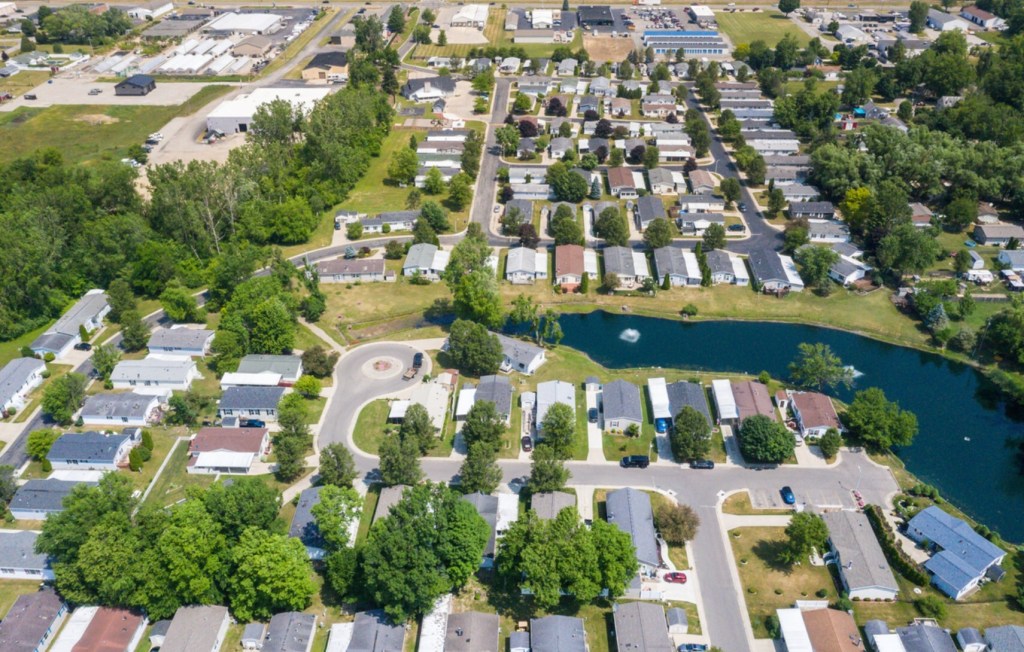
For decades, manufactured housing has often seemed like something of an afterthought for the residential market. Despite more positive perceptions of the sector in recent years, change has been slow. Now a combination of factors is poised to push manufactured housing farther into the mainstream. The biggest boosters? The nation’s affordability crisis and the sweeping federal housing law passed this summer.
On a new ROAD
When the 21st Century ROAD to Housing Act became law in July, it brought long-term implications for manufactured housing as well as for most other residential sectors.

Title III of the act defines manufactured homes in federal law for the first time. Key provisions include increasing the Federal Housing Administration’s Title I manufactured housing loan limits and lengthening loan terms; designating the U.S. Department of Housing and Urban Development as the primary authority on manufactured home energy efficiency standards; and adding accessory dwelling unit (granny flat) construction as an eligible use for FHA property improvement loans.
Perhaps most significantly, Title III expands the federal definition of manufactured housing to include homes with or without a permanent chassis.
The law directs the states to certify that their laws treat chassis-free manufactured housing the same as conventionally built units for such purposes as financing, title, insurance and taxes. Ending the chassis requirement will save builders roughly $5,000 to $10,000 per unit in construction costs, according to Berkadia’s 2026 manufactured housing report. The change also allows for more flexible design.
“Chassis-free will allow the manufacturer to create different concepts,” Eastern Union Senior Managing Director Marc Tropp told Multi-Housing News. “Now, you can develop it onto a foundation that’s essentially indistinguishable from a stick-built house.” That will make it easier to include a second story or basement in a unit.
Boosting perceptions

Beyond the impact on cost, design and policy, the Road to Housing Act will likely have an important impact on perception, as it does much to mainstream the sector, according to Northmarq Senior Associate Anthony Pino. “The changes will get the knowledge out there that these are high-quality places to live, and more of them will be better for everyone,” he predicted.
Financing a manufactured housing development will be easier, and since that kind of housing is generally more affordable, attainability will be improved, according to Tropp.
The new law is also important for investors. Providing access to Community Development Block Grants, which historically have only been available to single-family lot developers, promotes both the expansion of existing parks and the creation of new ones, Tropp added.
Key aspects of the process await before these changes can take full effect. HUD must complete the often-slow process of rulemaking, and in the private sector, lenders need to update their guidelines.
The attainability question
Despite the recent progress on policy, roadblocks remain, mostly at the state and local levels, according to the State Policy Playbook for Manufactured Homes, published in May by the Lincoln Institute of Land Policy. Removing restrictive land use and zoning regulations should be at the top of policymakers’ to-do lists. Other steps include creating and funding programs that replace old, unrepairable manufactured homes with new, efficient units. The report also notes that “policymakers can strengthen baseline lease protections, invest in infrastructure and assist residents and mission-aligned organizations to purchase communities when they go up for sale.”
As policy evolves, research offers a telling sketch of manufactured housing demand. Census Bureau data indicates that the properties tend to be large, which points to popularity with families. Last year, 82.7 percent of units had three or more bedrooms, a figure that’s little changed from 10 years earlier.
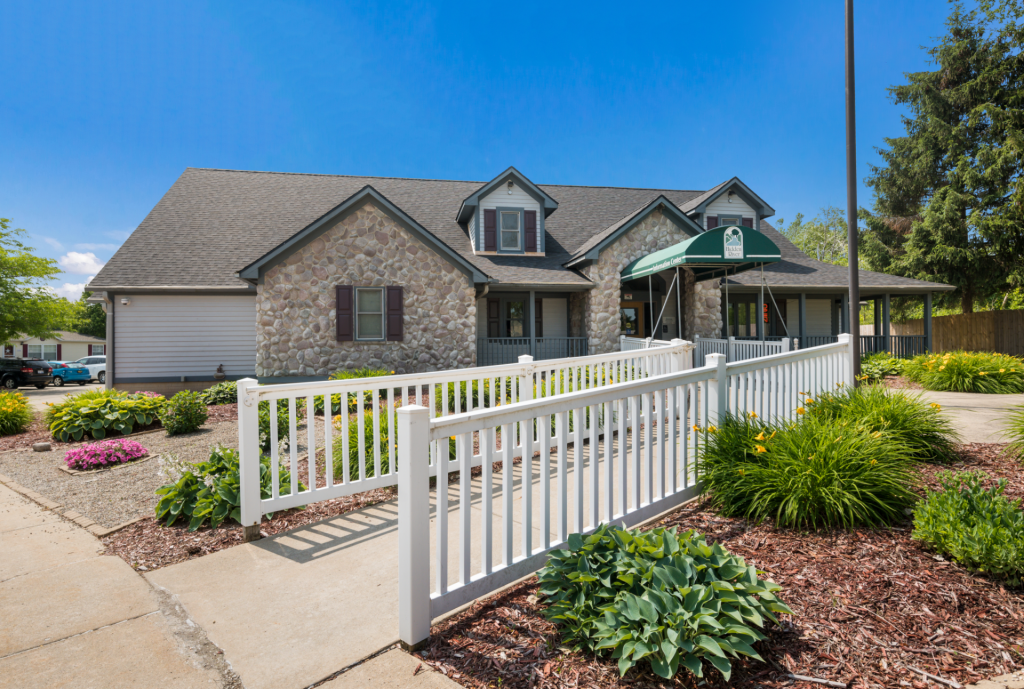
On the demographic front, renters are skewing a bit younger. “We track who’s moving into our communities, and we’ve found over the past five years that age has decreased by three or four years,” reported Havenpark CEO Robbie Pratt. And those residents are getting younger even as the average age of Americans continues to inch upward. “The older stigma is being lost, and it’s becoming more embraced as a very credible living arrangement for that (younger) generation in particular,” Pratt added.
A key reason for that growing popularity among the younger set is the undersupply of for-sale housing options at attainable prices. Demographic trends also support interest in manufactured housing, including brisk household formation among younger renters and a bulge in the number of downsizing Baby Boomers. Manufactured housing is thus in a position to increasingly insert itself into the missing middle. Driven by all these factors, manufactured housing occupancy continues to hover at more than 95 percent nationally.
Adding appeal
When Tropp attended a manufactured housing conference in Kentucky earlier this year, he found walking the homes to be a “really eye-opening” experience. Some models had two-car garages, and some had a second story. “I hate to say the word ‘normal,’ but normal is the state of manufactured homes now. The perception about them has drastically changed.”
“The current (product) is obviously superior to what they were decades ago, the quality and the look, and they’re continually improving,” Pino told MHN. “Overall, the structure, the interiors, and sizes are better—you can get three beds, three baths, 1,200-square-foot homes, more than that at times.”
That’s good news for investors. As Berkadia observes in its report, the manufactured housing sector “is uniquely positioned at the intersection of stable cash flow and critical housing need.”
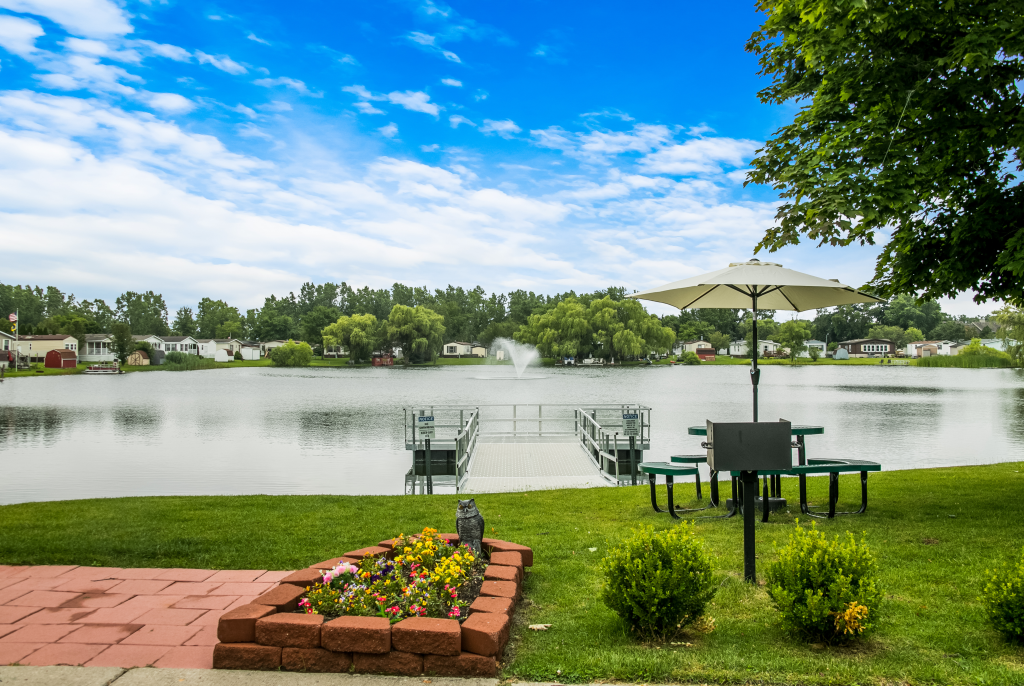
In recent years, rental growth in the sector has been steady, if not phenomenal. Effective rent per space for communities increased 1.4 percent in 2025, Berkadia reports. Annual effective rent per space averaged 2.2 percent over the past five years.
The majority of manufacturing housing units sold in the U.S. are built on private property, though a sizeable fraction ends up in land-leased manufactured housing communities. Some 18,700 units were placed in investor-owned communities last year, up from 15,300 in 2024.
Investors have taken note. REITs, private equity platforms and regional operators are increasing their exposure, “drawn by historically high occupancy, predictable rent growth and relatively low capex intensity,” according to Berkadia.
Because many manufactured housing communities are decades old, that translates into opportunity for investors. Manufactured home community sales volume in 2025 increased 47.1 percent, with a particularly large increase in the fourth quarter, Berkadia reported. In all, 460 communities traded during 2025, with Phoenix leading the U.S. in sales volume. Private buyers outpaced all other investor categories with $560.5 million in acquisitions.
That trend has continued into 2026, as total transactions jumped 26 percent year-over-year in the first quarter, according to a June 2026 report from Northmarq. Prices also ticked up 12 percent to $58,400 per unit.
To cite a few recent noteworthy deals, Legacy Communities paid $25.5 million in July for Vintage Acres, a 300-site asset in Duluth, Minn. Also in July Sunrise Capital Investors paid about $2.9 million for Ponderosa Mobile Home Estates, a 108-lot, age-restricted community in Dublin, Ohio.
Meanwhile, some operators are making major capital investments in their portfolios. Havenpark Communities told MHN that it plans to put more than $70 million into improvements in 46 communities this year, mainly across the Midwest, West and Sun Belt.