TruAmerica’s Deep Dive Into the Missing Middle
While the firm expands into multiple business areas, its central idea is staying the same.

At TruAmerica Multifamily, no constituencies are more important than renters-by-necessity and the company’s array of international investment partners.
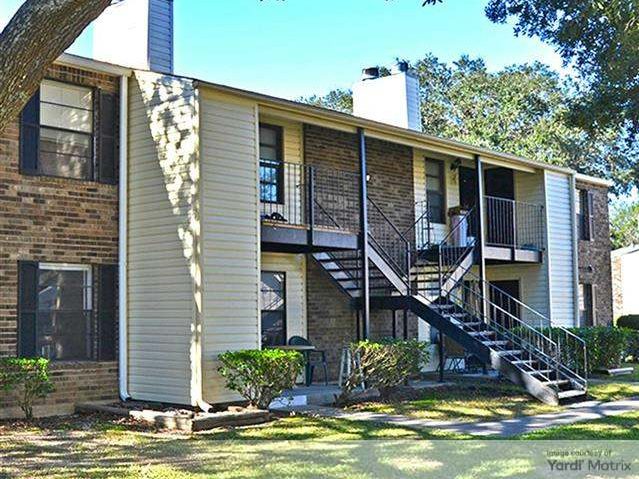
The vertically integrated firm, one of the nation’s largest owners with more than 65,000 units under management, approaches workforce and, more recently, affordable housing as both a public good and revenue driver.
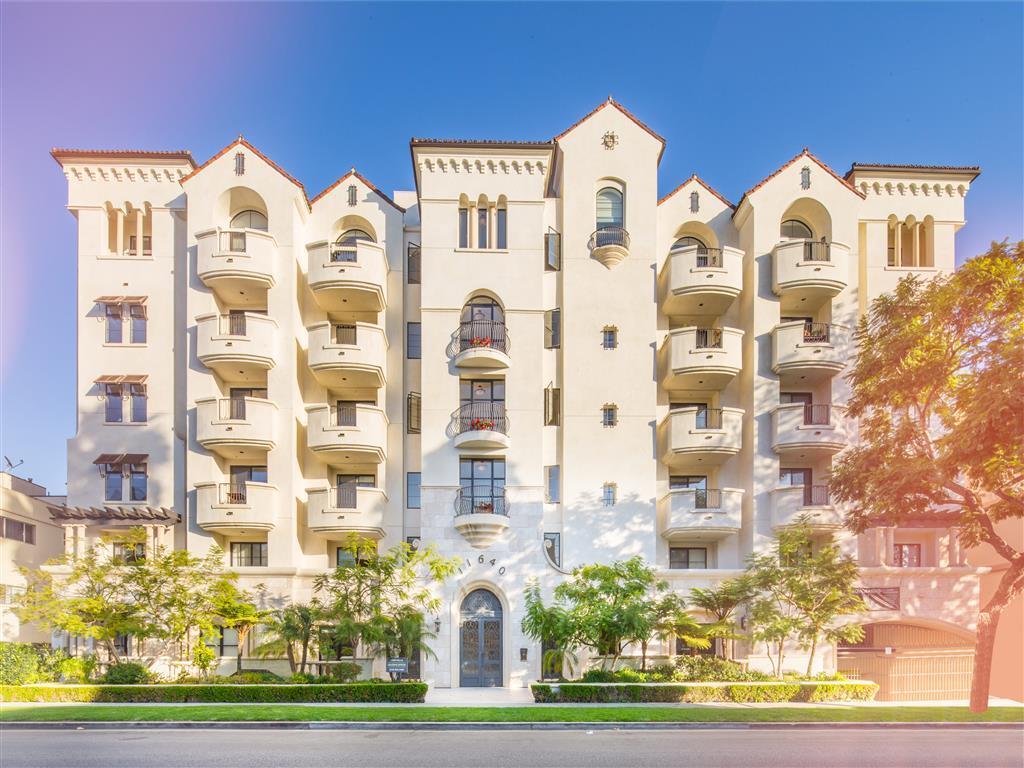

And the company has a great deal of recent activity to show for it. In February, the Los Angeles-based firm closed on a $708 million workforce housing fund for Class B stabilized multifamily properties designated for renters earning 60 to 100 percent of the area median income. That vehicle has roughly $2 billion in purchasing power.
In September 2025, it forged a $1 billion affordable housing joint venture with Manulife Investment Management, which began with the purchase of a 6,000-unit portfolio of income-restricted properties.
The flurry of recent activity and the firm’s gradual metamorphosis into a fund manager is grounded in its leader’s life experience and career, as well as the company’s unique approach to investing in the asset class.
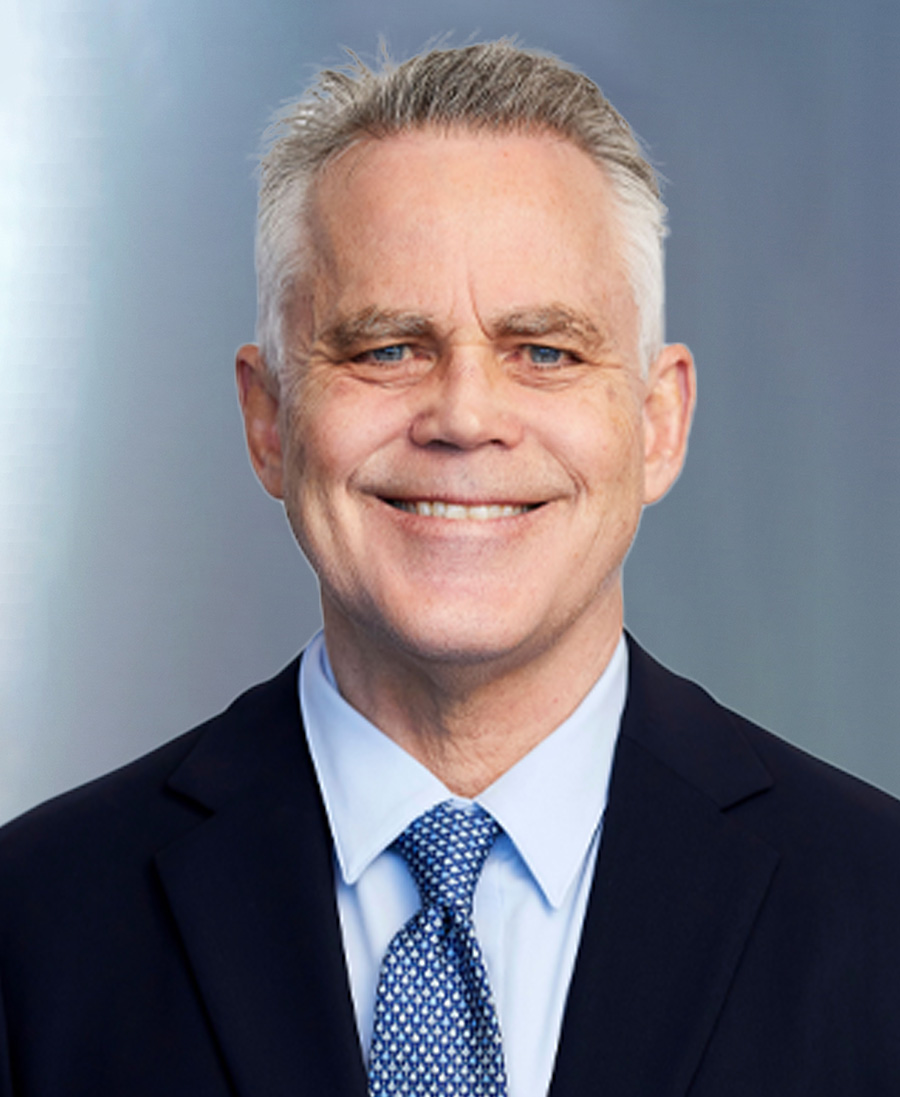
“Affordability means different things, but our ethos has always been to address and house that renter-by-necessity cohort. That has not changed,” detailed Bob Hart, TruAmerica’s founder, president & CEO.
Setting the stage
At first glance, the bulk of TruAmerica’s workforce housing portfolio has an investment thesis that contradicts the conventional economics of market-rate and lifestyle properties. The strategy leans more into the value-add side of investment.

But TruAmerica treats these realities as strengths, looking to supply-demand imbalances to drive its acquisitions. Also on the checklist: barriers to entry, strong fundamentals, job and population growth, and opportunity to modestly improve asset value and quality through operating technology and capital investment.
Potential residents are likely “individuals priced out of homeownership and newer construction, but are still looking for clean, well-located housing,” said Chief Investment Officer Noah Hochman. And in the most attractive, high-potential markets, “You have better affordability and less direct competition from new supply, as well as (stronger) long-term demand.”
Wes LaBar, the company’s executive managing director & head of acquisitions, described TruAmerica’s process for evaluating investment prospects as a “micro-submarket” perspective that weighs the local construction pipeline with the revenue growth of similarly positioned properties in the portfolio. As LaBar put it: “It’s this old-school view of location, it’s the micro-market view of supply in a three-to-five-mile radius, and then it’s, ‘Hey, what’s the potential for a flat-to-modest revenue increase for the next 12 to 18 months?’”
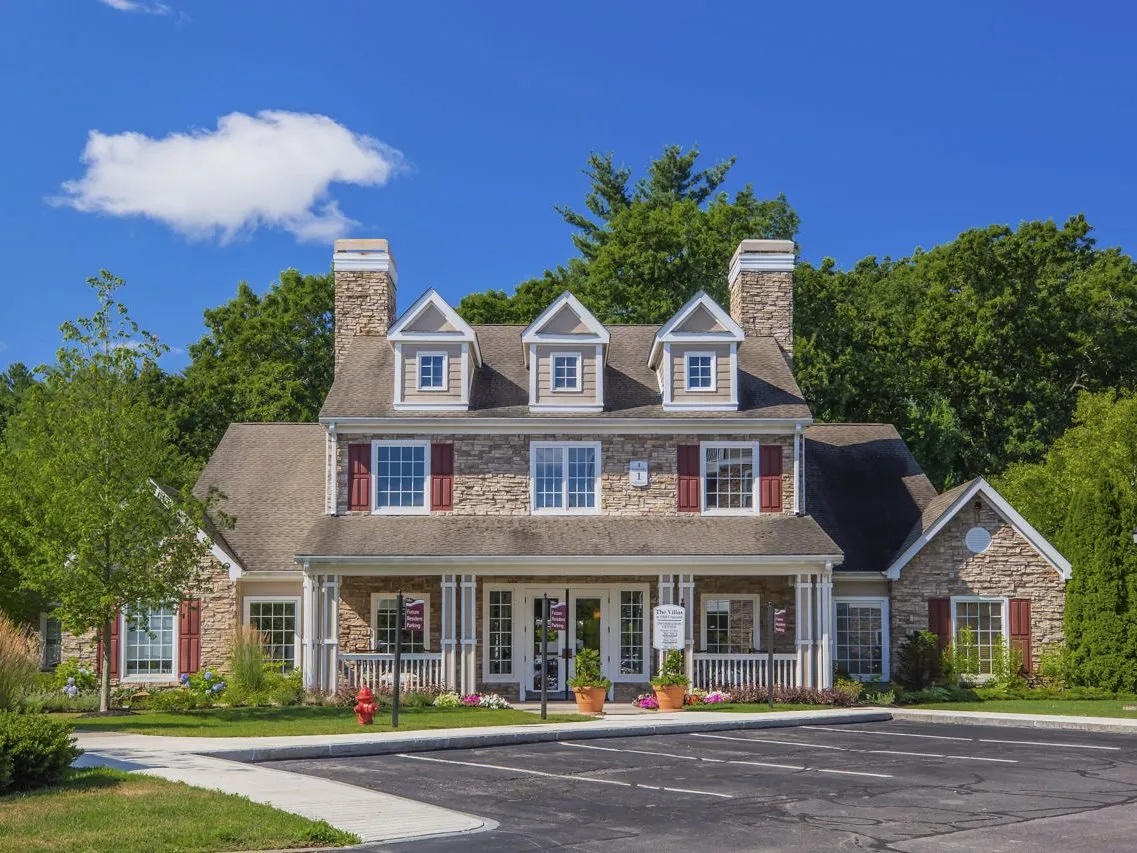
The firm has a penchant for acquiring recently renovated assets that punch above its weight when it comes to unit finishings, amenities and residents’ perceptions—or TruAmerica itself will bring a property to that point.
In late March 2026, the firm bought The Tower on Piedmont, a 155-unit high-rise in Atlanta’s Buckhead district, which is characterized by an acute shortage of rental housing and 2.3 percent annual population growth, 90 basis points above the city’s average. The previous owner implemented $3 million in capital improvements at the 2009-completed community, giving it condominium-like finishes that command close-to-market rents.
But managing these properties is a tightrope act. “You can’t over-renovate, because you’re either going to make the property too expensive, or you’re just going to bump up against the wall of (there) being other places people can live,” LaBar noted. “There’s a fine balance between spending money on apartment units and properties in order to improve the quality of the home that we’re offering, while not over-renovating and forcing people to leave at scale.”

One plus one makes three
This middle-ground approach also lends itself to a dialed-in development strategy, a party that TruAmerica is relatively new to attending. The company formed a development arm in 2022 amid the single-family rental boom, debuting with a townhome project in its home city. But the platform has since grown to include traditional affordable, workforce and even market-rate housing.

According to Tyson Sayles, TruAmerica’s senior managing director of development, the business lines evolved as the cost of lower-density land increased in California at a time when rents couldn’t keep up. “We expanded due to both the lack of build-to-rent and traditional apartments, as well as the more competitive pricing on higher-density land,” Sayles said.
The firm has likewise adapted how it structures developments. These projects benefit from state and federal tax credits, while the market-rate projects get a boost from more affordable entitlement provisions under California law. And the company has a backstop in the GSEs.
Sometimes, the firm even combines the financing elements across one project with separate buildings supporting both income brackets. “It’s that one-plus-one-makes-three approach,” shared Stuart Cramer, TruAmerica’s head of residential development and another Kennedy Wilson alum. “We’re buying sites that are a little bit too large for the traditional one-off affordable tax credit development, but where market-rate (apartments) benefit from the affordable entitlement provisions.”
The local district benefits, too. “Tax credits allow us to have a more efficient financial structure and deliver more affordability to a community than what might otherwise be required,” Sayles noted.
There’s a fine balance between spending money on apartment units and properties in order to improve the quality of the home that we’re offering, while not over-renovating and forcing people to leave at scale.
—Wes LaBar, Head of Acquisitions, TruAmerica Multifamily
Man on a mission
In Hart’s long, varied real estate career, TruAmerica stands out as an especially personal endeavor. The son of a postal worker and a homemaker, he grew up in a tenement home in Chelsea, Mass., a small suburb just north of Boston. The city had fallen on hard times by the time Hart was growing up, a situation that shaped his perspectives and priorities.

After moving to California in 1979, he got his start in real estate investment working in dispositions and workouts at Executive Life Insurance Co. during the real estate downturn of the early 1990s. It was both a key career experience and a character-builder. “I really came of age during the workout era of the ’90s when the markets weren’t so good, and really played defense for a number of years,” he recounted. That position was followed by a stint at Heitman Capital Management, where he was senior vice president of portfolio management. His accomplishments there featured the turnaround of a $500 million portfolio.
The transition to investment came in 2000 when Hart joined Kennedy Wilson, where he rose to CEO of the multifamily management group. In his 13 years at the company, Hart grew the multifamily portfolio to more than $3 billion in assets under management across 30 multifamily communities with about 12,000 units.
The experiences of living in workforce housing and crafting multifamily investment portfolios gave Hart a leg up when he founded TruAmerica in 2013 alongside longtime investment partner Guardian Life Insurance Co. He made the sector his mission nearly a decade before the large-scale entry of institutional investors.
His personal and professional background also helped shape the firm’s investment and value-add strategies. “There’s sort of this art and science in how you reposition things, alongside where you can find that loss-to-lease differential between what the renters (pay) and where we could drive value,” he observed.
But Hart’s business acumen manifests itself well beyond calls with limited partners. Known for his hands-on approach, Hart can often be found on-site doing everything from testing lightbulbs to inspecting paint work at a value-add operation. “If it’s not good enough for me to live in, even for a little while, then no one will,” he emphasized. “A family that needs it should also want to stay there.”
Relationship capital
In the eyes of some former employees, Hart’s formative experience with workforce coupled with the firm’s innovation, is a strong selling point with investors.
“TruAmerica combines the power of significant institutional capital and national scale with the agility and entrepreneurial drive that Bob Hart has championed from Day 1,” said Matt Ferrari, the company’s former co-CIO. After leaving TruAmerica in October 2025, Ferrari started PXV Multifamily, a private investment firm that has plans to acquire $2 billion in assets, mostly in the middle-market, value-add and institutional sectors.
TruAmerica’s investment philosophy allows its assets to function as resilient income drivers with a longer-term appreciation potential. The firm has also made significant inroads with foreign investors; approximately 35 percent of the capital from its latest workforce housing fund arm is from overseas, with heavy concentrations in Canada, the Middle East and Southeast Asia.
“Despite what you’re seeing geopolitically, what’s really attracted them to our strategy is the fact that this type of housing does not exist en masse in their home countries,” said Stella Pappas, the firm’s executive managing director of investment management. Another key selling point is that investors’ home markets can only handle so much investment. The U.S. offers transparency and “really lends itself to investors (looking) to balance their asset and liability matching, and it can also generate that current income that they’re looking for,” Pappas added.
Capital A
Hochman refers to a key selling point for investors as “relationship capital.” “Whether it’s a seller, a broker or an investor, we’re always looking for angles, not just broad market exposure. “It may seem contradictory, but this niche approach has contributed to TruAmerica’s expansion into the affordable housing and structured finance spaces.
Going into its first year in the sector, the firm is keeping its core investment thesis, applying it to renters at the lower end of the income bracket. “Making sure that we don’t lose these assets to market-rate is a big focus for us right now,” commented James Crowder, who joined the firm in March 2026 as managing director of affordable housing.
To coincide with the firm’s established presence in workforce housing, TruAmerica has also identified how to use it to drive value for investors, despite an inability to meaningfully raise rents. Investors view workforce housing as a consistent return stream that compares to some corporate bond structures, “and it has the backstop of state and federal governments that other segments don’t quite have,” Crowder added.
The launch of the platform last September coincided with the purchase of a 6,000-unit portfolio of income-restricted assets. “We see a generational opportunity to institutionalize what was really a mom-and-pop business for regional and local developers,” Hochman said. “I think at the end of the day, you’re going have a better resident experience.”