How the Nation’s Largest Office-to-Residential Conversion Came to Life
An in-depth interview with the team behind the repurposing of Manhattan’s 25 Water St.
In the heart of Manhattan’s Financial District, a former office building has undergone the most ambitious residential conversion in the country’s history to date. What used to be a 1.1 million-square-foot office structure at 25 Water St. has now become a 1,320-unit residential community known as SoMA.
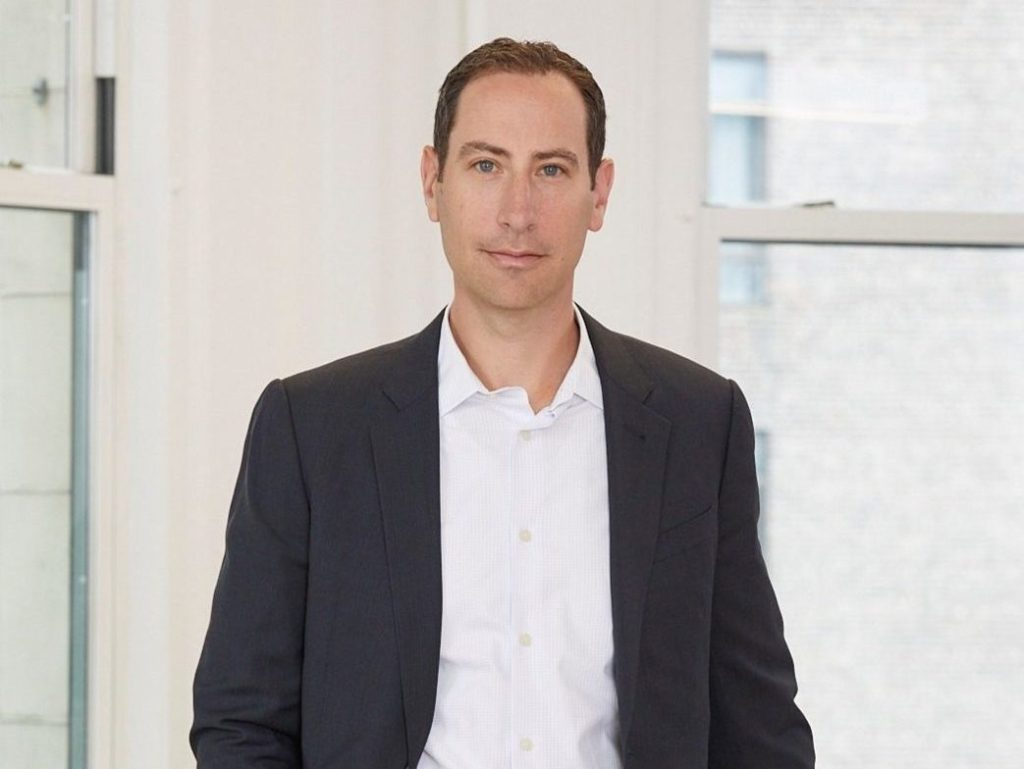
For GFP Real Estate, one of the three developers behind this conversion—along with Metro Loft and Rockwood Capital—the decision to transform the building where The Daily News and JPMorgan Chase were once based was driven by data and demand.
“Office was no longer the best and highest use,” Brian Steinwurtzel, co-chief executive officer at GFP, told Multi-Housing News. “The project’s scale also made it possible to incorporate 100,000 square feet of lifestyle-driven amenities, a feature that helps SoMA stand out in New York’s competitive rental market.”
READ ALSO: Largest Office-to-Apartment Conversions
Leasing activity at the 32-story tower has been strong since the very first residents moved in early this year, but reimagining such a vast office footprint as a vibrant residential destination required both vision and architectural ingenuity. Key structural interventions were central to the transformation of the late 1960s building. How did the experts do it?
CetraRuddy Principal & Director of Architecture Eugene Flotteron, along with Co-Founder Nancy Ruddy, share how they tackled challenges at this NYC office conversion, blending preservation with innovation, and redefining what adaptive reuse can look like in today’s urban landscape.
What led your team to get involved with the 25 Water St. project, and how did your design vision develop as the project progressed?
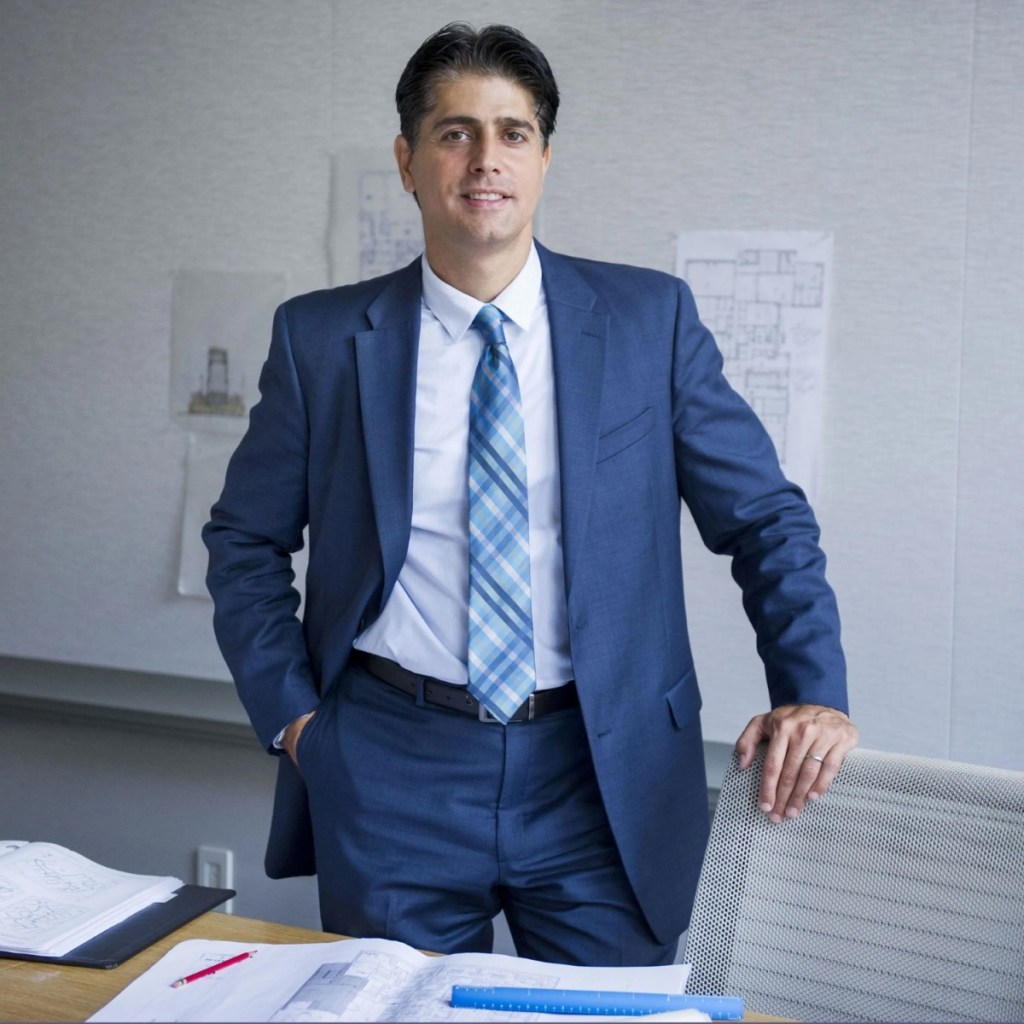
Flotteron: As urbanists and planners who are committed to sustainability, we believe in reimagining existing buildings for new uses. Adapting historic—and now, more modern—buildings is a powerful tool for increasing value, providing new life to otherwise obsolete structures, reducing waste and revitalizing neighborhoods.
CetraRuddy has collaborated with Metro Loft on numerous initiatives, and when GFP Real Estate, Metro Loft and Rockwood Capital began exploring the potential to convert 25 Water St. into SoMA, our experience and ability to craft desirable living environments made us a natural fit.
Every tool in our kit came out for SoMA, and the design vision definitely evolved. Any conversion requires a substantial analysis and study to understand the building and what opportunities we can unlock.
In this case, it was exciting to discover that 25 Water St. actually held even more potential than we first realized. In our early analysis, for example, we looked at a six-story overbuild. But once we studied the best proportions for the light wells, it became clear that the zoning actually enabled us to create a 10-story overbuild instead.
And this 10-story rooftop addition is the tallest overbuild in NYC history. What were the key structural challenges, and how did you overcome them?
Flotteron: Structurally, SoMA is an impressive design and engineering feat that became possible thanks to a creative truss bracing system that is threaded through the entire building. Adding an overbuild of any significant scale was inevitably going to have a structural impact. The key challenge revolved around achieving a critical balance: How could we deliver the greatest amount of allowable new floor area with the least invasive structural upgrade?
We always look to avoid touching a foundation if possible, and as architects who have worked extensively in this part of Lower Manhattan—a flood zone on filled land—we also know how complicated it would be to address the foundation on this specific site.
READ ALSO: How Office Conversions Are Reviving Downtowns
By working closely with the project team and structural engineers, we found the best solution was to brace the entire building with new steel elements, without triggering any structural modifications to the foundation. In some amenity spaces, we’ve actually been able to incorporate these braces as design features.
Interestingly, our analysis showed that if the overbuild had gone up to 11 stories, that additional floor area would have triggered the need for foundation work. So we did in fact achieve the ideal balance.
The building’s facade also saw a dramatic transformation. Could you walk us through how the design came together and how it was executed?

Flotteron: Yes, the building had a distinctive appearance from its early 1970s era, which many sources have noted resembled a computer punchcard. Across its lower elevations, the facade had minimal window openings—ideal for the original use involving large servers—but not at all suited for residential space.
One approach would have been to remove the existing facade and simply reskin the entire building. We studied this solution and realized that by taking a completely different path we could save time, money and significant embodied carbon.
Our eventual design kept as much of the original brick as possible and punched in thousands of new window openings. We still created the best light possible for the residential units, while dramatically reducing material waste. The existing brickwork has been refinished in a fresh white color, and the result is what looks like an entirely different facade but is in fact a seamless blend of old and new.
Getting enough natural light is indeed one of the biggest challenges with residential conversions, along with good ventilation and sound control. How did you approach these issues on such a large scale?
Flotteron: Over the past several decades, CetraRuddy has designed more than 30 conversions. It takes both experience and creativity to craft a successful residential program in these adaptive-reuse projects. We’ve transformed a very broad range of commercial and industrial building types for residential use, so we have a good sense of how floorplans and unit mixes can lay out in a typical office building from different eras, for example.
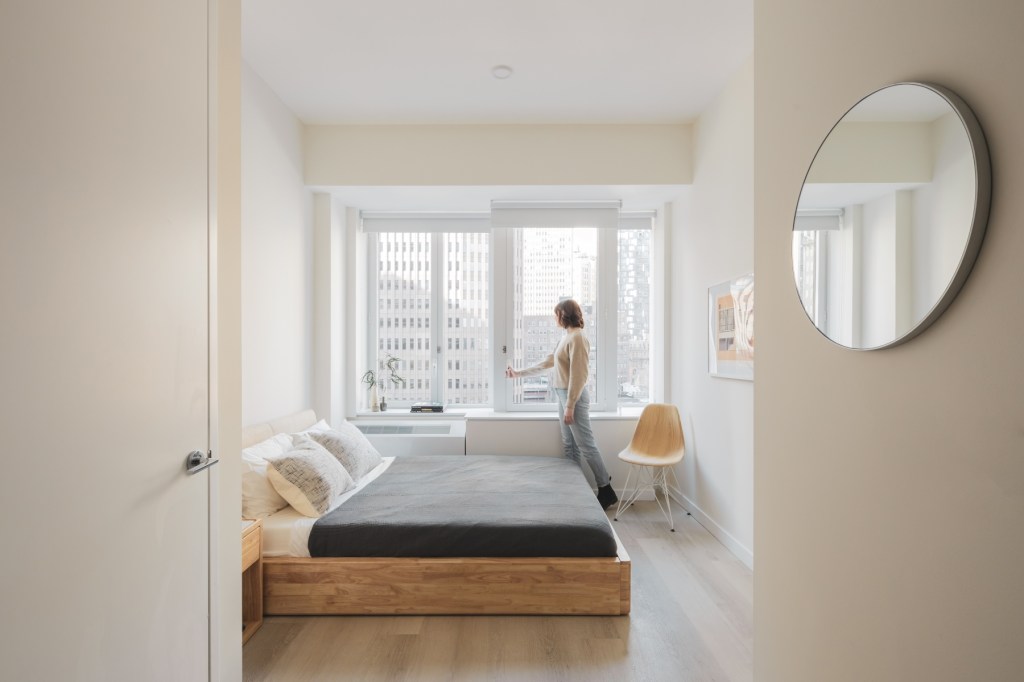
From our first study of the 25 Water Str. property, we saw that because of the building’s size and layout, by combining light wells with facade modifications the team could make this project not only feasible but actually among the most innovative office-to-residential conversions in terms of its floorplans. Across a range of unit types—from studios to three-bedroom apartments—we have created bright, gracious and unique layouts that are readily adaptable for different living situations. These are apartments that work well for single occupants, couples, co-living and even for families, which sets SoMA apart in the market.
We also realized there were opportunities to move floor area around in creative ways to maximize value. For instance, by relocating egress stairs from corners into the building core, we turned that square footage into especially desirable corner apartments with multiple exposures.
In a similar way, with today’s HVAC technology and advanced mechanical ventilation we can also make the most of deep floorplates and incorporate home office or accessory use spaces within individual apartments. Our team also works closely with acoustical experts to make sure all the units have the right vertical and horizontal separation from each other and from any adjacent common areas.

One notable feature of the conversion is the inclusion of greenery and a rooftop pool within a dense urban environment—how did you make it work?
Flotteron: In every project, and especially those in dense urban settings, we look for opportunities to incorporate outdoor space and greenery. At SoMA, the zoning code effectively dictated a setback at the 25th floor. Architecturally, this created an opportunity for indoor/outdoor amenity experiences.
The building’s scale and large floorplates opened up exciting possibilities, and our team found that even accounting for the cut out of two light wells we could incorporate not only a sizable outdoor pool, but also extensive landscaping and a variety of differentiated outdoor gathering spaces and working and activity zones. We’re very pleased with the result, which gives everyone in the building access to the benefits of biophilic design—particularly important in a dense urban environment like NYC.
Speaking of the result, there’s nearly 100,000 square feet of amenity space in the project—that’s huge! How did you go about planning the common areas to make them both functional and community-focused?
Ruddy: Conversions sometimes have these existing treasures in terms of good bones that lend themselves to certain uses—especially on the building’s lower levels. High ceilings and large volumes made it clear to us that we could conceptualize the project almost as its own neighborhood and incorporate a uniquely extensive set of amenity offerings.

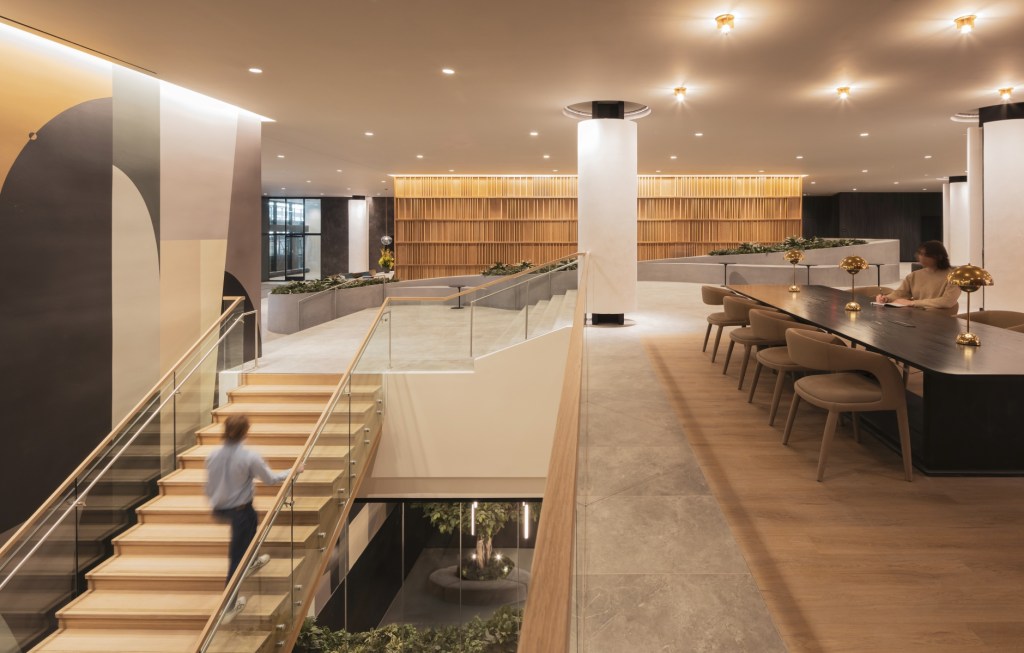
Recognizing that a majority of the amenity space was to be below-grade, we developed an atrium that provides connectivity across three levels, and which also brings light into this space. The key element was to create community within the building and to design spaces for diverse activities that promote gathering. This was essential because the Financial District location didn’t provide the range of services and amenities that make for a true 24/7 residential neighborhood.
We curated the amenities to provide wellness and fitness uses while also incorporating spaces for art, music and intellectual pursuits. SoMA residents can utilize a basketball court, two pickleball courts, an extensive spa and a pool. There are also maker rooms, an art studio with professional-grade equipment, recording areas for music and podcasts, workspace, flexible gathering areas, game rooms with bowling, virtual golf and other VR uses. On the upper levels, there is an outdoor pool, private dining areas, lounge space and other gathering areas.
If this was a brand-new building, it likely would not have been feasible to dedicate this much floor area to amenity space. The variety and diversity of common spaces really sets this project apart from any new construction building on the market.
On the lower levels, all of the amenities are tied together by the central atrium that leads into a very open, flexible area with stadium seating and projection for screenings, lectures and movie nights. It forms a natural focal point and gathering area that allows for connectivity. The different amenity uses radiate out from this atrium, which offered us opportunities to modulate their scale and create more intimate or more expansive environments depending on the particular use.
A unique aspect of the project is its inclusion of affordable housing in a central urban location. What role did policy incentives play?
Flotteron: Policy incentives play a vital role, especially in supporting affordability. SoMA is the first-ever project to utilize a new program in New York called 467-m, which incentivizes conversions to incorporate a minimum 25 percent of units as affordable housing.
This is a great example of a statewide tax abatement that is well-conceived and smartly written, and that is likely to have a positive impact for development teams and end-users alike. Because developers can opt in while a project is underway or even for one year after completion, the SoMA team was able to implement the 467-m incentives while the conversion was in construction.
Would you say the city’s zoning and building rules supported this conversion, or were there specific hurdles you had to work through?
Flotteron: The underlying zoning and regulations supported the conversion, and this was fundamental to the project’s feasibility. NYC has really been a pioneer in its approach to conversions, and the new City of Yes for Housing Opportunity legislation opens the door for as-of-right conversions well beyond the relatively limited districts where this approach was allowed. Already we’re seeing the impact of that shift in terms of more projects on the boards in Midtown, for example.
When we speak with real estate leaders or public policy experts in other markets about office-to-residential conversions, we always point to the zoning and approvals process in NYC as a valuable template.
How do you see the office-to-residential conversion trend evolving?
Flotteron: It’s important to recognize that office-to-residential conversions are not a trend. These initiatives are a positive urban development strategy to utilize and maximize the value of existing infrastructure. The market has seen a massive acceleration since the pandemic, but this sector has been an important part of the real estate landscape for a long time. In the 38-plus years that CetraRuddy has worked on office-to-residential conversions, we’ve seen a constant evolution in the approach.
Right now, we’re noticing a few shifts in particular. One of the most significant is that conversions are getting larger and more ambitious. SoMA is a perfect example of this. The project sets a new precedent, and it proves that even exceptionally large office buildings can be successfully adapted.
And while NYC has always led the way in terms of conversions, another evolution is happening largely in markets outside of New York. Developers from other cities are reaching out to CetraRuddy for this unique expertise. We’re looking at opportunities to carry out mixed-use conversions with residences, retail, some amount of retained office space, and possibly even hotel uses. The goal is to create a community and deliver a dynamic live-work-play experience within a single building. This is a framework we’ve employed in new construction projects, so it’s interesting to begin looking at this approach in a conversion context.