Bushberg Secures $320M for Manhattan Conversion
The project will create more than 700 apartments.

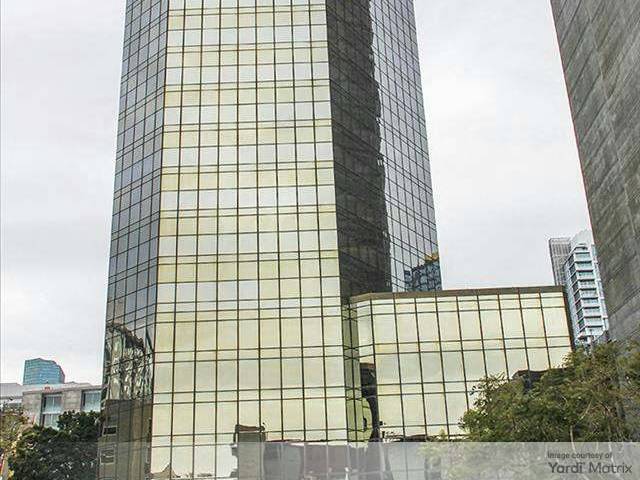
Bushburg Properties has secured a $320 million construction loan for the partial office-to-residential conversion of the 1.2 million-square-foot office building at 80 Pine St. in Manhattan, The Real Deal first reported. Bridge City Capital and Deutsche Bank issued the note in a deal arranged by Arrow Real Estate Advisors.
Levels two through 17 at the 38-story tower are slated for adaptive reuse, introducing 713 multifamily units upon completion. Construction kicked off earlier this year, with first apartments set to debut in January 2026. CetraRuddy provided architectural services for the Financial District high-rise.
The repositioning project benefits from the 467-m tax incentive program, which provides a 35-year tax exemption, and in exchange, 25 percent of the units will cater to households earning up to 80 percent of the area median income.
Bushburg acquired the 1960-built asset for $160 million in September 2024, according to Yardi Research Data. Rudin Management sold the tower after renovating it in 2021 to attract new office leases. Several tenants had already vacated the building at that point—including AIG—leaving some 800,000 square feet empty.
READ ALSO: From Desks to Doors: The Rise of Office-to-Residential Conversions in NYC
Yet, some tenants remained, including architect Snøhetta and personal injury attorney Elefterakis, Elefterakis & Panek, resulting in Bushburg opting to partially convert the office property into residential.
Bushberg isn’t the only developer looking to get the most out of its office tower, even if it means a partial adaptive reuse project. Earlier this year, RXR Realty, Apollo Global Management and SL Green secured $575 million to convert roughly 918,000 square feet of office space inside the 1.1 million-square-foot building at 5 Times Square into 1,250 apartments.
Manhattan’s growing office-to-residential pipeline
Yardi Research Data’s Conversion Feasibility Index—a metric that ranks the potential of office properties to be redeveloped into residential, accounting for variables such as location, floorplate, architecture and age—places 80 Pine St.’s score at 82, making it a great candidate for adaptive reuse.
Manhattan had 907 office properties with a score between 90 and 100, representing more than 100 million square feet as of February, according to a RentCafe report. Another significant repositioning effort in the borough is Metro Loft Developers and David Werner Real Estate Investments’ adaptive reuse of Pfizer’s former headquarters. The duo secured a $720 million construction loan for the 1,602-unit project, which will be the nation’s largest conversion project upon completion.