How the Affordability Crisis Could Be Solved Within a Generation
A new study from NYU found that a few key reforms could spur the development of millions of apartments.
“Housing affordability can be solved in this generation,” is the assertion of the Housing Affordability Toolkit, a report released in June by the National Multifamily Housing Council in partnership with New York University’s Schack Institute of Real Estate.
How so? By implementing policies that spur production to levels last seen 50 years ago and keep them there, the report asserts, while simultaneously making vacant homes livable at affordable rents.
“The math is clear: A 13 percent boost in private-market production, sustained over time, returns to the output levels of the early 1970s,” the report notes, positing a 17-year timeframe to end the current affordability crisis. “With the right policies, this is not just possible—it’s the moment to prove that the rental housing affordability problem can finally be solved in America.”
The roots of the supply shortage
The magnitude of the housing crisis is well known, with the report citing the fact that half of all U.S. renter households—more than 22.4 million—are cost-burdened, spending more than 30 percent of their income on rent. Renters represent one-third of all American households, pointing to a severe affordability crisis.
The report recommends a three-prong approach to dealing with the problem: more subsidized rental housing and more cash for rental assistance, creating and preserving non-subsidized rental housing and a lot of local deregulation.
READ ALSO: Nearly Half of Renters Are Cost-Burdened: Report
At its heart, the crisis is basic economics, with supply unable to meet demand. The most recent peak in residential development in the U.S. was in 1973, when 2.1 million units were completed for a population of about 207 million. Now the U.S. population is about 345 million, and in 2024, only 1.6 million new residential units came to market.
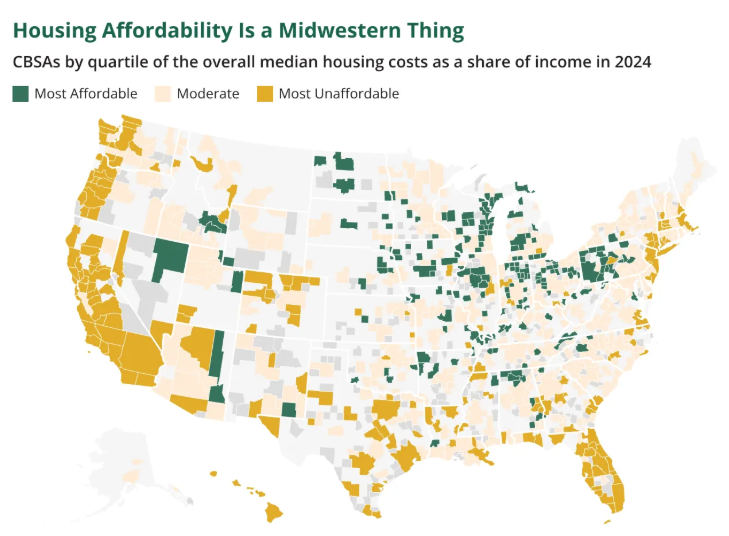
Supply is thus short, but there is also considerable nuance in the situation. The report notes that there are two distinct rental affordability crises.
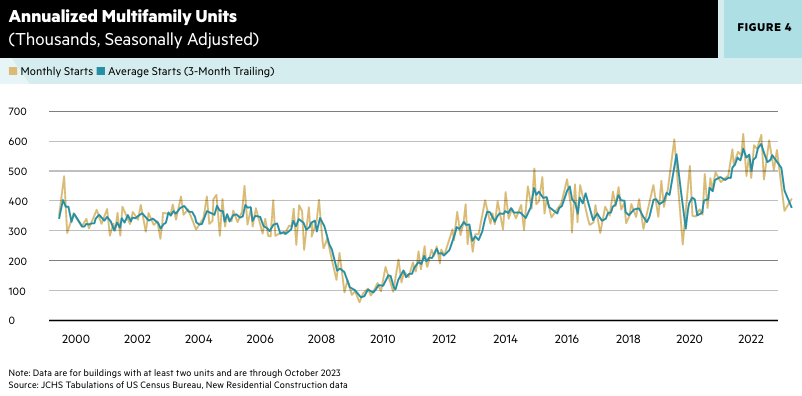
The first is a chronic undersupply of homes in certain markets, leading to high rent burdens even among the middle class. The second is the large number of extremely low-income households for which no private housing will ever be affordable without some sort of subsidy, the report explains.
Difficult to solve, but not impossible
The report likens a 17-year effort to house the nation more affordably to a “moonshot.”
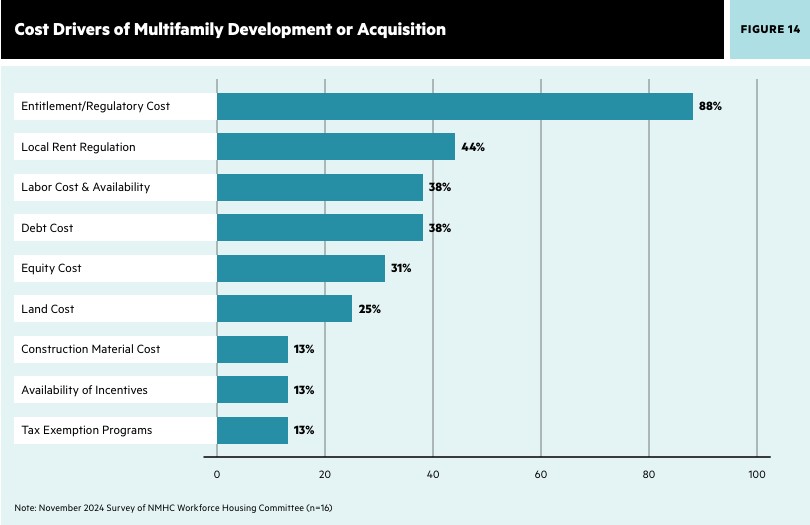
Deregulation over construction could yield 4.3 million or more new housing units, the report says. Reduced regulatory costs and quicker project approvals would increase both for sale and rental property development, which in turn would lower production costs and put downward pressure on prices. An expanded supply would also increase competition in local markets, pushing prices closer to the now lower marginal cost of production.
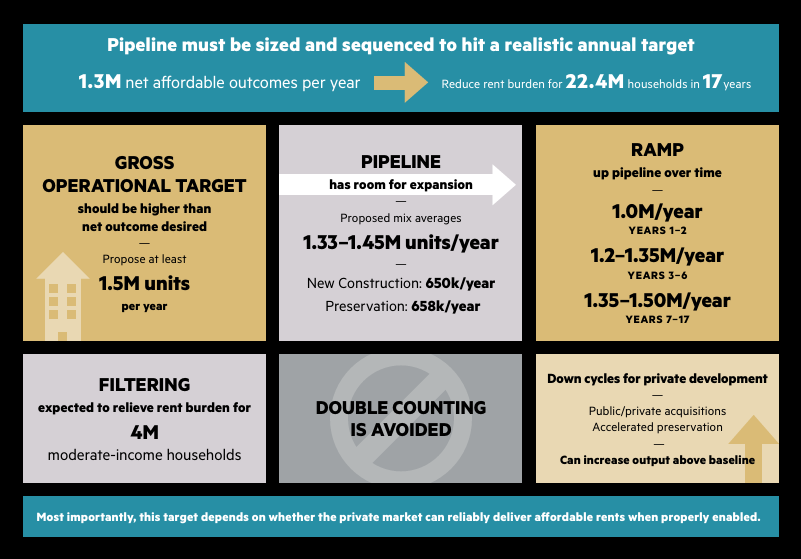
But deregulation will only go so far. The report estimates that about 10.1 million U.S. households earn too little to afford any type of housing without assistance, and currently go unsubsidized. Because their incomes don’t meet the cost of producing housing, no private market effort can adequately serve them without significant public subsidies. In fact, the report posits, the subsidies need to rise.
Tools that work
So what works outside of deregulation? “Tax abatements are actionable and are, in fact, already being implemented in many different forms across the country, where they are meeting with considerable success,” NMHC Senior Vice President of Research and Innovation Caitlin Sugrue Walter told Multi-Housing News.
“We recommend all policymakers look at their approach to taxes as a way that can quickly spur housing supply in their city, state, and region,” Walter said. “Over the longer term, additional support for lower-income individuals and families will be important, and the education of lawmakers about that income level is critical to long-term success.”
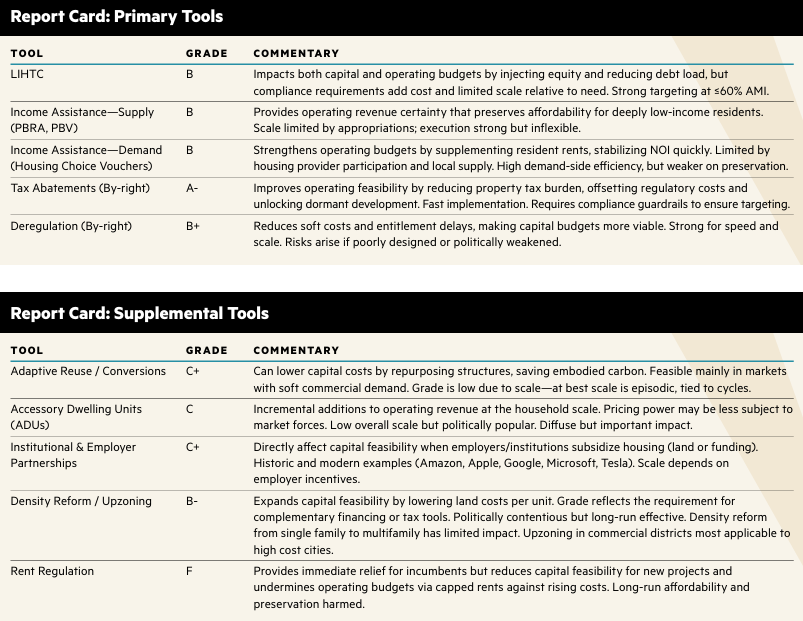
The most effective housing tools are the ones that already work, such as preservation by-right tax abatements and selective deregulation, Matthew Kwatinetz, clinical associate professor at the NYU SPS Schack Institute of Real Estate & director of the NYU Urban Lab, told MHN.
“Time to approval is almost always the binding constraint,” Kwatinetz said. “The data proves it, across thousands of preserved units. Tax abatements are the winner for me. They deploy fast, include public guardrails, and allow cities to claw back value if needed.”
In contrast, there’s one regulatory aspect that policymakers would do well to avoid. “Rent regulation is the weakest tool in the kit,” Kwatinetz added. “Despite its political appeal, both academic theory and real-world outcomes grade it poorly against options that actually scale.”