Bonaventure CFO on Why Multifamily Distress Remains Contained—for Now
Stephen Burch discusses where refinancing risk is concentrated, how borrowers and lenders are managing maturities and what makes a debt stack resilient.

The anticipated multifamily maturity wall has so far produced more workouts than foreclosures. Extensions, recapitalizations and selective sales have absorbed much of the pressure, although elevated interest rates continue to expose highly leveraged, floating-rate assets, particularly in supply-heavy markets.
Stephen Burch, chief financial officer of Bonaventure, expects the adjustment to remain uneven. His company develops, invests in and manages multifamily properties across the Mid-Atlantic and Southeast, with more than $2.8 billion in assets under management.
Here’s what he told Multi-Housing News about where risk remains concentrated, what a resilient debt structure looks like and which signals would indicate that the market is finally beginning to clear.
The multifamily maturity wall was widely expected to produce a much broader wave of distress. Why has that scenario not materialized at scale, and how have maturing loans generally been resolved?
Burch: Here’s the myth-versus-reality: The headlines wanted a 2008-style wave and what we got instead was a lot of quiet workouts that will continue. Roughly $115 billion of the $2.5 trillion multifamily debt market—less than 6 percent—is flagged as potentially distressed, and even that is concentrated almost entirely in CMBS and CLO paper, which is a small slice of the overall market. For the loans that reached maturity, many were extended or recapitalized, while some properties were sold to fresh capital at an adjusted basis rather than foreclosed.
Multifamily has a notoriously strong bid and very little of the debt was actually underwater. Owners who bought reasonably, kept occupancy stabilized and had a lender willing to work with them kept operating. That does not mean ‘no distress.’ It’s distress getting sorted loan by loan instead of showing up as a systemic wave. It is also worth noting that defaults did not peak until more than four years after the GFC began. Said differently, there’s still plenty of risk in the system given that interest rates have not materially improved.
To what extent have extensions and restructurings resolved borrowers’ underlying problems rather than simply postponed them? What typically determines whether another extension, a recapitalization or a sale is the most viable path forward?
Burch: This is where it gets asset-specific rather than macro. Extensions buy time, but they don’t fix a bad basis. If you bought at a 3 percent cap rate in 2021, assuming rent growth that didn’t happen and rates that didn’t return to zero, an extension just moves the reckoning down the calendar.
What determines the path is a cash-flow test, not a sentiment test. If the property covers debt service at a market rate with a reasonable equity check, you extend. If it doesn’t cover debt service but the sponsor has capital and conviction, you recapitalize. If neither is true, you sell, usually to a buyer underwriting a lower basis and today’s cost of debt.
Which multifamily loans and assets are under the greatest pressure today? How do acquisition vintages, leverage, floating-rate exposure, local supply and sponsor strength affect the risk of distress?
Burch: The pressure lines up with what the data has been showing for a while: bridge debt on heavy value-add deals bought at peak pricing in 2021 and early 2022, especially in markets that also caught the biggest new-supply wave since the 1970s. Stack floating-rate debt, aggressive renovation-premium assumptions and a submarket absorbing thousands of new units, and you’ve got real potential for a loss of capital.
A conservatively levered, fixed-rate agency loan on a well-located asset from the same era is having a completely different year. Vintage and leverage matter, but submarket supply exposure is just as predictive and gets less attention than it deserves.
Additionally, for assets in lease-up in high-supply geographies, sponsor quality is what matters—can and will they inject the additional capital needed to get the deal through the extended lease-up cycle?
READ ALSO: When ‘Non-Recourse’ Construction Financing Means ‘Recourse’
With multifamily distress more localized than systemic, what market- and property-level indicators help distinguish a temporary refinancing challenge from a fundamentally impaired investment?
Burch: At the market level, a temporary issue is a metro still absorbing a supply glut while job growth and household formation remain intact, indicating a timing problem. Fundamentally impaired is a property where, even at a lower rate and a fair market rent, debt service still isn’t clear. That’s not a refinancing problem; it’s a valuation problem. What we have found is that sticking with low-supply markets as a primary investment thesis has helped avoid much of the distress.
How has the recent development cycle changed the relative risk of different multifamily assets? How do older properties in supply-constrained submarkets compare with newer Class A assets in high-growth markets with substantial new supply?
Burch: Class A product delivered into the largest supply wave since the 1970s is competing against itself—lease-up concessions, flat effective rents, longer time to stabilize. For a decade, new Class A in the Sun Belt was the trade everyone wanted—growth markets, new product, cap-rate compression. Now that’s exactly where the supply overhang sits and rent growth in a number of those metros has been flat or negative while concessions climb.
Older product in supply-constrained, slower-growth markets—the kind underwriters used to discount for lack of growth—is now the more defensive asset because there’s less new competition and more pricing power. It’s a mean-reversion story: Last cycle’s winners became this cycle’s risk and vice versa.
To be clear, we don’t believe this means Sun Belt growth markets are broken—demand has actually been remarkably resilient, with some of the strongest absorption on record. It means the supply side needs another year or two to get absorbed before those assets attain a true stabilized economic occupancy level.
What does a resilient multifamily debt stack look like today? How should owners think about leverage, fixed- versus floating-rate exposure, maturity schedules and the amount of equity needed to withstand further volatility?
Burch: Keep leverage conservative enough to service debt at whatever rate the market hands you. We typically won’t underwrite above the mid-60s loan-to-value. Fix your rate where you can. Floating-rate debt only makes sense with the equity cushion and hedging in place to absorb another leg up.
Ladder maturities to limit the risk of facing a single wall of debt in one calendar year and hold enough equity in reserve to write a check if the refinancing math gets tight. Underwrite as if you won’t get the benefit of the doubt from your lender. Operators with a strong balance sheet who held back capital for renovations, concessions or a rate reset are the ones sailing through this cycle rather than scrambling.
READ ALSO: What Multifamily Supply Data Misses, With Hines’ Lawler
As banks, agencies and other lenders compete for multifamily transactions, how is that race reshaping agency market share and loan execution? Which assets are attracting the broadest range of lenders?
Burch: Banks are back and aggressive—multifamily balances at FDIC-insured banks are up over 4 percent and bank lending volume at major capital-markets shops jumped roughly 30 percent year-over-year. That’s pulled agency market share down from the 50, 60 percent range to something closer to 40 percent, forcing Fannie Mae and Freddie Mac to compete on execution speed and certainty rather than rate alone.
Capital flows easily to stabilized, well-located, moderately levered deals. The competitive dynamic is genuinely healthy right now for borrowers with a clean story. Stabilized, well-occupied, reasonably leveraged assets are getting bids from banks, agencies and life companies at once. That’s capital availability at its best. Capital hasn’t dried up broadly, lenders just got more selective while pricing aggressively for high-conviction deals.
What advantages can HUD debt provide over conventional or agency financing, and why does the program remain underused?
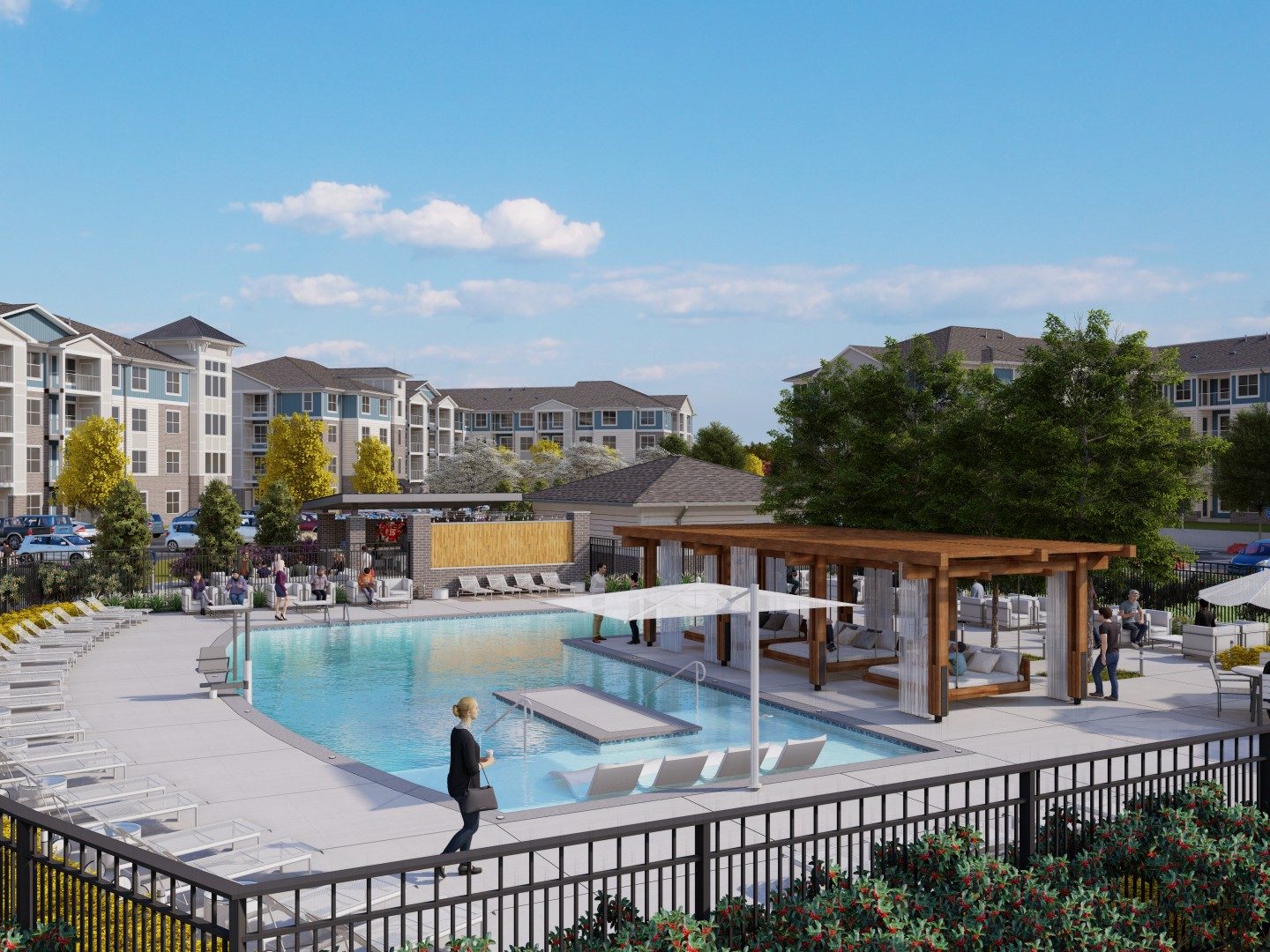
Burch: The economics are hard to argue with—long-term 35- to 40-year, fully amortizing, non-recourse, fixed-rate debt at leverage that agency and bank execution can’t match. In a market where the distress conversation is about refinancing risk and floating-rate exposure, HUD debt structurally eliminates both.
It’s underused for two reasons: timeline and complexity. The application and underwriting process takes months longer than a conventional or agency execution, there’s more paperwork and prepayment flexibility is limited. It’s a tool built for long-term, patient capital, and that works very well for our business model.
Looking over the next 12 to 24 months, what could force more multifamily loans and properties into resolution? What would signal that the market is beginning to clear rather than continuing to extend the adjustment?
Burch: The forcing function is really the calendar catching up with reality. A large share of that 2021–2022 vintage floating-rate debt has either been extended already or comes due over the next several quarters, and there are only so many times a lender wants to extend the same loan. If new-supply absorption keeps running at its current strong pace and rents stabilize, a lot of these deals resolve themselves through improving cash flow rather than forced sales, which is a great outcome.
The signal that we’re clearing rather than extending is transaction volume: distressed and workout sales actually closing at market-clearing prices, not just getting marketed and pulled. Watch loan sales and completed foreclosures tick up modestly—that’s not bad news; that’s the system doing what it’s supposed to do.