Survey: Multifamily Construction Starts Lose Momentum, Costs Rise
Respondents to a survey conducted by the NMHC cited economic uncertainty, limited financial feasibility and low rent growth as key factors behind the decline.
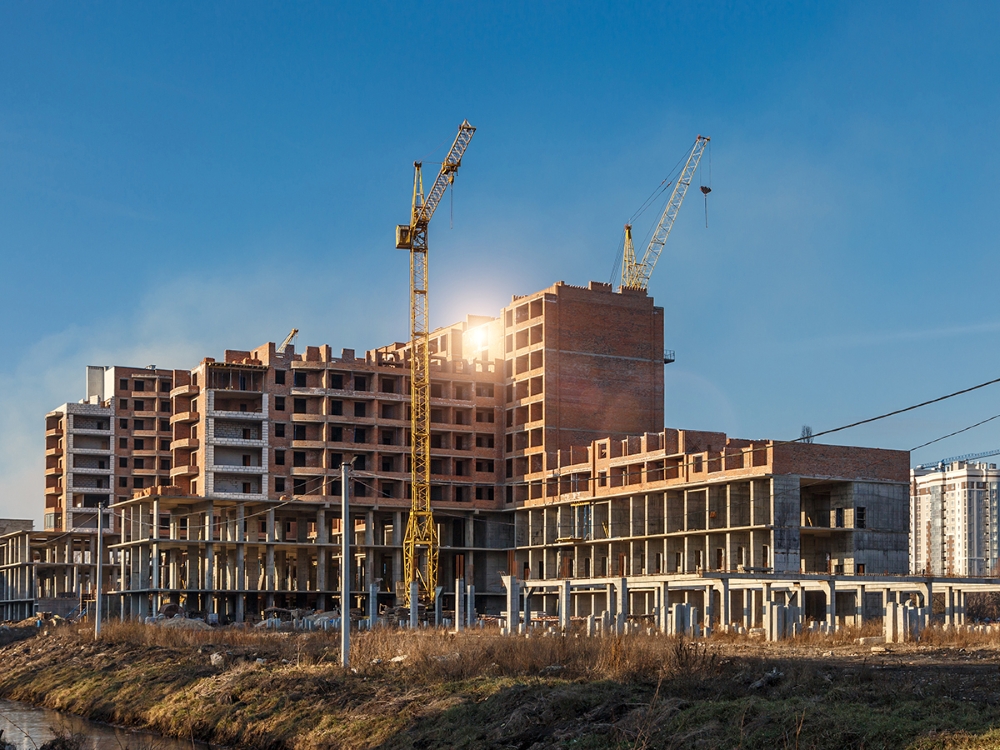
Rising construction costs, muted rent growth and economic uncertainty weighed on multifamily starts during the third quarter, according to the National Multifamily Housing Council’s latest Quarterly Survey of Apartment Construction & Development Activity.
Some 29 percent of respondents said their firms started fewer projects than three months earlier, up from 20 percent in June and 12 percent in March. Another 24 percent reported more starts, while the share recording little change fell from 55 percent to 41 percent quarter-over-quarter.
Economic uncertainty and financial feasibility were the leading reasons for the pullback, with each cited by 65 percent of respondents who started fewer projects. Low rent growth followed at 59 percent, up from 42 percent in June. Another 24 percent pointed to construction financing availability and cost.
READ ALSO: Largest Apartment Development Companies
Higher labor and material costs also became more prominent. The share citing labor expenses tripled from 8 percent in June to 24 percent, while the share pointing to material costs rose from 8 percent to 18 percent.
Higher borrowing costs have added to these pressures, as rising interest rates make fewer projects financially feasible, particularly when developers cannot rely on stronger rent growth. The Federal Reserve added another hurdle by raising the federal funds rate by 25 basis points to a range of 3.75 to 4 percent, its first increase since July 2023. Higher labor and material expenses are also putting further strain on project budgets.
The pullback spreads beyond individual markets
Fewer starts remained concentrated across several high-growth markets in September. Among respondents who reported a decline, 41 percent pointed to the Southeast, including Atlanta, Charlotte and Orlando. Another 29 percent recorded fewer starts across all regions, while Texas and the Southwest each accounted for 24 percent.
The northern West Coast and South Florida followed at 18 percent each, while the Rockies and Southern California registered 12 percent. The Mid-Atlantic, Midwest and Northeast each accounted for 6 percent.
Compared with June, the Southeast’s share declined from 75 percent to 41 percent, Texas dropped from 50 percent to 24 percent and the Rockies fell from 42 percent to 12 percent. Meanwhile, the share reporting fewer starts across all regions increased from 17 percent to 29 percent.
Many Sun Belt metros are still working through elevated supply, weak rent growth and widespread concessions. Yet these markets are still favorites among investors due to their job creation and in-migration prospects.
The NMHC’s State of the Multifamily Market webinar also identified Austin, Phoenix, Dallas and parts of Florida as markets absorbing significant supply. Population and employment growth could support stronger demand after these markets work through their existing inventory.
Costs accelerate as projects reprice upward
A third of respondents said material costs rose faster than inflation during the previous three months, up from 22 percent in June and 10 percent in March. Half said material costs tracked inflation, while 12 percent recorded a real decline.
Labor costs followed a similar pattern. Twenty-two percent said labor expenses outpaced inflation, compared with 8 percent in June and 5 percent in March. Another 53 percent said labor costs tracked inflation, down from 67 percent in June.
Among all respondents, 51 percent repriced developments that had been on hold for three to six months, with 37 percent raising project pricing and 14 percent making downward adjustments. The balance was reversed in June, when 17 percent priced projects upward and 38 percent lowered pricing.
Over the next six to 12 months, 39 percent of respondents expect labor costs to outpace inflation, while 38 percent anticipate faster growth in material expenses. In both categories, just 14 percent foresee costs declining or increasing more slowly than inflation.
Still, half of respondents expect overall construction conditions to improve over the next six to 12 months, up from 46 percent in June, while near-term sentiment remained weaker, with 21 percent anticipating a decline during the next three months.
Rising costs, limited rent growth and economic uncertainty will keep construction activity selective. More supportive financing and lower supply levels could reopen the pipeline, but developers will need stronger project economics before starts recover more broadly.