Is a Rate Hike on the Way?
Experts weigh in on the Fed’s latest move and what’s on the horizon.
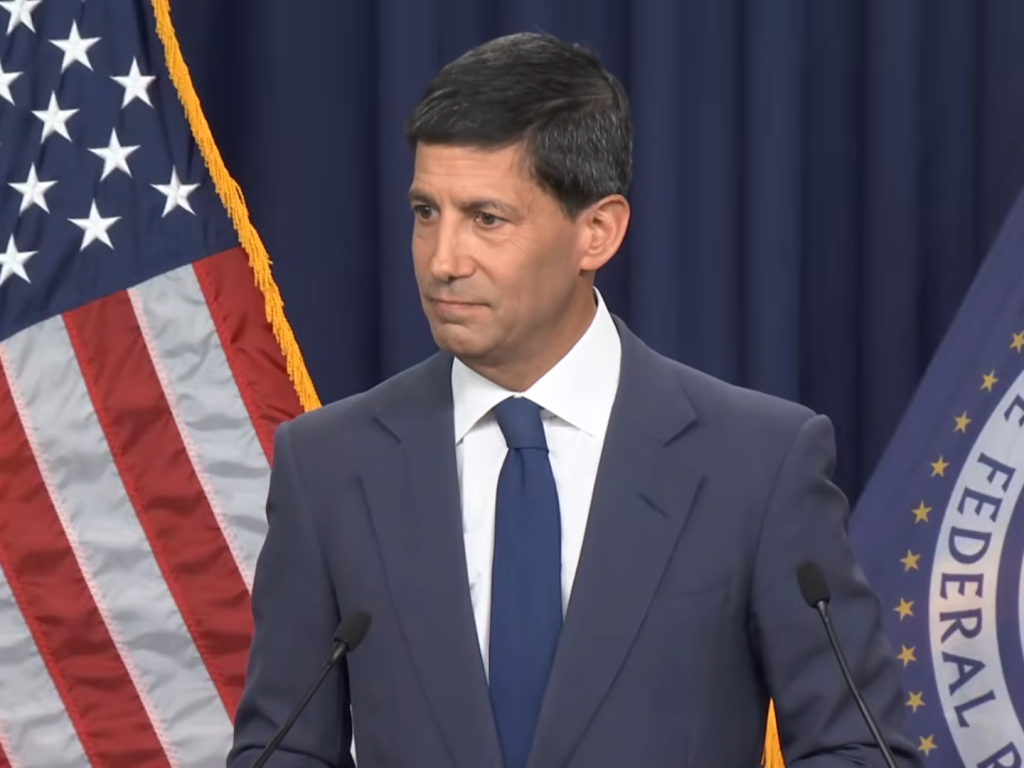
The Federal Open Market Committee has once again decided not to adjust interest rates, although it hinted at doing so in the near future.
For now, the Fed is keeping the federal funds rate at 3.5 percent to 3.75 percent. It has now been about eight months since interest rates have changed.
The vote wasn’t unanimous, with three members of the FOMC voting against the policy and nine members for, including Fed Chairman Kevin Warsh. The members who voted against standing pat—Beth Hammack, Neel Kashkari and Lorie Logan—made it clear that they preferred an increase of a quarter point in the federal funds rate.
In its announcement, the Fed acknowledged that “inflation remains elevated relative to the Committee’s 2 percent goal, in part reflecting supply shocks that have driven price increases in certain sectors, including energy.”
The meeting was Kevin Warsh’s second as Federal Reserve Chair.
“Rates are higher today than they were 42 days ago,” Chairman Warsh noted during the press conference after the announcement. “Markets have made decisions because we stepped. Judgments have moved up on what nominal rates across the Treasury curve.
“That doesn’t mean we take them as by dictation, but we’re observing them. So I think it’s a mischaracterization to say that markets haven’t reacted because we didn’t move today. Markets are reacting in real time in the period ahead.”
Warsh avoided explicit forward guidance—and in fact the central bank has shied away from forward guidance so far during his watch—but he also signaled that if inflation remains elevated, further tightening, including rate hikes, are on the table.
The data backing the decision
The vote came as inflation eased somewhat in the last month, but still sat well above the central bank’s target of a 2 percent annual increase. The Bureau of Labor Statistics reported in June that the all-items consumer price index increased 3.5 percent year-over-year and 0.5 percent for the month.
That figure was down from May, when the all-items consumer price index saw a 4.2 percent increase compared with 2025, and from a 3.8 percent annual increase in April, according to the BLS. For the month, prices were up 0.5 percent in May, after an increase of 0.6 percent in April.
In response to the vagaries of the war with Iran, the price of energy dropped in June, down 5.7 percent after rising 3.9 percent in May, 3.8 percent in April and 10.9 percent in March. The June decrease accounted for the modest slowdown in overall inflation.
READ ALSO: Multifamily Stabilizes as the K-Shaped Recovery Takes Hold
Since the war began, disrupting the flow of oil worldwide, the BLS energy index recently has been the largest contributor to the monthly all-items increase. In June the energy decline, offset increases in other indexes, including those for shelter and food.
Though the pace of inflation in July is still uncertain, oil prices may once again have an upward impact, as renewed fighting had started to drive up the price to more than $83 a barrel by the time of this week’s FOMC meeting. That’s up from around $75 at the beginning of the month.
The second part of the Federal Reserve’s dual mandate, healthy employment, is less problematic than inflation, but still a little weak. Both total payroll employment (up by 57,000 jobs) and the unemployment rate (4.2 percent) changed little in June. Employment continued to trend up in professional and business services, social assistance and health care, while the leisure and hospitality sectors lost jobs.
Is a hike in the cards?
“We don’t expect today’s Fed decision to trigger any near-term or knee-jerk reaction in the market,” Vaster Managing Director Zack Simkins, whose company specializes in residential lending, told Multi-Housing News.
Capital remains available for well-capitalized sponsors, but commercial real estate is currently more opportunity-constrained, Simkins said, as higher equity requirements and disciplined underwriting have narrowed the pool of deals that make economic sense.
“As inflation concerns ease, lender appetite may increase, but the real challenge remains finding enough high-quality opportunities to deploy that capital,” Simkins added.
What the Fed will do next is less certain. “Consensus is that there will be at least one rate hike before the end of the year,” said Ben Johnston, COO at Kapitus. “We generally agree with this assessment, and expect inflation pressure to continue as long as oil and gas prices remain elevated due to disruptions in the Persian Gulf, the Red Sea and as the result of the Russian-Ukrainian conflict.”
READ ALSO: Short-Term Volatility, Long-Term Opportunity for Multifamily: NMHC Experts
Higher oil and fertilizer prices are rippling through the global economy, he noted, causing inflation to emerge across a wide array of products and services. If these global conflicts continue, and there is no reason to believe an end is near, higher prices will force the Fed to act, Johnston said.
“Higher interest rates would be especially painful for commercial real estate loans that carry variable interest rates or are due to be refinanced in the near future,” Johnston said. “Assets that are suffering high delinquency would be especially impacted, as they would struggle to pass an increase in cost on to current and future tenants.”
“While markets cheer softer CPI numbers, consumers do not feel inflation as a monthly datapoint,” said George Ratiu, the National Apartment Association’s vice president of research. “They experience the cumulative and significant loss of purchasing power.”
That tension gives the Fed a narrow window to wait for more evidence, he added. Stable employment and moderating inflation reduce the urgency for an immediate move, while the upcoming Personal Consumption Expenditures Index and next week’s employment report will help determine whether the economy retains momentum or is masking fractures beneath headline strength.
“For the Fed and Kevin Warsh, the next few months are a critical test: Can the bank tame the flames of inflation without inflicting the pain of higher rates and risking freezing job growth?” Ratiu observed. “The stakes are high. Much-needed new housing construction is highly sensitive to financing costs as well as the price of materials and labor, which remain elevated.”