
The Iran War’s Impact on Multifamily: 3 Scenarios
A new report from Marcus & Millichap outlines the potential effects of the conflict, which range from moderate to severe.
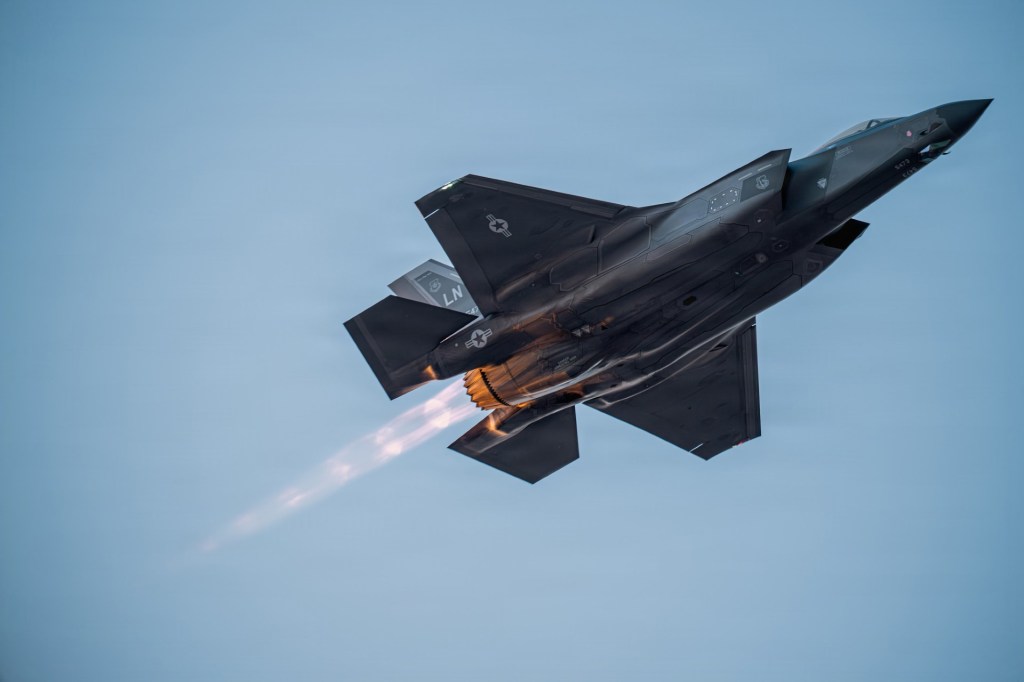
War in the Middle East comes with a host of uncertainties for the U.S. commercial real estate market, including multifamily, according to a new report by Marcus & Millichap. Topping the list are inflation risk and wider uncertainty that dampens business confidence, but the conflict might also spur higher interest rates and further restrain spending by some households, including on rent.
But it’s all still up in the air. In forecasting possible impacts on U.S. CRE, Marcus & Millichap considered three scenarios from less impactful to more so: a relatively short conflict, a conflict of as much as three months, but doing relatively little damage to energy infrastructure and a conflict of more than three months with massive damage to energy infrastructure.
“The economic impact will depend on the conflict’s duration and the extent of damage to energy infrastructure, shaping the shock to inflation, growth, and Fed policy,” the report notes. For now, Fed policy is standing pat, waiting to see what happens next.
READ ALSO: Nearly Half of Renters Are Cost-Burdened: Report
The report found that apartment demand tends to be relatively consistent even during times of market stress, at least when compared with other property types. Even so, tight household budgets might act as a constraint on rent growth, especially at lower-income properties.
However, assets with durable income streams—something often characteristic of multifamily—may be better positioned to weather uncertainty, as far as lenders and investors are concerned. Marcus & Millichap posits that investors will likely focus more on in-place cash flow, while more speculative deals may face greater scrutiny.
Not bad, fairly bad and really bad
A short military engagement, ending via de-escalation or a negotiated deal, would mean that broader economic conditions return to normal fairly quickly, according to the report. In that scenario, U.S. inflation would be muted—at just under 3 percent inflation, where it has been recently—and price pressures would ease later this year as energy costs normalize.
Also in the de-escalation scenario, overall U.S. GDP growth would be about 2.5 percent for the year, with fuel costs and uncertainty posing only a limited drag on activity, especially as the war recedes from current events. The Fed might continue its slow lowering of interest rates, judging that the economy needs the stimulus. However, that wouldn’t be a certainty, especially if inflation persists above the 2 percent target rate.
The second scenario poses more difficulties for the U.S. economy—and thus, income-generating properties—than the first. A conflict that lasts at least three months, but without massive infrastructure damage, would nevertheless be a larger shock.
In that scenario, oil rises above $130 a barrel and U.S. inflation increases to roughly 3 percent, with price pressure lasting into the third quarter of 2026 before easing. Higher input costs and prolonged uncertainty would create a larger drag on business activity and consumer spending, keeping GDP growth near 2.25 percent for 2026. In that environment, there is a chance that there would be no interest rate cuts for the rest of the year, depending on how much energy-driven price gains spur broader inflation.
The third and most impactful scenario in Marcus & Millichap’s estimation would involve a prolonged conflict (more than three months) and significant damage to the energy infrastructure of the Middle East, with effects that ripple worldwide. In that case, oil would rise to around $150 a barrel and U.S. inflation reaches 5 percent, with the sharpest price pressures emerging by the third quarter of this year.

Under the third scenario, U.S. GDP would be below 2 percent in 2026, as the larger shock creates a deep hit to activity, and the possibility of a recession increases. The Fed might be concerned about preventing that via rate cuts, but if inflation is also elevated, the central bank would be tempted to shift away from easing, especially if inflation broadens beyond energy.
It would be a fairly straight line from severe war damage in the Persian Gulf to damage to U.S. real estate, including multifamily, according to Marcus & Millichap CEO Hessam Nadji.
“An extended conflict with significant damage to infrastructure would push energy prices higher for longer, potentially weighing on economic growth,” Nadji told Multi-Housing News. “A slowing economy could further restrain job creation and household formation, reducing new demand for apartments.”
The scenarios might have mitigating factors, however, especially the fact that the U.S. is the world’s top oil producer. Oil prices are a function of the world market, and while Americans would pay more for energy if the international price is high, alarming shortages, as seen in the 1970s, aren’t likely. Moreover, energy goods and services also account for roughly half the share of consumer spending than they did 50 years ago, and the economy uses less energy per dollar of GDP than it did then, the report notes, leaving the United States better equipped to absorb geopolitical risk.
Unintended consequences
Nervous investors often sit on the sidelines, but they also look for safer alternatives. Thus the commercial property sector might remain an appealing asset class despite uncertainty, according to the report. If assets that are more exposed to risk, such as stocks or private credit, come under pressure, real estate may attract additional interest among investors, especially for its tangible income streams and diversification benefits.
Investors might also turn to real estate as an inflation hedge. For property types where leases reset to the market quickly or rent escalators are built in, with expenses are generally passed through to tenants, inflation is more tolerable, Marcus & Millichap says. Apartments and self-storage fall squarely into that category, repricing more quickly, while properties with longer leases may have contractual bumps that help preserve income.
“Income stability grows more valuable,” the report explains. “Assets with durable income streams will be best positioned amid heightened uncertainty. Lenders and investors are likely to focus more on in-place cash flow, long (weighted averaged lease terms), and near-term rollover visibility, while more speculative deals may face greater scrutiny.”
Regardless of external shocks, financing pressure should remain elevated in 2026, with $875 billion of commercial debt coming due this year. High-quality assets can generally still refinance, but more challenged properties may continue to be obliged to kick the can down the road further in the form of extensions, restructurings, or new equity to bridge proceeds gaps.