NYC Just Greenlit a Rent Freeze. What Happens Now?
It was a move promised by the mayor, and the industry's reactions were mixed.
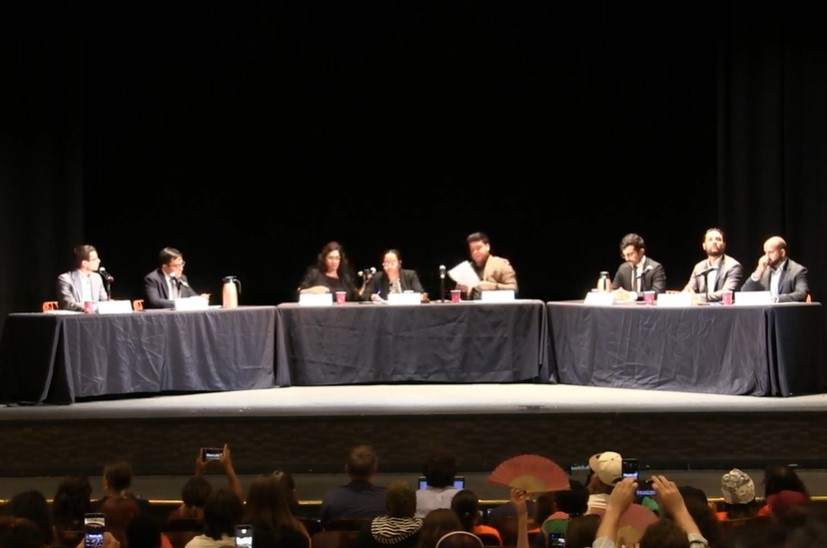
The New York City Rent Guidelines Board, which sets rental rates for the million or so rent-stabilized apartments in the city, voted on Thursday to freeze rents for both one- and two-year leases. Though there have been rent freezes periodically since the board was created more than 50 years ago—most recently due to the pandemic—this is the most comprehensive freeze yet.
The freeze was one of the main campaign promises that helped elect Zohran Mamdani mayor. Though the board is technically independent of the mayor, the freeze was widely expected, since in February the mayor appointed six new members to the nine-member board.
During the tenure of Eric Adams, Mayor Mamdani’s predecessor, rent-stabilized apartment rents were raised a cumulative total of 12 percent. That includes a three percent hike for one-year leases and 4.5 percent for two-year leases in 2025.
Last month, the board approved a range of rent increases from 0 percent to 2 percent for one-year leases and 0 percent to 4 percent for two-year leases. The fact that the low range of possible increases included zero was taken to mean that the board, in taking a final vote, would indeed vote to freeze rents for both classes of leases. Now that has happened.
At the time, Mayor Mamdani said in a statement: “New Yorkers are being crushed by the cost of living, and they need real relief. I’m encouraged to see the board taking seriously the data around affordability, operating expenses and the pressures facing both tenants and small property owners as it sets this preliminary range.”
Reactions to the decision
Real estate attorney Christina Smyth, who represented landlords on the RGB, resigned on Thursday hours before the body was scheduled to vote, strongly criticizing the board for ignoring rising building and insurance costs for landlords.
“This rebuilt board was required to deliver a rent freeze,” she wrote in a three-page resignation letter first reported on by the New York Daily News. “Everything since has been theater. The hearings, the reports, the public comment, the data. None of it was ever going to change the result.”
READ ALSO: How the Affordability Crisis Could Be Solved Within a Generation
Smyth had been the only member of the board last month to vote against a preliminary freeze, with another landlord representative abstaining. She argued in her letter that a rent hike is necessary because operating costs have risen faster than inflation, and that insurance costs, property taxes, water and fuel are also higher.
The New York Apartment Association agrees with that position.
“Our message is clear: This freeze will destroy the living conditions for hundreds of thousands of New Yorkers,” NYAA CEO Kenny Burgos said in a message to Multi-Housing News immediately after the vote.
“This was supported with study after study, including RGB data finding (the) rent needed to increase just to run a building,” Burgos said. “NYCHA, a shelter, a co-op, or a rent stabilized building cannot exist without funding, yet here we are, left to watch housing stability and quality malaise, with no plan to save it. I urge policymakers to act expeditiously before this bubble bursts.”
Other reactions were even more negative. “This vote was an absolute farce,” Ann Korchak, board president of Small Property Owners of New York, said in a statement after the vote. “The RGB may have technically met its quorum requirements, but proceeding with one of the most consequential rent votes in recent times with half of its owner representation undermined the balance and fairness of this process. The vote should’ve been postponed until a new owner representative could be appointed.”
Defunding rent-stabilized housing when the RGB’s own data showed a 5.3 percent increase in operational costs and expenses is setting up already financially distressed small owners for failure, Korchak added.
“Instead of balancing the needs of renters and owners to maintain the health and stability of the city’s rent-stabilized housing stock, Mamdani’s RGB unleashed what will be irreparable destruction on affordable housing, small owners, and the millions of New Yorkers we house,” Korchak said.
Urging help for landlords
Maksim Wynn, the remaining member of the board representing apartment owners, spoke at some length before he voted—the only member to do so on Thursday evening—making a case for government intervention at various levels to help landlords with rising expenses.
“Past boards have reasonably assumed that the best way to ensure sustainable operations is to increase legal rents,” Wynn said. “However, the data this board has reviewed suggests that for buildings with income-to-expense issues, increasing legal rent may counterintuitively decrease income.
“Economic occupancy, or the percentage of the owed rent that is actually collected, decreases when tenants are unable to pay their rent, according to testimony from the NYAA and the (New York University) Furman Center,” Wynn said.
That doesn’t mean that no economic intervention is needed, however, according to Wynn.
“These buildings and their owners are struggling, and they need a decrease in expenses, as well as an increase in the availability of capital,” Wynn said. “Policymakers at the city, state, and federal levels have the ability to make the expensive capital interventions that these buildings and their owners, need.”
Ultimately, Wynn voted for the freeze. Only one member of the board, public member Arpit Gupta, voted no, without comment.