Reduce Your Exposure: Why High-Tech Buildings Are Safer
How predictive maintenance and other tools can reduce your insurance costs and protect NOI.
You might think of proptech investments as just a way of attracting and retaining residents. While this is often the case, you might be missing out on another benefit of upgrading your tech stack: risk management.
From leak-detection systems to digital access control, there’s a growing supply of hardware products and software services in the market that aim to reduce risk and liability, while also improving safety. Many owners and operators who have integrated these technologies are already seeing more favorable insurance rates, with the trend expected to continue and expand in the future.
“Insurance is one of the largest line items that multifamily has right now,” said Sandy Jack, vice president of strategic relations for multifamily at Vingcard/Nomadix. “Owners are now really (asking): How do I mitigate that and how do I prove that I’m doing the best practice?”
Charting a course through the insurance waters

The industry has experienced a whirlwind insurance market over the past decade, according to Stephen McCord, executive vice president of real estate and hospitality at insurance brokerage Marsh McLennan Agency.
“The property market got really bad following 2017,” McCord reported. “In the insurance industry we call it the Year of HIM: Harvey, Irma, Maria,” referring to that year’s three major hurricanes that struck the U.S.
Since late 2023 and through 2025, rates have been decreasing, though they still pose a large burden on owners, he noted.
So where does tech come in? Known as predictive maintenance, new tools use AI to identify building failures before they occur or early on—before the damage gets too costly. Insurers are taking notice of this technology and integrating it into their underwriting.
Multifamily in 2022 is not multifamily in 2026.
—Sandy Jack, Vice President of Strategic Relations for Multifamily, Vingcard/Nomadix
Insurance carriers want to understand why a previous catastrophic loss occurred and the steps an owner has taken to prevent such a loss from happening again. For example, this might mean showing how a property installed leak-detection software following a burst pipe.
“In a challenging environment, or when there’s (a higher) cost, it’s making sure we’re telling our story,” noted Jason Shepard, vice president of risk at RPM Living. “One of the things that some companies forget to do sometimes is to take credit for the things they’re doing that are good.”
McCord gave the example of a 50-story community he insured that originally had a $2 million water damage deductible. After installing leak detection software in the building, the insurance carrier reduced that deductible to $100,000—a decrease of 95 percent.
Besides leak detection, other types of predictive maintenance tools are coming to market, as well. Some properties, for example, have adopted infrared scanners to find hot spots in walls and identify faulty wiring.
“I wouldn’t say it’s as much where you can’t get coverage if you don’t have this (technology) in place,” he said. “I just think that your deductibles will be better.”
Access control and digital security
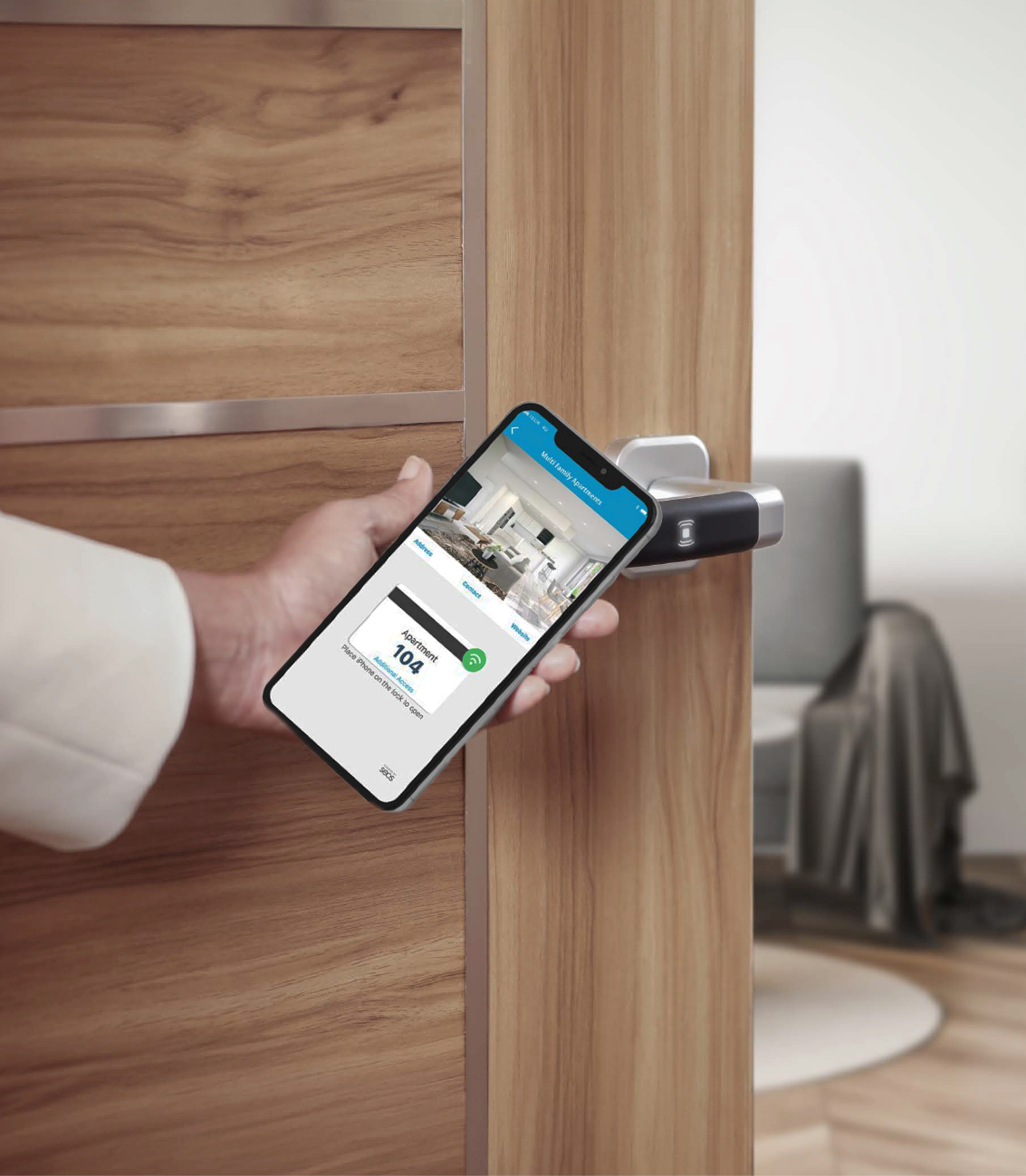
Technology adoption can also be a key way of keeping your residents safe, according to Jack.
Just compared it to a few years ago, when “it was really about the resident experience and how to attract more people. Now risk and liability have become a big component of it. I tell people all the time, multifamily in 2022 is not multifamily in 2026.”
Digital access control systems can be crucial in ensuring resident safety and reducing liability. Modern cloud-based software can produce detailed audit logs of each time a door at a community is opened and who opened it. This is critical information in the event of a safety incident that leads to litigation.
These types of technologies can also alert operators when doors are propped open, a potentially dangerous resident habit that’s common in lower-tech buildings.
Jack also pointed to the rise of the gig economy as evidence of the need for better access control systems. According to research from Gallup, 36 percent of U.S. workers participate in the gig economy in some way, such as driving for delivery or rideshare apps, walking dogs or cleaning homes. These types of workers are frequently entering and exiting other people’s homes, she noted.

The kinds of clients that most carriers want are those who are investing not only in property safety but also life safety.
—Stephen McCord, Executive Vice President of Real Estate and Hospitality, Marsh McLennan Agency
“Properties have to adapt to having that kind of intrusion,” Jack asserted. “Having a secure building doesn’t just help the residents and protect the property from liability but it also protects the visitors that are there.”
As with any internet-connected technology, there are cybersecurity concerns that property owners and managers must take into account. Jack says using a managed Wi-Fi system can both improve resident satisfaction and ensure better security.
Using enterprise-grade, cloud-connected IoT devices on a managed Wi-Fi system can help defend against intrusions or cyberattacks, Jack said. For properties that have not implemented managed Wi-Fi for residents, she recommended at least adding a dedicated network just for property-wide smart devices, such as smart locks.

Reframing the cost mindset
While more new builds are rising with these types of technologies pre-installed, retrofitting older buildings can pose a challenge. Many owners may balk at the cost of implementing such equipment, but this may prove to be shortsighted.

“I encourage people to not just look at the line item and the cost of what it takes,” Jack said, “but to look at what it’s providing for your property overall and how you’re presenting yourself for the future.”
Owners also don’t necessarily need to upgrade their entire tech stack at once. Take stock of what additions are most critical to your property and do upgrades step by step over time.
RPM’s Shepard recommends looking closely at the a property’s historical losses and determining whether the cause was behaviors or conditions.
Behavioral failures, such as poor maintenance or improper contractor oversight, can often be prevented by effective training and procedures. Conditions, such as aging pluming infrastructure or faulty wiring, may present an opportunity for tech adoption.
We have to be good at telling our story.
—Jason Shepard, Vice President of Risk, RPM Living
Certain instances, such as in the case of a leaking pipe, leak-detection software can work together with proper maintenance training to prevent catastrophic water losses.
“Sometimes the blocking and tackling are simply making sure you’ve got the basic inspection and escalation processes to get things fixed,” Shepard said. “You really have to analyze your data and determine, is there a specific tie to this particular solution that a vender might be bringing me?”
While technology isn’t a silver bullet, and not every property can implement everything, the operators who integrate risk thinking into budgeting, capex planning and portfolio standardization may gain resilience and negotiating power in the long run.