Tales From the Missing Middle: Q&A With Wendover’s COO
Ryan von Weller on development challenges, shifting cost dynamics and how developers are adapting.
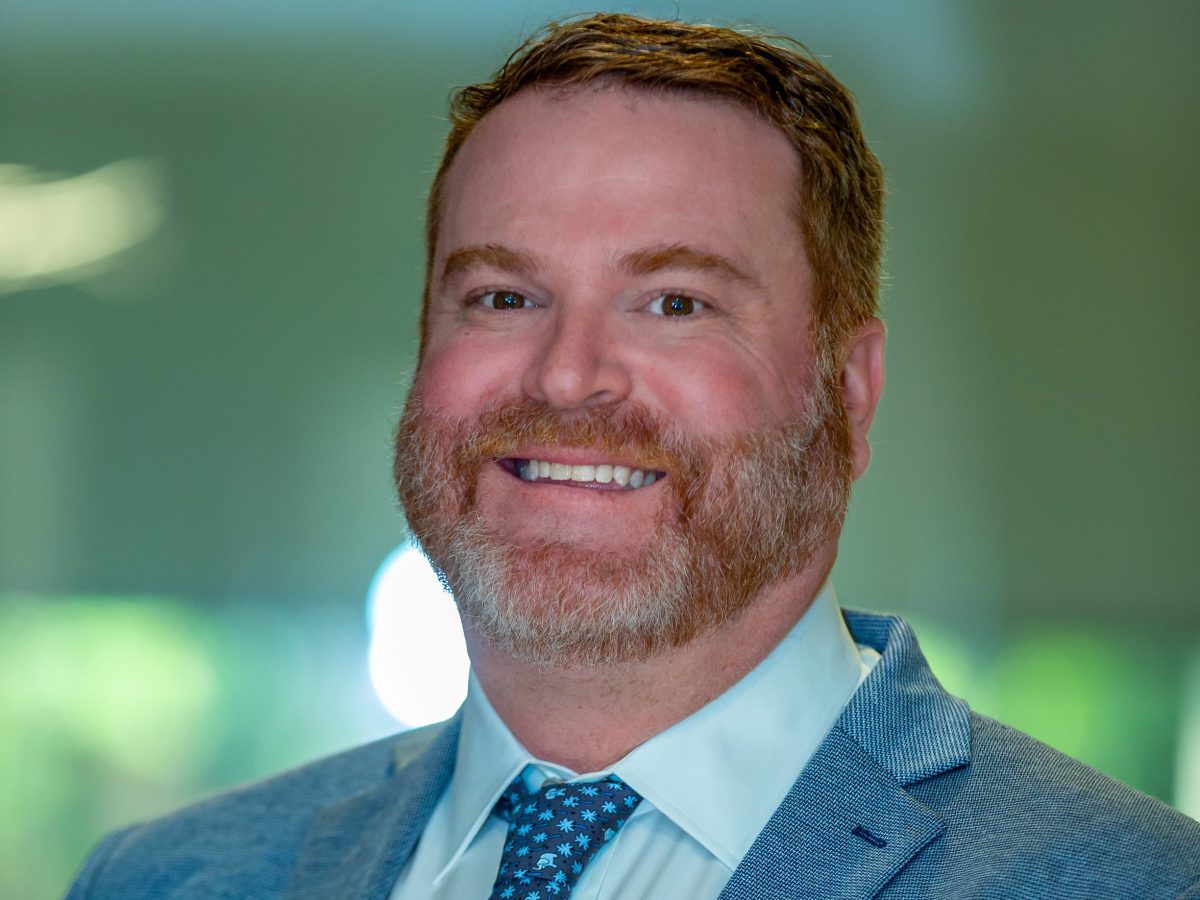
Often labeled “the missing middle,” workforce housing is typically framed through income bands. For Wendover Housing Partners, an affordable housing developer with more than three decades of experience across the Southeast, it’s something more practical: housing for the essential workforce that holds a community together.
In this interview, COO Ryan von Weller discusses the gap between traditional affordable and market-rate housing, and how “affordable” plays out beyond technical definitions. He also weighs in on what’s pressuring workforce housing feasibility in 2026 and how developers are adjusting as costs and timelines become harder to control.
How do you define workforce housing in practical terms?
Von Weller: When we talk about workforce housing, we’re referring to housing for people who keep a community running. These people are the backbone of our neighborhoods: teachers, hospitality workers, health-care staff, public-sector employees, retail and service workers, and a long list of other jobs that make the local economy function.
Practically, workforce housing serves households that fall in the gap between traditional affordable housing and market-rate housing, often in the 60 to 120 percent of the area median income range. For example, this could include a construction worker earning $45,000 a year or a kindergarten teacher earning $60,000 a year. For those households, ]affordable’ has to mean they can pay rent and utilities and still afford the basics—groceries, transportation and other essentials—without constantly feeling like they’re making trade-offs.
While affordable and workforce housing limits are determined by these income bands, we don’t view it solely as a technical definition. In our minds, if housing costs force people to choose between rent and groceries, or rent and child care, then it’s not truly affordable, even if it checks a box on paper.
READ ALSO: Affordable Housing Industry Trends
What are currently the biggest challenges in making workforce housing projects financially feasible? And how are you addressing them?
Von Weller: The biggest strain points right now are construction prices and interest rates. Though we saw reductions in materials like lumber in 2025, the shortage of skilled labor and rising wages counterbalanced these gains, creating a net increase in construction expenses. At the same time, interest rates remain higher than in previous years, and that has a direct impact on feasibility. Higher rates increase borrowing costs, tighten underwriting and shrink how far each dollar can go. As a result, we’ve seen a greater need for gap money to cover the shortfalls in budgets.
The challenge is that workforce housing doesn’t have the option to simply raise rents to close a financing gap. The entire purpose is to keep housing within reach for working households. So the feasibility conversation turns into: How do we bring in more partners, more tools and more predictability so we can still deliver what the community needs?
At Wendover, we’ve leaned into partnerships with local governments to streamline processes and reduce financial barriers. For example, in several projects, we’ve worked with municipalities to secure low-interest loans or grants, which reduce the pressure on rents while still covering construction costs. We also actively seek out opportunities to utilize innovative funding sources to fill the gaps in our capital stack.
In the midst of challenges, we are seeing increased activity to create affordable and workforce housing for the people who need it most. The rising momentum reflects a stabilization in our industry, even if the pace remains slower than we would like.
Given all the constraints you mentioned, how are you structuring the capital stack and navigating approvals to get workforce projects to the finish line?
Von Weller: We’re always looking for ways to be more creative and more disciplined at the same time. These deals are rarely a simple capital stack anymore. We’re often layering multiple sources of capital and we’re also working much earlier and more closely with public partners to reduce risk and shorten timelines.
On approvals, we’ve learned that time is money in a very real way, especially in this environment. So we’re focused on clarity upfront, steady coordination with the municipality and doing everything we can to avoid surprises late in the process. When local governments treat housing like critical infrastructure and put real capacity behind permitting and coordination, it materially changes what’s financeable. Where it becomes challenging is when timelines are unpredictable or requirements shift midstream, because that uncertainty gets priced into the deal.
Which public-sector actions are currently most decisive in moving a workforce housing project from concept to financeable reality, and where are municipalities falling short?
Von Weller: The most decisive actions are the ones that create certainty and close gaps. If a city or county can help speed timelines, provide clear rules and bring real financial tools to the table, it changes the outcome. The biggest wins usually come from some combination of zoning that allows housing to happen, reliable local funding tools, and a process that treats housing as urgent, not optional.
Where municipalities fall short is often in the basics: inconsistent timelines, unclear expectations or a lack of sustained funding that matches the scale of the need. Sometimes it’s also a disconnect between stated goals and the willingness to make tough decisions that allow housing to move from concept to reality. Workforce housing doesn’t happen on good intentions alone. It takes practical tools and follow-through.
READ ALSO: How Mixed-Income Housing Drives Neighborhood Revitalization
When evaluating a potential workforce housing site, what are the non-negotiables that determine whether you move forward?
Von Weller: When we evaluate a potential workforce housing site, we’re asking two main questions: Is this location near essential services like grocery stores, doctor’s offices and job opportunities that will set residents up for success, and can we realistically get the project delivered in today’s environment?
A big non-negotiable is access. If the site isn’t close to jobs and other daily needs, it’s hard to say we’re solving the real problem. That’s where infill can be especially powerful. Infill sites can put workforce housing closer to established employment centers, schools and services, which can reduce commute time and transportation costs and give people more time back in their day. The trade-off, of course, is that infill often comes with its own complexity, whether that’s tighter sites, higher land costs, or navigating complicated existing infrastructure.
From there, we look hard at feasibility and certainty. We need a realistic plan, infrastructure that can support that plan and a timeline we can stand behind. In today’s market, unpredictability can break a deal fast.
And finally, we look at whether the site allows us to deliver a community people will be proud to live in, not just a set of units. If we can’t create something that works for residents long-term and works financially without drifting out of reach for working households, we’re not going to force it.
And what indicators do you track to assess a project’s long-term impact on residents and the broader community?
Von Weller: Our CEO, Jonathan Wolf, always asks, ‘How can we improve someone’s life?’ This guiding principle is at the heart of everything we do.
It’s not just about building a development. It’s about creating a place where residents can truly flourish, whether that’s offering something as simple as a washing machine in every unit or something bigger like providing access to on-site continuing education. This includes looking at residential stability. Are residents able to stay in their homes long-term without the constant fear of being priced out?
We also look at quality of life. It’s not enough to just offer affordable rent. We want to make sure our communities provide access to important amenities, transportation and services that make life easier and bring satisfaction for residents.
And then there’s community impact. Housing doesn’t exist in a vacuum; it’s part of a larger community. We aim to create projects that have a positive ripple effect on the area, strengthening the community as a whole.
Our goal is to change lives through housing. If we can provide not just a place to live but a space for people to thrive, then we’ve truly succeeded. And that’s the kind of impact we’re committed to achieving with every project.
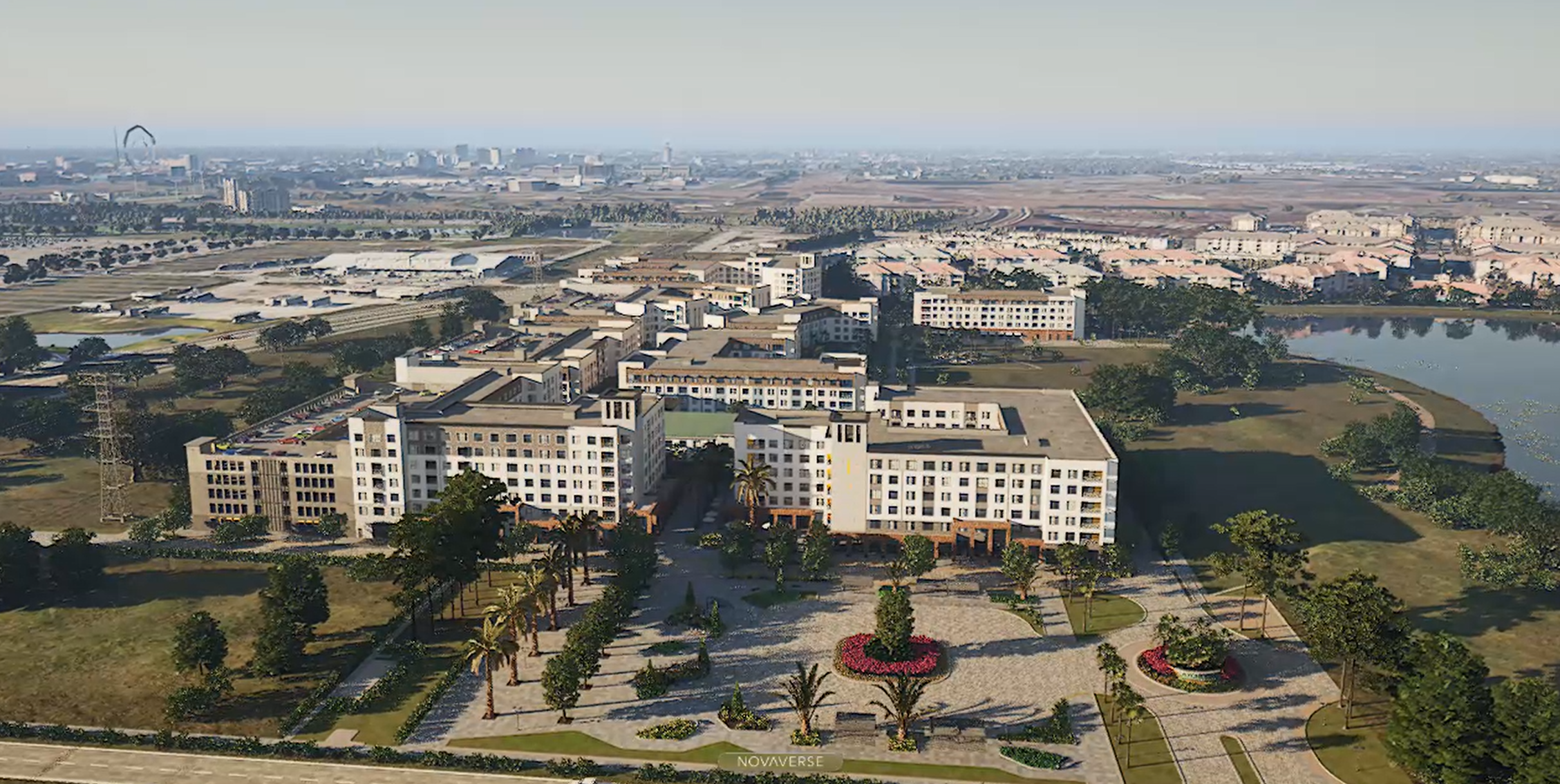
Catchlight Crossings is a 20-acre, 1,000-unit community under development near Orlando’s International Drive corridor, on land donated by Universal’s Housing for Tomorrow nonprofit. All images courtesy of Wendover 
Apartments feature large windows and modern furnishings in natural tones. 
On-site amenities include resort-style pools, alongside a community garden and 4 acres of open green space, to name a few.
Is there a recent Wendover workforce housing project that best illustrates the trade-offs you’re navigating today?
Von Weller: A current example is Catchlight Crossings, a 1,000-unit affordable and workforce housing community we are currently developing in partnership with Universal Destinations & Experiences.
Catchlight Crossings brings together multiple priorities at once—rents that are within reach for working households, a location strategy tied to jobs and connectivity, and partnerships that add real value. In this example, Universal took the bold step of setting up a not-for-profit organization and entering into a low-cost, long-term lease with Wendover for land directly next to Universal’s new Epic Universe theme park, allowing us to keep costs down and place the development in a location that serves both the workforce and the broader community. …
Universal’s involvement demonstrates how private sector companies can make a tangible impact by partnering with affordable housing developers to create real, lasting change amid escalating challenges like rising construction costs and limited land availability. …
LISTEN TO: Mission Success Podcast: Why Mission Requires Courage—and Capital
What partnership models are proving most effective in workforce housing right now?
Von Weller: What’s proving most effective right now are partnerships where each party is solving a real problem and making a real commitment, not just lending a logo. On the employer side, the strongest models are the ones tied to retention and stability, where the employer is willing to provide meaningful land that actually changes feasibility.
We’re also seeing community-based partnerships play a bigger role, including faith-based partners. For example, Wendover is currently partnering with a local church to develop affordable housing, aligned with the “Yes in God’s Backyard” approach. The reason models like this work is that they are rooted locally and they come with a shared mission and staying power. When a partner is truly invested in the long-term health of the community, it changes the conversation from “Can this get approved?” to “How do we make this happen responsibly?”
Looking ahead, policy support could meaningfully expand what is possible. New legislative support is expected to reshape the landscape in 2026, and one example we are watching closely is the Live Local Act in Florida. New language is set to allow tax credits for school-employee-related housing. This could open up new pathways to partnerships with school boards, helping meet the housing needs of the community workers who show up every day, like teachers and school staff.
Is there a lesson from the past you’re carrying into 2026?
Von Weller: The lesson we’re carrying into 2026 is that the strongest workforce projects are the ones that pair affordability with real-world livability and access. To do this, we need partners who are committed to making a real impact and addressing the need for affordable housing in meaningful ways.