Fed Holds Rates Amid Economic Volatility
Yet the impact of the Middle East war and other factors could complicate future decisions.
The Federal Open Market Committee has once again decided to keep interest rates level at their current target range of 3.5 to 3.75 percent, where they have remained since December. Addressing a continuously cooling labor market, elevated inflation and broader economic uncertainty remain the central bank’s focus as global crises deepen.
The Bureau of Labor Statistics revealed that the U.S. labor market lost 92,000 jobs in February, raising the unemployment rate to 4.4 from 4.3 percent month-over-month. On the other side of the Fed’s dual mandate, rising oil prices due to the war with Iran risk slowing the progress that has been made on inflation.
In a statement following the announcement, the Committee acknowledged the risks that the conflict poses to both sides of its mandate. “Uncertainty about the economic outlook remains elevated, and the implications of developments in the Middle East for the U.S. economy are uncertain,” the group said in a statement.
The Committee cited both the recent jobs report and inflation data as the primary reasons for its pause. “Job gains have remained low, and the unemployment rate has been little changed in recent months. Inflation remains somewhat elevated,” the announcement read.
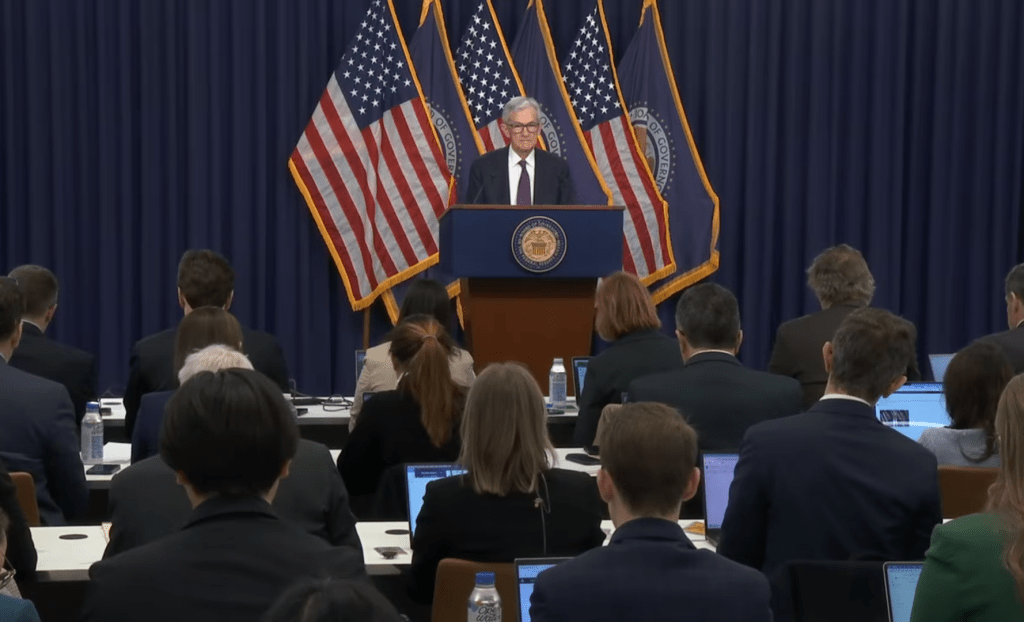
Despite the sudden shock to oil prices, Fed Chair Jerome Powell pointed to the uncertainty brought on by the conflict as being the more significant cause of the Committee’s policy restraint. “Nobody knows what the economic effect will be,” Powell said at a press conference following the announcement. “If we have a long period of higher gas prices, that will weigh on consumption. But we don’t know if that’s going to happen.”
Despite the volatility, Powell expressed confidence in inflation coming down to two percent over the next few years. This Committee projected one additional rate cut this year.
Industry experts were surprised little by the announcement. “The Federal Reserve’s rate-setting committee finds itself squeezed between the proverbial rock and hard place,” said George Ratiu, vice president of research at the National Apartment Association. Ratiu beleives that this pattern of decision making signals slowing economic momentum alongside renewed inflation pressures. He added that cutting rates too soon could reignite inflation and complicate the Fed’s path forward.
A cloudy path forward
While most analysts expected rates to remain unchanged, economic uncertainty surrounding the conflict in Iran and its potential effect on inflation, particularly with regard to oil prices, has left many wondering how the Fed will respond through the rest of the year, especially under a new, more inflation-hawkish chair.
READ ALSO: A Closer Look at the Multifamily Maturity Wall and Refinancing Crisis
Before the recent conflict, the industry was not expecting an interest rate change until the latter half of 2026. Rising oil prices and broader uncertainty have since clouded that outlook. Some industry professionals now anticipate that the Fed could decide on a rate increase, depending on the incoming data.
“Upward pressure on inflation—stemming from the services sector and higher oil prices related to the conflict in Iran—likely constrains the Federal Open Market Committee,” said Kurt Funderburg, chief investment officer at Byline Bank. “Even prior to recent geopolitical developments, the tone of commentary from most FOMC members pointed to an indefinite pause in rate cuts.”
In the multifamily sector, professionals say the Fed’s decision and cautious outlook are unlikely to push investors out of the market, but they will likely slow deal activity and tighten capital markets. Lenders will probably remain selective on spreads while limited partner equity largely stays on the sidelines.
“Multifamily, being among the most sensitive to rate movement, is a great example of the sales gridlock,” Marion Jones, principal and executive managing director of U.S. Capital Markets at Avison Young, told Multi-Housing News. “Underlying rates and the resulting cap rates are keeping a lot of product from hitting the sales market.”
Jones said continued uncertainty around the ongoing conflict could also contribute to greater hesitation among institutional investors that are considering new multifamily deals.