Finding Value in Volatile Markets, the CRC Way
Dana Caudell on how the firm's strategy is playing out amid market shifts.

With more than six decades in residential and commercial real estate, Continental Realty Corp. has evolved from a regional operator into a fully integrated national real estate platform. The Baltimore-based owner and manager of more than 10,000 apartments across 14 states continues to refine its investment and operational strategy across the Southeast and Mid-Atlantic as multifamily market trends and broader economic conditions shift.
In an environment that demands both precision and adaptability, CRC is relying on data-driven insights and enduring relationships to guide its approach, according to Executive Vice President & Head of Multifamily Operations Dana Caudell.
She spoke with Multi-Housing News about navigating shifting cycles, identifying value-add opportunities, and finding balance between growth and stability.
WATCH NOW: The State of Multifamily: A Q&A With Jeff Adler
Since CRC’s early days in 1960, the company has seen the multifamily landscape change dramatically. What key turning points have influenced how CRC defines and manages its portfolio today?
Caudell: The defining pivot came as we evolved from a regional operator into a fully integrated real estate company with a national perspective. Today, CRC has a proven track record of delivering results for investors, maintaining longstanding lender, broker and owner relationships and earning a reputation for certainty of execution.
We further differentiate ourselves through our use of alternative data to identify opportunities others might miss. By creatively adapting data from various industries and leveraging nontraditional information sources, we gain more timely, granular insights than firms that rely solely on conventional real estate data. That edge reinforces our commitment to integrity, relationships and results.
You’ve seen the multifamily market move through several ups and downs. Which lessons from past cycles do you find most valuable in responding to volatility and changing renter dynamics?
Caudell: We have learned that discipline, data and relationships sustain performance through volatility. The most relevant lesson from past cycles is the importance of maintaining a long-term view while staying agile in the short term. Markets change, but fundamentals such as sound underwriting, strong operations and the resident experience remain constant.
We apply those lessons by staying active in the market and maintaining a pipeline of opportunities that meet our investment criteria. As fixed-rate, long-term borrowers, we take a disciplined approach that helps protect against downside risk. Leveraging advanced data science and alternative data allows us … to invest ahead of the curve in locations positioned for outsized growth.
In addition, our industry relationships and market expertise enable us to source a significant share of our acquisitions off-market, accessing high-quality opportunities that are not widely available. These fundamentals, paired with enduring demand for multifamily housing driven by job and wage growth, demographic shifts and the rising cost of homeownership, create a resilient foundation.
How would you describe the multifamily landscape across the markets where you operate?
Caudell: CRC’s multifamily portfolio is concentrated in the Southeast and Mid-Atlantic regions, where we continue to see strong fundamentals and consistent outperformance relative to national trends. These markets benefit from sustained demand, steady rent growth and healthy absorption across a range of asset types.
Population and job growth continue to outpace national averages, supported by migration to the Southeast driven by affordability, employment opportunities and overall quality of life. At the same time, elevated construction costs and tighter financing conditions have limited new supply, creating a favorable balance between demand and available inventory.
Our data-driven approach enables us to monitor these dynamics and anticipate emerging shifts. By focusing on markets and submarkets with durable economic drivers and limited new deliveries, we position the portfolio for stable performance and long-term value creation.
When evaluating new markets, what criteria guide your decisions?
Caudell: When evaluating properties, we prioritize well-located communities with quality construction, appealing design and potential for operational or strategic enhancements. Our goal is to identify assets that align with our investment philosophy—those positioned for stability today and meaningful value creation over time.
You target a mix of value-add and newer Class A properties. How do you decide when it makes sense to pursue a repositioning opportunity versus a stabilized asset? What’s the thinking behind that balance?
Caudell: Our decisions are guided by market fundamentals and cycle positioning. During periods of expansion, we focus on value-add opportunities where renovations and management enhancements can drive meaningful NOI growth. In more mature or supply-constrained markets, we emphasize Class A assets that offer durable income and long-term appreciation.
Regardless of the asset class, our goal remains the same: to create lasting value through disciplined execution, data-driven insight and a deep understanding of the markets where we invest.
Once you acquire an asset, what kinds of upgrades or improvements usually make the biggest difference in terms of value and resident appeal?
Caudell: We prioritize upgrades that deliver measurable ROI and enhance the resident experience. That includes interior renovations to kitchens, bathrooms, flooring and lighting to refresh vintage properties with a timeless, modern look. We also value technology enhancements such as smart-home features, bulk Wi-Fi packages and a multifamily AI tech stack for faster, more convenient communication. Upgrades to common areas and amenities are a priority, with a focus on fitness centers, coworking spaces, package lockers and outdoor social areas.
READ ALSO: When Deploying AI in Multifamily, a Focused Strategy Is Key
With so much competition in multifamily, how do you set your communities apart to keep occupancy and retention high?
Caudell: We typically prioritize low-density layouts with direct-entry units, connected garages and walkable designs. Post-pandemic, residents prefer more connectivity than ever while maintaining privacy within their homes.
It is also important to ensure a consistent brand experience throughout tours and residency, from sound, scent and visual presentation to high-touch follow-up across the portfolio. Our top priority is resident satisfaction and reflecting superior service and retention.
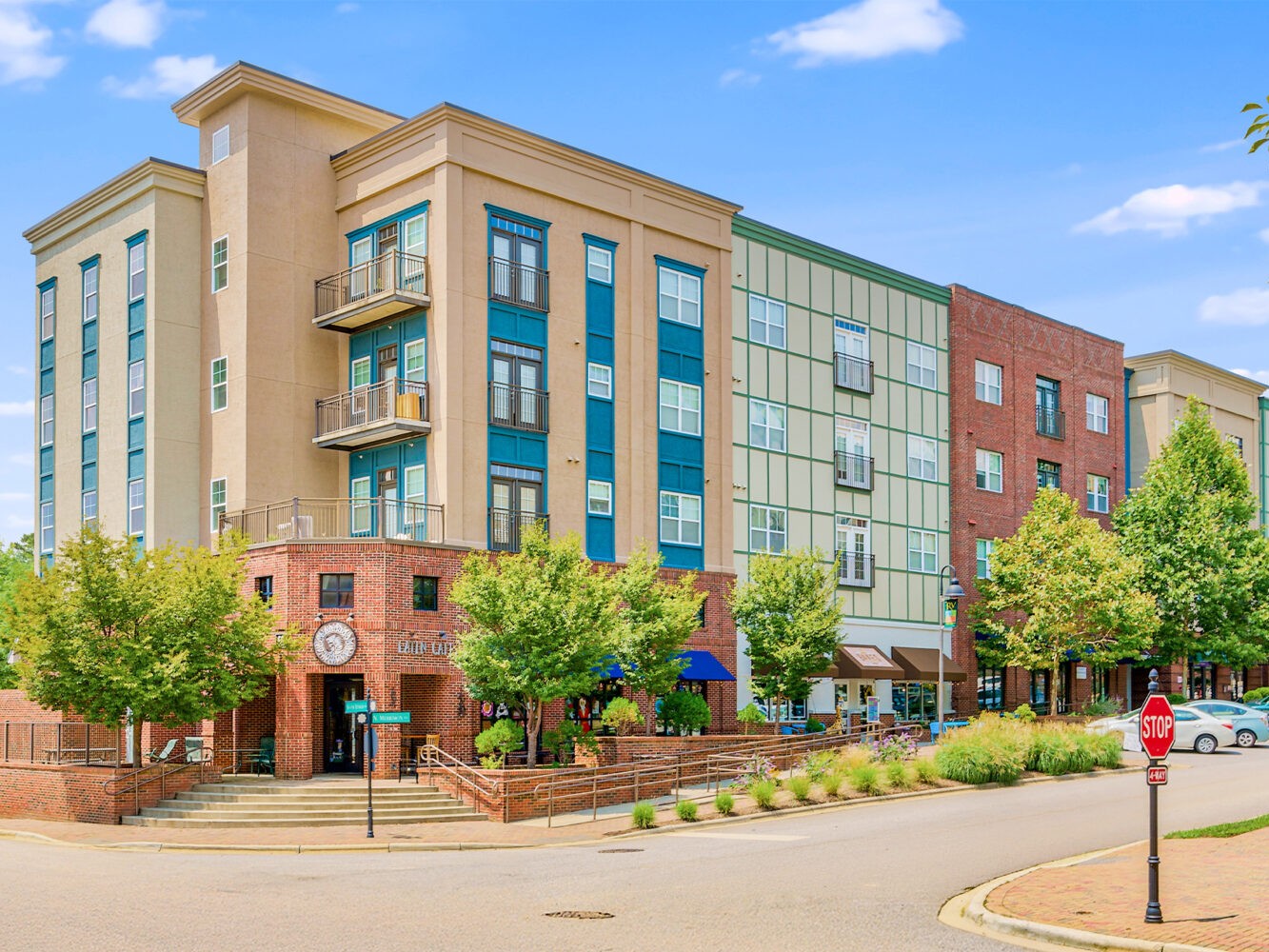
You recently acquired The Lofts at Reynolds Village in Asheville, a mixed-use property combining apartments and retail. What attracted you to that deal, and how do you plan to bring both sides of the asset to life?
Caudell: Given our knowledge of residential and retail operations, this acquisition exemplifies CRC’s mixed-use strategy. Our decision was driven by the asset’s irreplaceable A-plus location within a vibrant submarket and strong consumer demand.
We intend to integrate the complementary residential and retail components by curating resident and commercial-use events while marketing the retail as an extended amenity for residents.
Looking ahead, what do you see as the most significant challenges and the greatest opportunities shaping the multifamily sector over the next few years?
Caudell: We expect the sector to continue navigating a complex mix of challenges and opportunities. Elevated interest rates and tighter capital markets will remain key forces influencing investment decisions and pricing. These conditions reinforce the importance of disciplined underwriting, operational efficiency and data-informed decision-making.
The long-term fundamentals remain strong. Population growth, migration patterns and the rising cost of homeownership continue to drive demand for quality rental housing, particularly in the Southeast and Mid-Atlantic, where we are especially active. We see opportunity in technology and advanced analytics to optimize performance, improve the resident experience and identify emerging submarkets positioned for sustained growth.
While new construction has slowed in the near term, measured development activity should help balance housing needs without oversaturating key markets. Overall, this period rewards thoughtful operators—those who combine strong relationships, sound data and disciplined execution to create lasting value through changing conditions.