Multifamily Market Realigns as Regions Diverge
This stability masks significant underlying shifts in regional performance and supply-side dynamics.
The U.S. multifamily market is finding a new equilibrium, with the national vacancy rate holding steady at 6.5 percent for a third consecutive quarter. This stability, however, masks significant underlying shifts in regional performance and supply-side dynamics. While the market remains mostly in balance, a slight decline in both asking and effective rents—the first since late 2023—signals a subtle momentum shift as construction deliveries slow from their 2024 peak.
READ ALSO: National Multifamily Report – September 2025
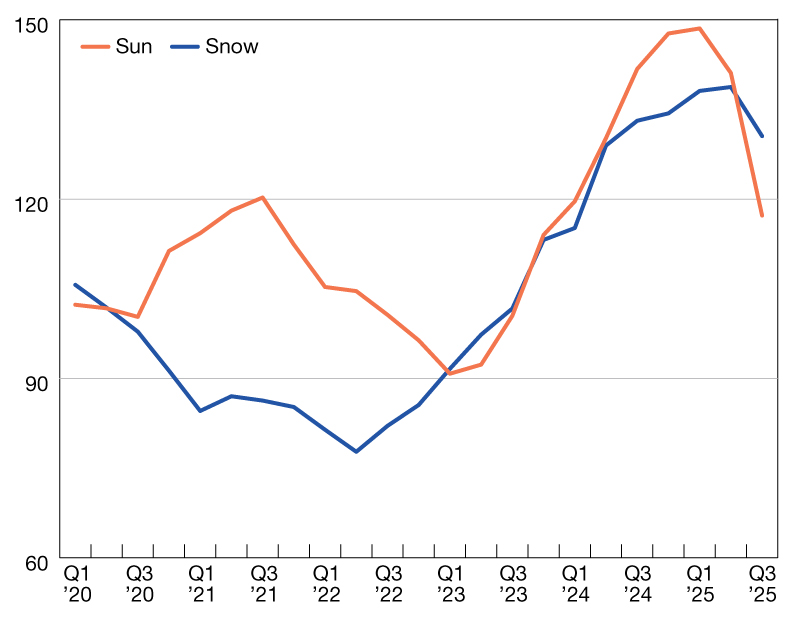
A pronounced divergence between the Sun Belt and Snow Belt markets defines the sector’s landscape. Many Sun Belt markets are experiencing a period of normalization after extraordinary pandemic-era demand, as a return to pre-pandemic migration and job growth patterns has softened demand. This has coincided with a recent construction boom, creating oversupply pressures and emerging weakness in markets such as Miami, Denver and Colorado Springs. Consequently, these markets are seeing vacancies rise and rent growth cool.
Snow Belt demand stays strong
In contrast, multifamily demand in the Snow Belt remains elevated, supported by greater housing affordability and steady job opportunities. This reflects a broader shift as renters increasingly prioritize more accessible markets. The divergence is clear when comparing the 12-month total net absorptions: the Sun Belt markets have returned to near pre-pandemic levels, while the Snow Belt markets remain strong.
Looking ahead, the beginning of a supply-demand realignment is underway, driven by the Sun Belt’s slowing construction pipeline. This significant deceleration, which is more recent and more pronounced than in the Snow Belt, is already leading to early signs of vacancy declines in the region. This crucial pivot to a more balanced supply-demand dynamic sets the stage for a more stable outlook heading into 2026.
—Posted on October 27th, 2025