Supply Shock and Vacancy Trends in the Multifamily Market
Supply has been tapering since the beginning of the year.

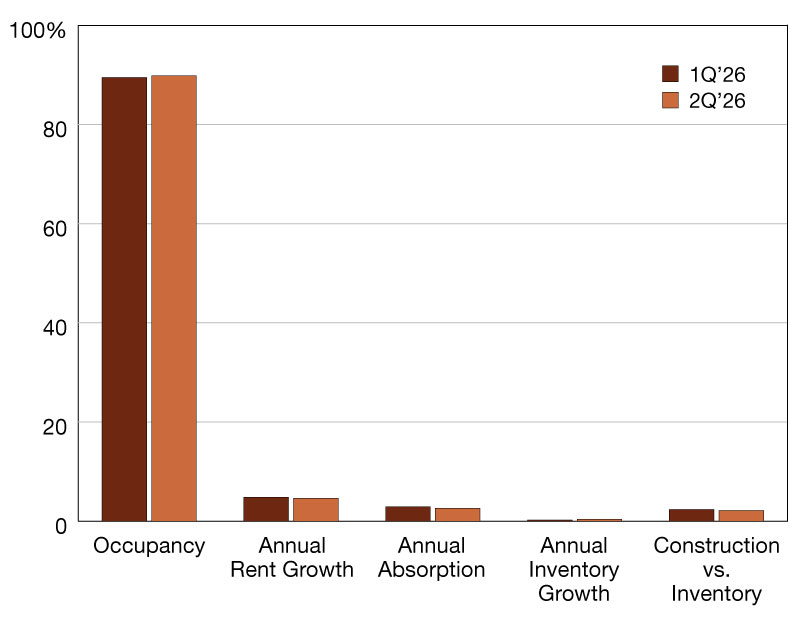
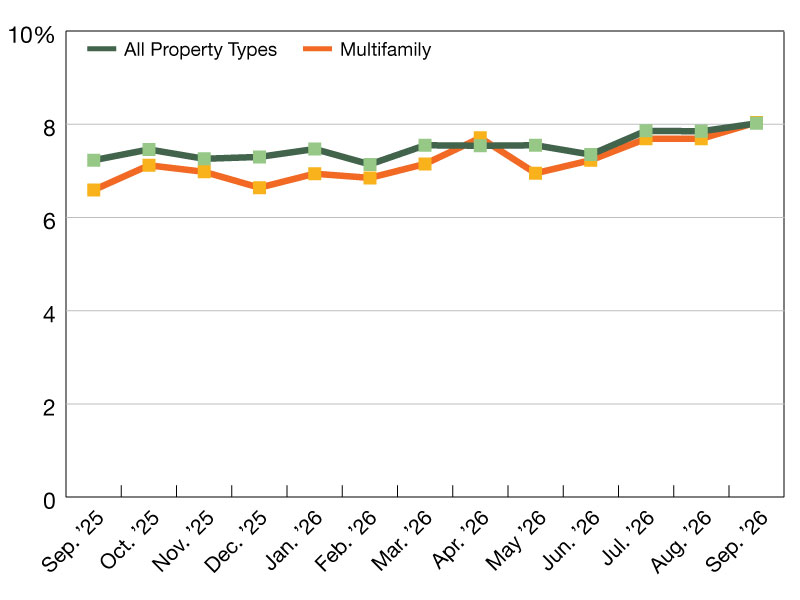
The multifamily market at the national level remained stable through the first half of 2025, supported by consistent renter demand and a deceleration of new construction deliveries. Across the 79 major markets tracked by Moody’s Analytics, average vacancy rates held steady at 6.5 percent, while rent growth showed modest momentum, rising 0.6 percent over the quarter to reach $1,928. This stability highlights the multifamily sector’s resilience amid uncertain economic conditions.
READ ALSO: 2025 Employment Update
Following a record-setting year in 2024, when deliveries of multifamily projects reached a 40-year high of 348,000 units, supply has been tapering since the beginning of the year. This cooldown was anticipated, as indicated by the housing starts tracked by the Census Bureau, which showed a decline in housing starts with five or more units in late 2022 and early 2023. Given the typical two-year construction timeline, national inventory growth is expected to further slow, eventually reaching a steady rate of around 1.7 percent by mid-2027, which is consistent with pre-pandemic rates.
Regional supply surges and vacancy pressures
While national trends provide a broad overview, regional dynamics reveal more localized variations in supply imbalances. Since early 2024, Texas has led the nation with the highest absolute number of completions at 73,000 units, growing by 3.6 percent. Austin accounted for a significant share of this growth by adding nearly 23,000 new units, an 8.3 percent inventory increase.
Other rapidly growing markets with relatively lower costs of living, such as Colorado Springs, Charlotte, Raleigh-Durham, Greenville, Nashville and Denver, also experienced inventory growth surpassing 5.0 percent over the 18-month period. This surge of new supply triggered vacancy spikes across all the major Texas markets. Austin (+322 bps), San Antonio (+211), and Dallas (+173) all ranked among the 10 markets with the steepest vacancy rate increases during that period.
Demographic trends impact the sector
To gain a clearer understanding of the multifamily housing market, it is essential to consider demographic trends and their influences on regional dynamics. From 2020 to 2024, the U.S. median age rose to 39.1 years, driven by a 13 percent increase in the older adults and a 1.7 percent decline among the younger cohort. This shift carries significant implications for Texas, which has the nation’s second-largest median age gap, spanning over 30 years between its youngest and oldest counties.
Austin’s renter demographic base of a younger population has sharply declined over the past two years, coinciding with a surge in new supply, creating this imbalance that placed upward pressure on vacancy rates. While its homeownership levels remained steady at 58 percent, prolonging renter tenure, it was insufficient to offset the effects of the supply shock.
As the aging population grows and migration patterns evolve, it is increasingly important to reevaluate housing strategies to account for geographical nuances in supply and structural evolution of demand to ensure sustainable revenue growth.
—Posted on July 28, 2025