Policy Meets Impact in NYC: Turning Vacant Offices Into Vital Housing
Market-rate and affordable apartments are coming to Billionaires' Row. TF Cornerstone's Jeremy Shell on how developers respond to the right signals.
Office-to-residential conversions are proving to be a key tool in tackling two of New York City’s most pressing issues: vacant office buildings and a housing shortage that’s been worsening for years. Initiatives like the City of Yes zoning reform and New York State’s 467-m program have made conversions far more feasible, providing a viable pathway to turning underused office space into much-needed housing.
Capitalizing on this synergy between policy and market dynamics, development company TF Cornerstone recently announced its intention to redevelop Manhattan’s Tower 57 into more than 370 apartments. The firm secured a ground lease for the 32-story high-rise dating back to the 1980s and will soon begin work on its first office-to-residential conversion in the borough since 2000. Since its inception, TFC has developed more than 21 million square feet of residential and commercial projects, including 15 commercial-to-residential conversions.
READ ALSO: Are Office-to-Residential Conversions Taking Flight?
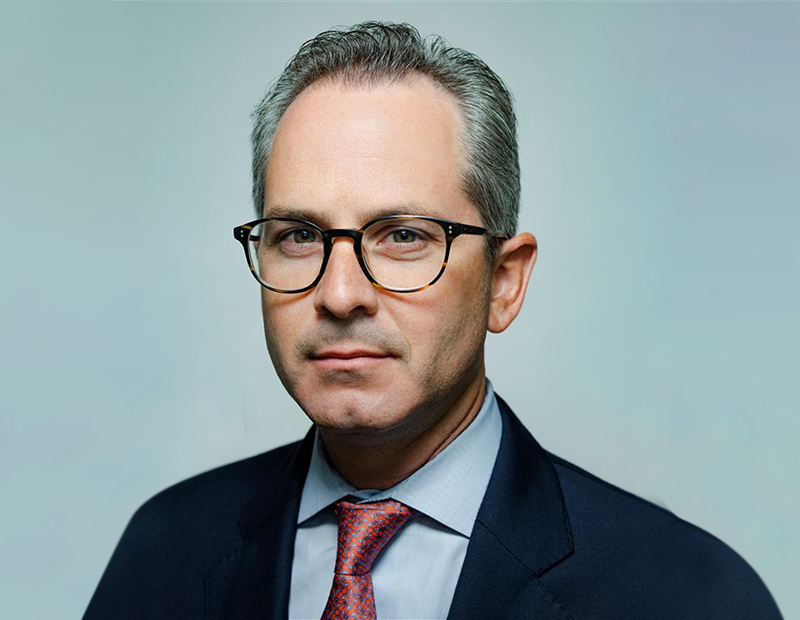
The Billionaires’ Row project also marks a shift in development patterns. Over the past decade, most new multifamily construction in NYC has taken place in the outer boroughs, Principal Jeremy Shell told Multi-Housing News. Now, with the help of these new incentives, developers can introduce affordable units in areas where they were once out of reach.
In the interview below, Shell fleshes out how incentive programs factored into TFC’s decision to convert the 400,000-square-foot Midtown tower into apartments, and also touches on what the broader landscape of NYC residential conversions will look like moving forward.
What made Tower 57 an ideal candidate for conversion into residential? Was it the floorplate size, ceiling heights, market dynamics or a combination?
Shell: Tower 57 was an ideal candidate for a residential conversion due to a mix of physical characteristics. Its unique and narrowly dimensioned floorplates—measuring 14,000 gross square feet in the base, 10,500 gross square feet in the midrise and 5,700 gross square feet in the tower—lend themselves to a variety of layouts for a residential project, with ample light on all four sides. It also has ceiling heights of 12.5 feet, oversized windows, differentiated setbacks and view corridors including views of Central Park from the top 20 percent of the tower. The scale, location, size and building design allow for large-scale amenities to be implemented, in addition to a unit mix that skews toward multi-bedroom units.
We think that this is the right program for such a prominent building in Manhattan, nestled between Sutton Place, Lenox Hill and East Midtown. Tower 57 boasts extraordinary architecture that is atypical for multifamily development projects. These unique architectural features, the enhancements we intend to make to the large public plaza on 57th and Lexington and the opportunity to reposition the ground-floor retail spaces provide for a transformational placemaking opportunity.

Can you tell us more about the balance between market-rate and affordable units at Tower 57?
Shell: In addition to the market-rate housing that we are creating, we are proud to be delivering a meaningful amount of affordable housing to Billionaires’ Row. This project serves as proof of the concept that, with the right incentives, developers will respond with thoughtful and impactful housing developments. City of Yes and 467-m made the full building conversion possible.
We’ll build 370 to 400 units in total, 25 percent of which will be affordable. Bringing affordable housing to Billionaires’ Row is not only a rare feat, but also critically important to the long-term sustainability of the neighborhood overall.
We’re planning to commence early-stage work in Q4 2025/Q1 2026 and building-wide construction will commence in the second quarter of 2026, with delivery expected by early 2029.
How does the 467-m tax program factor into your financial modeling or long-term strategy for this project?
Shell: … The state’s 467-m program played a key role in making the conversion financially viable and unlocking that potential. This is a prime example of the effectiveness of public-private partnership in solving the housing crisis. Our long-term approach to ownership enables us to focus on generating returns over time. Housing supply in NYC is severely constrained, and demand for high quality, well-located housing is as strong as ever.
What role do state and city incentive programs like 467-m play in making conversions viable?
Shell: Programs like the 467-m tax abatement play a crucial role in helping office-to-residential conversions like this one pencil out, especially as construction costs have been escalating and the cost of capital is elevated. For developers like us, who use our own capital and take a long-term ownership view, 467-m aligns well with our model.
Do you expect to see strong demand for residential living in Midtown going forward?
Shell: As the housing market continues to tighten in NYC, it is essential that developers are focused on expanding both market-rate and affordable options. There are more than 18 million square feet and over 18,000 units of conversions in some stage of redevelopment. Midtown is a prime Manhattan submarket, proximate to several subway lines and cultural attractions that would make it suitable for renters. More importantly, there is a glut of underutilized and aging office stock that is ripe for redevelopment.
READ ALSO: Which Residential Conversions Make Sense?
But despite these recent incentives, there still are many hurdles. From a planning and permitting perspective, what are the biggest challenges to converting offices to residential in NYC today?
Shell: Not all buildings are created equal. Conversions are not simple and developers face plenty of hurdles including navigating zoning laws, building codes, historical preservation requirements, high conversion costs, financial challenges and more. Additionally, structural limitations such as deep floorplates and lack of legal light and air can pose challenges.
When TFC considers potential conversion opportunities, we first conduct an initial screening which focuses on floorplates, structure and vacancy. After that we look for certain attributes that, from our experience, enable us to drive value in the short and long term including capital and rents, architectural attributes, light, air and the potential for space utilization.
Would you say office-to-residential conversions are a long-term trend? Or are they just a market-specific response to COVID-19-era office vacancies?
Shell: As a firm that has completed 15 conversions over the years, resulting in more than 4,500 units from these projects alone, we think of the conversion strategy as a cyclical opportunity that presents itself when the stars align. It requires acquisition of commercial properties at low bases, a strong residential market and outlook, city and state real estate tax, zoning and other incentives and manageable construction and financing costs. We are at a point in the cycle where these opportunities exist in NYC and across the country and we will probably be here for some time.
As I said above, in NYC alone more than 18 million square feet and over 18,000 units of conversions are in some stage of redevelopment. These are real numbers and will have a significant impact on the market.
Looking beyond Tower 57, do you have more conversions in the pipeline in NYC or other markets?
Shell: We have a strong track record in conversions that speaks for itself, both in NYC and nationally. To date, our team has completed conversion projects in NYC including 45 Wall St., 95 Horatio St. and The Fairfax at 201 E. 69th St.
Currently, we’re also converting the historic and beloved Wanamaker Building in Philadelphia which, upon completion, will boast over 600 loft units and breathe new life into 300,000 square feet of significant retail. Conversions are a part of TFC’s roots and will continue to play a role in our future.