5 Strategies for Increasing NOI
Looking beyond increasing revenue and decreasing expenses.
Despite some recent moderation in fundamentals, the apartment industry continues to face headwinds. Rising costs are eating into margins, while revenues, especially in markets with an oversupply of inventory, are taking a hit as well.
As these conditions combine to challenge net operating income, the very success of an apartment community could be in jeopardy.
“NOI is a fundamental tool used in the real estate industry to measure a property’s operational performance,” said Cristy Andrews, a certified public accountant with Warren Averett in Montgomery, Ala., who regularly works with multifamily companies. “Because this measurement is tied so closely to a property’s valuation, it is vital for property owners to maximize it.”
READ ALSO: Second Act Leasing: Apartment Rebranding Strategies That Support NOI
Here are five strategies to help apartment operators increase NOI.
Increase streams of revenue. Increasing ancillary income helps to offset rising operating expenses and improve NOI, or at least hold it steady.
Lisa Gunderson, vice president of asset management for Bristol Development Group in Franklin, Tenn., regularly examines existing fee structures for opportunities to raise them, ensuring they are competitive to the market. Before instituting new fees, she’ll consider increasing existing resident fees for garages or pets, for example.
“I look at all those opportunities before I think about implementing an additional ancillary service fee,” she said.
Jeff Klotz, chief executive officer of The Klotz Group of Cos. in Atlantic Beach, Fla., said he likes to follow an “airline model,” where the firm charges for as many extras as possible. “That could be view premiums to floor premiums to added enhancements to the units,” he said.
The Klotz Group offers technology upgrades to residents that they can select on a la carte basis, such as Wi-Fi, remote-controlled lighting or speakers. Klotz said that across the company’s portfolio, the average technology upgrade increase is about $122 per unit per month—and in some cases, the technology rent premium is up to $250.
Reduce expenses. Reducing expenses can have a substantial and immediate impact on NOI and can be achieved in many ways.
Obtain competitive bids for new or expiring contracts, and attempt to renegotiate pricing on renewals. “We take a fine-tooth comb when we look at expenses,” explained Lauren Jarboe, a senior vice president at Bozzuto. “We re-bid all of our contracts annually to see if we can get bulk discounts by sharing among different properties. If we give a painting contractor a contract for 10 to 15 properties, hopefully they will give us a better deal than someone who is a one-off.”
Jarboe said that she also takes a hard look at staffing. “That’s a big expense on the sites, so we’re seeing where we could have efficiencies in staffing, whether it’s staggered hours on the concierge desk or a shared account manager across several properties,” she noted.
Be careful, however, that staffing changes don’t impact customer service.
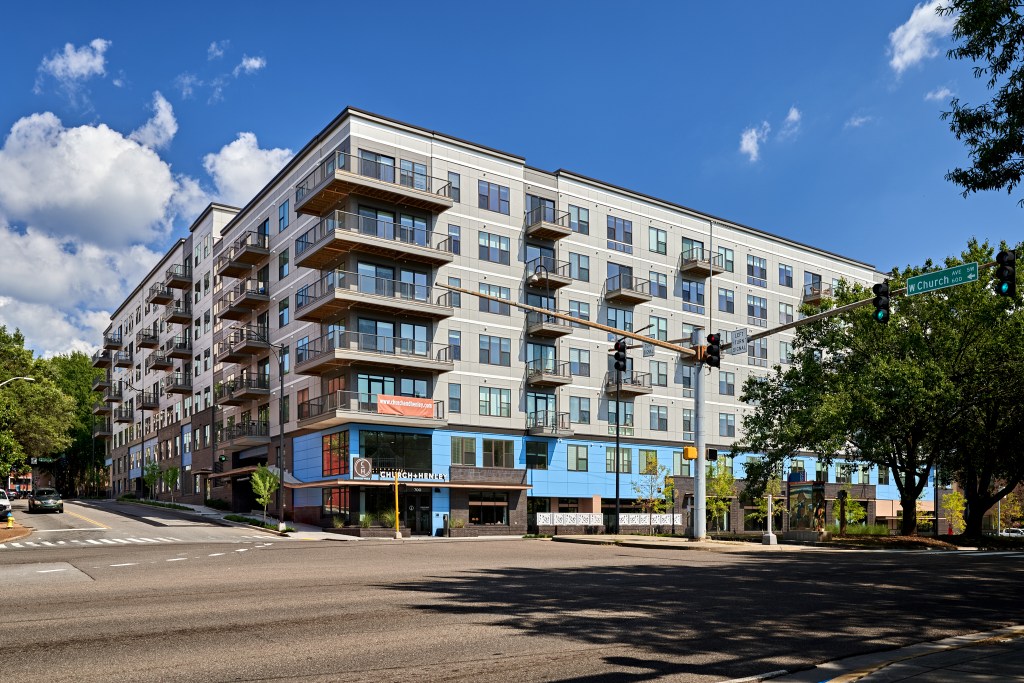
To reduce the expense of coffee for residents, Gunderson said that Bristol purchases commercial coffee makers to use onsite, rather than renting them from third-party vendors. At Church + Henley, the company’s mid-rise community in Knoxville, Tenn., the on-site coffee maker was paired with beans purchased in bulk from a popular local coffee roaster. The company is saving $500 to $800 a month by not renting.
Take a close look at insurance expenses. It’s no secret that the cost of insurance is skyrocketing in many markets around the nation.
Nat Worden, an area vice president with A.J. Gallagher Insurance in Washington Depot, Conn., suggests that apartment operators consult with their insurance agent once a year, at renewal time, to review coverage to see if there are any opportunities to reduce the premium and also to ensure each property has sufficient coverage to rebuild, at today’s costs, in case of a casualty loss.
For apartment owners willing to assume a little more risk, Worden said that increasing the policy deductible can reduce the annual premium. “The deductible is a lever you can pull to lower insurance costs, but it’s additional risk,” he said. “Plus, it also depends on what the discount is. You don’t want to double your deductible if the insurance company is only giving you a few hundred dollars in return. You want it to be commensurate.”
Bundling—packaging policies together—can also help reduce your premium, Worden said, as can reducing the insurance company’s risk by installing mitigation features onsite, such as central-station alarm systems, temperature monitors or water monitors that detect leaks and automatically shut off the water.
Leverage technology. By tapping new technology tools, apartment owners and operators can become more efficient and cut down on costs.
Many apartment professionals are already using artificial intelligence, or AI, for everything from engaging with prospective residents via chatbots to generating content through sites like ChatGPT to conducting predictive analysis to determine whether residents will renew their leases. AI automates tasks that used to require a human to perform and can help cut down on staffing costs.
Increase resident retention. Residents that renew their leases reduce the cost of unit turnover. According to a National Apartment Association survey of property managers in March 2024, 53.8 percent of respondents said their average turn costs ranged from $1,500 to $3,500 per unit, while nearly one in five (19.4 percent) said their costs exceeded $3,500.
“It’s always easier to keep an existing customer happy,” said Jim Cunningham, chief operating officer of Marquette Cos. “We start renewing them the day they get here. That’s a critical part of our business plan—we don’t want them to think about leaving because it’s so much cheaper to keep them than to release those units.”
Make sure you not only meet renter expectations, but exceed them. Providing top-notch customer service is probably the best way to keep residents happy and more likely to stay. And the more residents who stay, the lower the turnover costs and the higher your NOI.