Why Manufactured Housing Is an Investor Favorite in 2026
Even as some pressures complicate the landscape, MHCs continue to attract institutional capital.
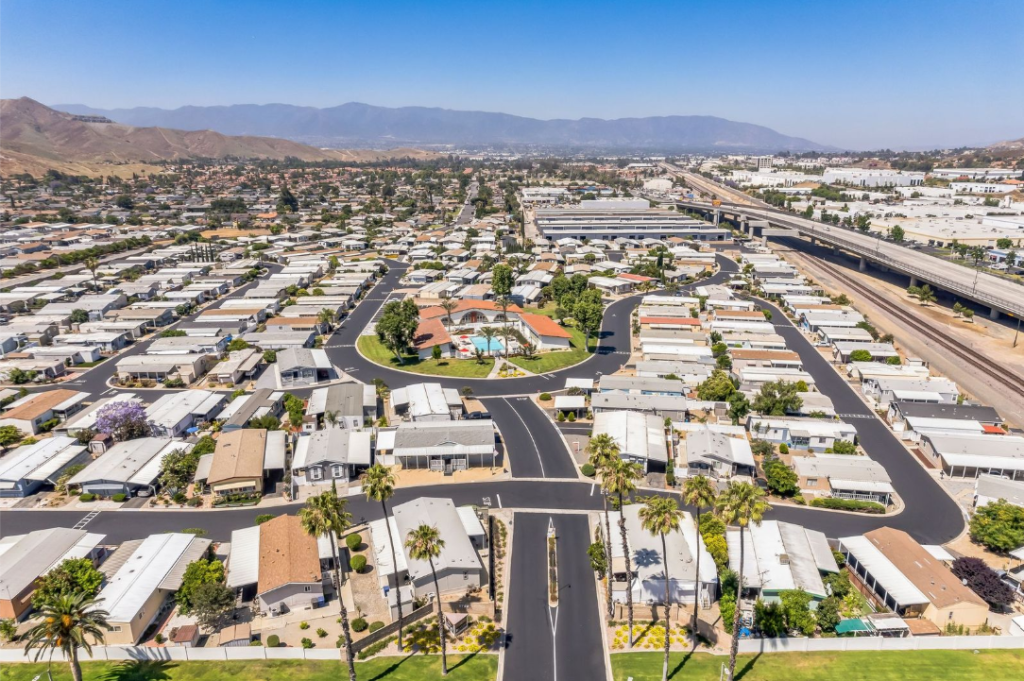
Demand for manufactured housing communities has strengthened steadily over the past several years, driven not only by affordability relative to conventional multifamily and single-family housing, but also by lower maintenance costs and operational simplicity.
That affordability gap has widened meaningfully. With median household income hovering around $85,000 and average single-family home prices recently surpassing $400,000, traditional homeownership has become increasingly unattainable for many households, according to Jon Shay, vice president in CBRE’s Denver office.
“Manufactured housing is generally the only unsubsidized affordable housing solution remaining,” he told Multi-Housing News.
LIKE THIS CONTENT? Subscribe to MHN’s Finance & Investment Newsletter
The data reinforces that reality. Only 38 percent of U.S. households currently earn enough to afford a home—down from 57 percent in the third quarter of 2020, according to the Housing Affordability Institute. As a result, national MHC occupancy continues to hover above 95 percent, near historic highs. Tight local zoning restrictions and community opposition have further constrained new supply, reinforcing pricing power and limiting development.
With fundamentals this durable, manufactured housing is no longer viewed as a niche strategy. Instead, it is becoming a core allocation within institutional portfolios, as consolidation accelerates and capital continues to flow into the sector.
Capital returns with policy tailwinds
Institutional capital continues to view manufactured housing communities as a compelling combination of social need and risk-adjusted return. For investors, the asset class offers exposure to households priced out of traditional housing while delivering relatively stable cash flows.
“We’re already beginning to see REITs and large funds move back to offense,” said Shay.
That shift is reflected in recent fund activity. Drake Real Estate Partners closed its fifth flagship fund last year with more than $515 million in commitments, targeting manufactured housing among other asset types. GMF Group followed with approximately $250 million for Fund II, aimed at acquiring manufactured housing properties nationwide.
Looking ahead, policy changes may further support capital formation. The federal administration’s deregulatory stance is expected to influence the sector by potentially unlocking land for MHC development and eliminating the permanent chassis requirement for manufactured homes.
“We expect early this year for HUD to have a proposed update to the building code that incorporates that change,” said Lesli Gooch, CEO of the Manufactured Housing Institute. “The value of the federal building code is that you get the affordability because of the regulatory efficiency that is paired with factory efficiency. That’s why our houses are the most affordable.”
READ ALSO: Housing Market Predictions
Interest rate relief is another critical variable.
“There’s no question that the relief in interest rates appears to have broken the transaction logjam,” said Shay. “The distance between buyer and seller expectations was a canyon a couple years back, and now it appears more like a small creek—easier to jump over.”

The 2025 rate cuts have already begun to thaw transaction activity. Brokerage firm HARRI5 entered 2025 with a $95.8 million pipeline across five deals, ultimately closing $800 million in sales across 27 transactions.
“HARRI5 sees stabilizing and lower interest rates are increasing operator and investor confidence, driving acquisition predictability and higher demand,” said Derek Harris, founder & principal of HARRI5 Manufactured Housing & Commercial Brokerage. “This is expected to increase property values and lower capitalization rates, ultimately boosting the volume of deals.”
Still, the investment environment is evolving. The easy value-add opportunities that once defined the sector are largely gone as 99 percent of the low hanging fruit has been harvested, according to Shay.
As a result, investors can no longer rely on outsized rent growth or cap rate compression. The emphasis in recent years has shifted toward yield preservation and testing the limits of lot rent affordability, dynamics that both reflect and reinforce the tighter regulatory frameworks the industry has navigated for over a decade.
Where tailwinds meet headwinds
Despite strong manufactured housing demand and renewed capital interest, regulation remains a central concern for investors and developers. Much like in the affordable housing segment of multifamily, limits on lot rent growth directly affect profitability, discouraging new development and, over time, constraining the supply of affordable housing.
Even the possibility of rent control in states where it has not yet been enacted—such as Washington and Colorado—has already influenced pricing. According to Shay, the perceived threat has widened cap rates by roughly 50 basis points. “Investors must now factor in regulatory risk alongside market and asset risk,” he said.
HARRI5 is also closely monitoring political signals around rent control nationwide since the prospect of regulation is deterring some investors from pursuing acquisitions in states where rent control exists or appears likely, according to Harris. That tension underscores the need for continued dialogue between policymakers and industry participants.

“The headwind is the policymakers not understanding all that goes into running a land-lease community,” said Gooch. “That being said, the demand for living in a community is great. That’s where you have your tailwind.”
Operating costs continue to climb. If rent growth fails to keep pace with expenses, owners may be forced to scale back repairs, maintenance and community improvements. In addition to rising utility costs and property taxes, insurance premiums—particularly in markets exposed to severe weather or wildfire risk—have emerged as a major constraint.
“Creeping insurance rates are eating into NOI growth that operators expected,” Shay noted.
Resilience anchors the sector’s future
Despite regulatory and cost pressures, manufactured housing communities remain among the most compelling defensive investments in today’s economic climate. The sector’s appeal rests on its recession-resistant characteristics: lower-cost housing, high resident retention and stable, predictable rent rolls.
Demand continues to build as affordability challenges intensify nationwide. As more households are priced out of traditional homeownership, MHCs are increasingly viewed as a practical long-term solution rather than a temporary alternative. At the same time, federal recognition of manufactured housing as a scalable and cost-effective response to the housing crisis is expanding the sector’s visibility among policymakers and institutional capital.
“It’s taken decades for the government to just kind of be more aware, more educated, if you will, on manufactured housing,” said Cody Cannon, senior vice president and market executive with Greysteel. “I think there’s been a historic kind of stigma against them, without recognizing the quality of construction, the affordability and just the timeframes it takes [to build them]. I would say it’s 80 percent quicker to get a nice, high-quality manufactured home onsite, in place, versus a single-family home development, and so it becomes more of a visible solution for affordability.”
With nearly half of renters nationwide considered rent-burdened and the affordability gap widening, demand for manufactured housing is likely to remain on an upward trajectory. Against that backdrop, fundamentals appear durable. For investors seeking reliable income and relative downside protection in a volatile capital markets environment, MHCs are positioned to remain a strategic portfolio allocation in 2026 and beyond.