Designing Senior Housing Landscapes That Residents Actually Use
Architect David McCullough on why some outdoor spaces fail to attract residents, and how thoughtful planning can change that.

Research has consistently linked exposure to nature with improved physical and mental health outcomes, particularly among older adults.
Researcher Roger Ulrich demonstrated in the 1980s that even only visual exposure to nature through a window could positively influence recovery and wellbeing. More recent research further highlights how nature-integrated environments can support cognition, emotional health and social engagement among seniors.
Despite the growing awareness of these benefits reflected in senior housing trends, many outdoor spaces in such communities remain underused. Why do some landscape designs succeed in becoming extensions of daily life, while others fail to attract residents? We asked David McCullough, principal landscape architect at McCullough Landscape Architecture Inc., to share his perspective on designing outdoor environments that are accessible, engaging and deeply connected to residents’ needs.
READ ALSO: 2026 Senior Housing Market Update
What role does nature and time spent outdoors play in supporting the mental and physical health of residents in senior housing settings?
McCullough: Spending time outside and in nature has proven to play a critical role in mental and physical health for everyone, including seniors. Intentional outdoor and landscape design in senior housing provides opportunities to get fresh air and sunlight, be physically active and connect with others.
When people spend time outside, they are more likely to engage in activities that provide all sorts of health benefits, like walking, gardening and spending time with others. Fresh air and sunlight for even short periods of time can boost mood, provide the body with vitamin D, and even impact sleep quality and patterns.
Outdoor areas like communal seating and gardens allow for a peaceful environment where seniors can connect with one another or spend time alone connecting with nature.
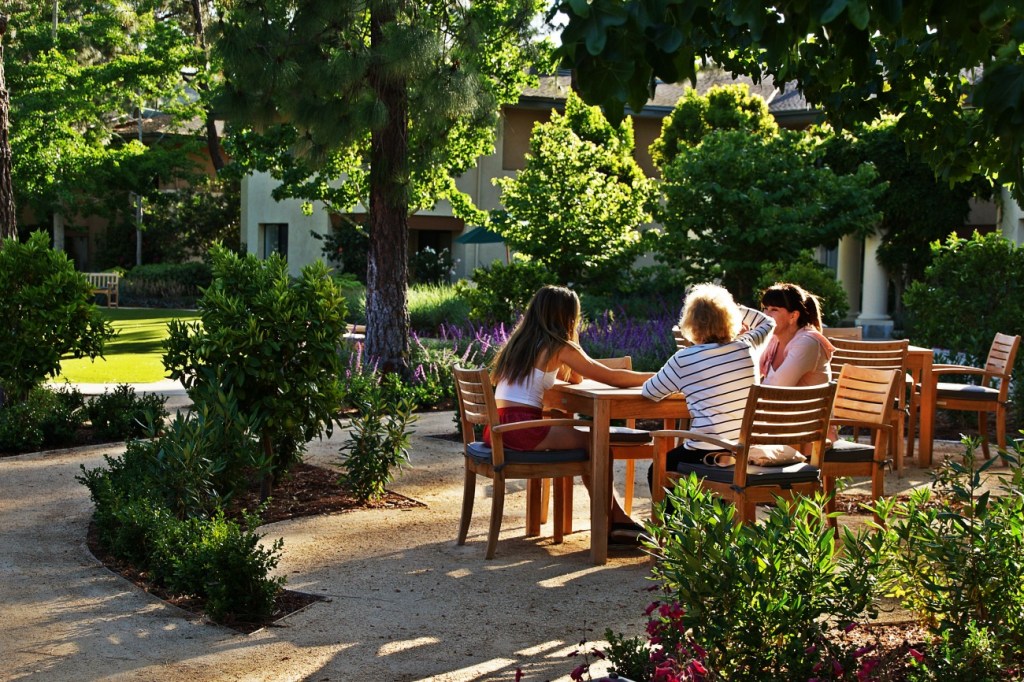
Many senior housing communities already include outdoor spaces, yet those areas are often underutilized. In your experience, what are the most common reasons they fail to attract regular use?
McCullough: Outdoor spaces often go underutilized due to unconditioned design and weather conditions. As seniors tend to have a lower tolerance to cold and heat, they reasonably avoid being outside when the weather hits higher or lower temperatures.
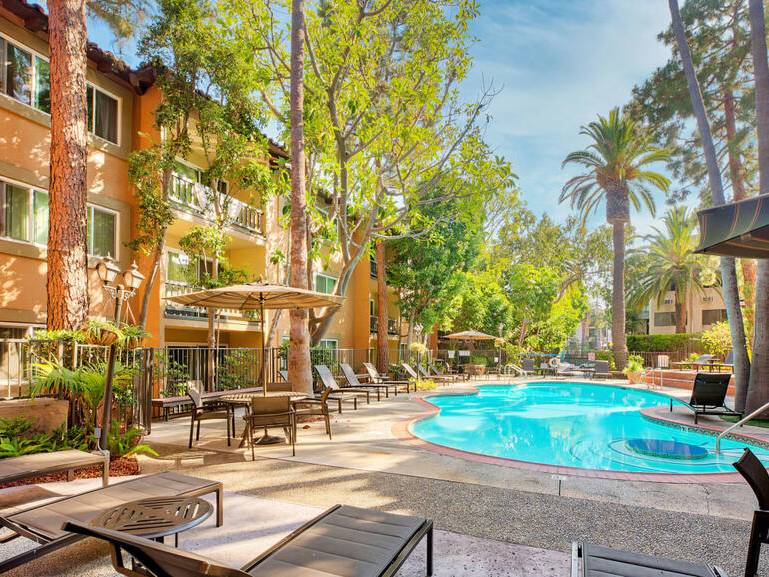
There are plenty of ways to condition outdoor space through intentional design. To accommodate during hot weather, atomized misters can be installed in outside areas, and big, beautiful trees can be added to bring shade. During colder seasons, safe fire elements and heaters can go a long way to encourage seniors to get outside, even for short periods of time.
How can architects and landscape designers create outdoor environments that feel safe, accessible and engaging without feeling overly clinical?
McCullough: The most critical safety features for making outdoor spaces dedicated to seniors are accessibility features like wheelchair ramps, as well as stabilizing features like railings where necessary. To ensure these features feel less clinical and more seamless with the outdoor environment, it’s important to choose features that fit the aesthetic of the environmental and landscape design, without hiding the important accessibility functions.
Additionally, design features like open sightlines and well-lit, ambient lighting allow for safe environments to be monitored by facility staff without creating distinct feelings of ‘surveillance.’ Safety for seniors can also be as subtle as designing frequent seating areas so there are benches frequently throughout a path. Safety can look different at the various stages of aging, and designing for these stages requires architects and landscape designers to understand their needs and capabilities.
READ ALSO: NIC Special Report: A New Approach to Senior Housing
Can you share specific design strategies that encourage residents to incorporate outdoor time into their daily routines?
McCullough: Biophilic design features in senior housing are critical to encouraging residents to include outdoor time in their daily routines. Attractive, interesting outdoor spaces invite residents in, making them feel relaxed and refreshed.
Features that support independence and convenience for residents drive a sense of freedom, alongside access to sunlight, fresh air and nature. Natural elements such as trees and foliage, shaded areas and seating support residents and invite them to be outside.
Social programming is also a great way to encourage residents to build outdoors time into their daily routines. Activities like gardening and meditation provide residents a reason to be outside, engaging with each other.
Social connection is critical for quality of life. What role can outdoor spaces play in fostering interaction and a sense of community among residents?
McCullough: Outdoor spaces can foster interaction, and a sense of community provided the outdoor spaces feel personal and can be customized by the residents. In our experience, the more the space can be customized by residents—the more a space feels like it belongs to them—the more it will be used.
If residents feel like they have contributed to the creation of the outdoor space, they will take ownership and participate in the space more actively and often. Gardens and community art projects are great examples of facilities including residents in their establishment and cultivation.
How frequently do communities incorporate gardening opportunities and what makes these programs successful?
McCullough: Gardens and related programming have been and are continuing to grow in popularity in senior housing buildings and developments. These programs drive physical activity, mental stimulation and social opportunities, showing increased engagement with seniors because they typically have more time on their hands than other demographics. The keys to driving this engagement are shade, seating and ease of accessibility across a variety of physical and mental needs.
What should developers or operators avoid when designing outdoor spaces for seniors?
McCullough: Overprogramming can be problematic. It is important to start the initial engagement but from that point on, operators need to allow for customization to ensure that residents feel like they ‘own’ the space. Additionally, providing a true authentic connection to nature is important: The outdoors should feel different and less clinical than the interior spaces, and should have strong contextual connections to the surrounding natural environment.
Give us an example from your portfolio where landscaping and outdoor design had a particularly strong impact on a senior housing community.
McCullough: Vista del Monte is an existing community built in the 1960s for senior living on 9.5 acres. Listening to their residents, they wanted outdoor space throughout the property that allowed the population to get outside in arguably one of the best climates in Southern California. The residents had objected for years that such space simply didn’t exist for them to connect with nature and spend time in the fresh air.
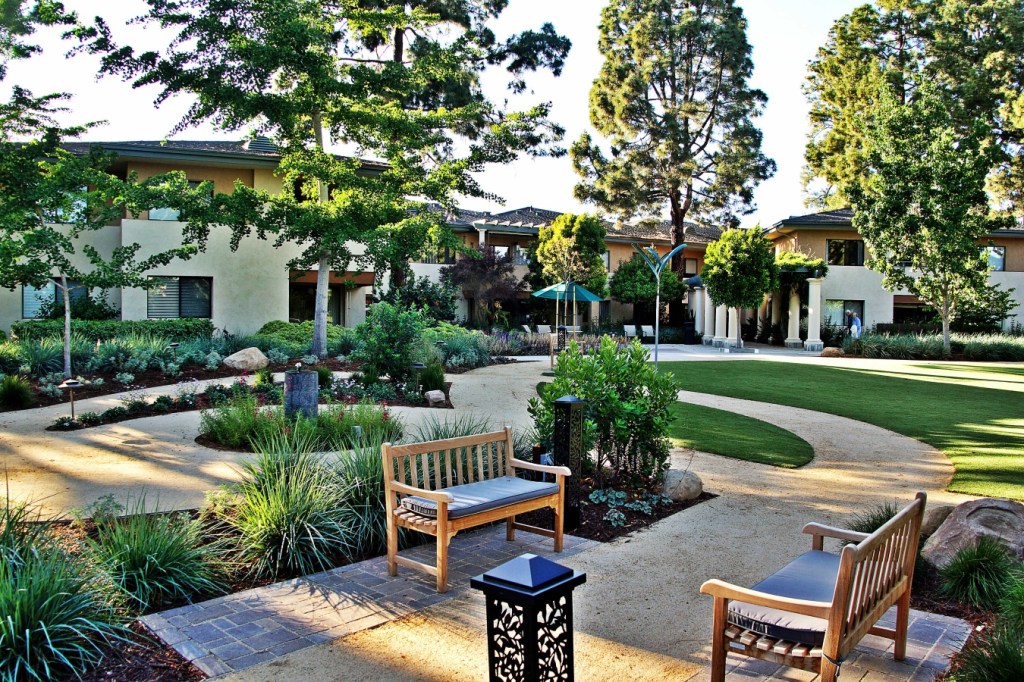
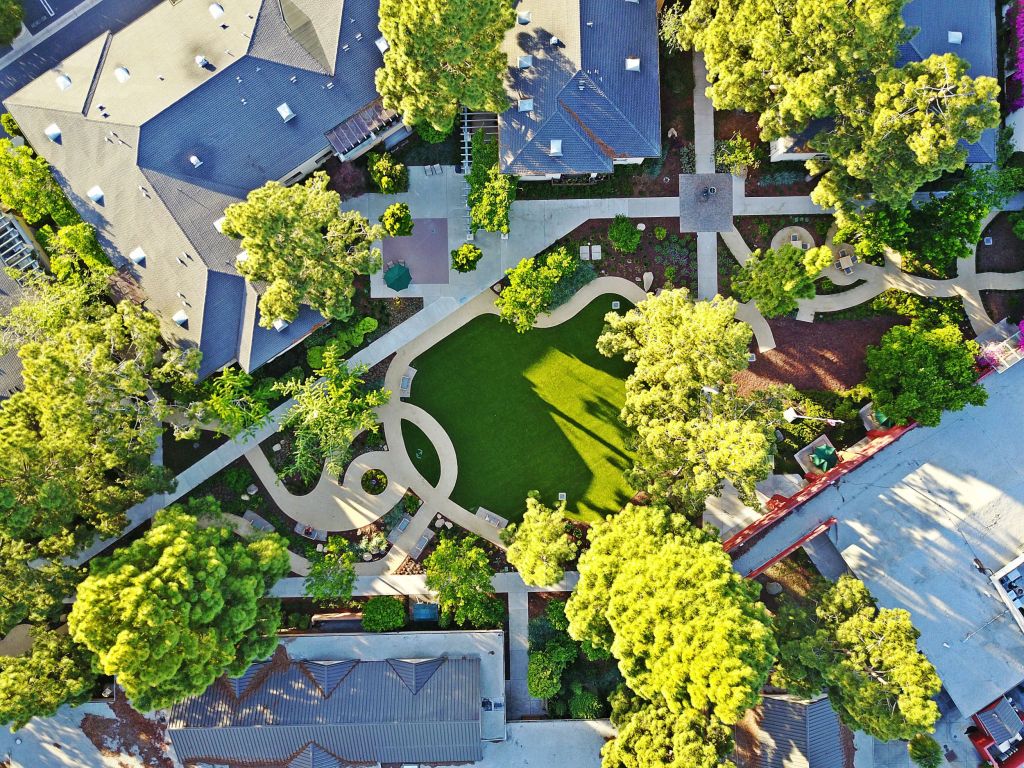
In the early 2000s, McCullough was brought on as their landscape architect and began a full site overhaul of the property with this as the primary goal. We delivered safe and accessible pathways, conditioned social spaces, as well as direct access to contextual Santa Barbara native and natural landscape, throughout.
Additionally, a site ‘quad’ was created as the center of the community, bringing residents together. The project included a newly constructed kitchen building and outdoor space, an expansive lawn area for community-wide events, and vibrant and rich native flower gardens to bring serenity to the space.
Looking ahead, how do you expect senior housing landscaping design to evolve?
McCullough: Senior housing landscape design needs to be authentic, inspiring and dynamic. Residents will feel a stronger connection to nature as we designers start to better understand the deep value of our surrounding environments.
There are also more and better options emerging for conditioning outdoor space for seniors, including radiant heat from hardscape features, seating and trellis structures, as examples. These and other innovations will continue to innovate and reimagine outdoor space for seniors.