Unpacking Mamdani’s New Housing Plan
We take a closer look at the recently unveiled initiative’s ambitious proposals.
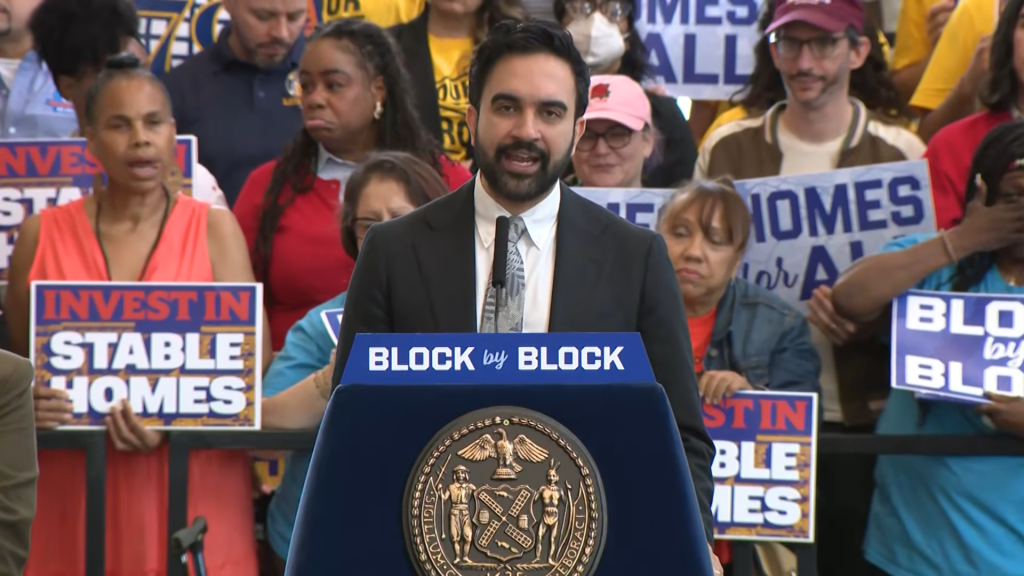
New York City Mayor Zohran Mamdani yesterday unveiled a 112-page blueprint that details the city’s goal to build 200,000 new affordable homes and preserve 200,000 existing units over the next decade.
The plan, dubbed “Block by Block: The Housing Plan for a New Era,” covers many of housing-related affordability issues that Mamdani ran on last year to win the mayor’s race. During the campaign, he said he wanted to build more than 200,000 units of rent-stabilized housing over 10 years, including 20,000 in the first year of his term. The new plan has scaled down that initial goal with 8,000 new affordable units planned for fiscal years 2027 and 2028, with total funding of approximately $5 billion, an increase of 35 percent from fiscal years 2024 and 2025.
During a rally-style event in Gowanus, Brooklyn, the mayor said the city would make a $22 billion capital investment in building and preserving affordable housing. It would also spend $5.6 billion on public housing improvements, an investment paired with a land-use agenda that includes changes approved by voters last year.
Stakeholders react
Rachel Fee, executive director of New York Housing Conference, an affordable housing advocacy organization, called the housing plan “a thoughtful vision for building and preserving the affordable housing New Yorkers need.”
Fee told Multi-Housing News the plan “centers on the renters and homeowners overburdened by housing costs and builds on proven strategies to build and preserve affordable housing.”
Another affordable housing advocate, Annemarie Gray of Open New York, said the plan pairs ambitious strategies to build more homes of all kinds with protection for tenants and investments in housing preservation while addressing public housing needs and expanding homeownership opportunities. She also pointed to administration plans to advance citywide transit-oriented development.
Thirty percent of those 16,000 apartments would be earmarked for “extremely low-income” residents — those that earn less than 30 percent of the area median income. Twenty percent would be for “very low-income” New Yorkers, those with households earning between 31 and 50 percent of AMI.
READ ALSO: The 21st Century ROAD to Housing Act Passed the House. What’s Next?
To create more mixed-income housing, the plan states the city will explore how it can dedicate capital funds to attract matching investment into a revolving loan fund to finance shovel-ready developments that are struggling to assemble the necessary financing. The fund could also offer repayable construction or short-term permanent financing as an alternative to private equity.
The city also wants to cut the time it takes to get affordable housing built and has issued a set of reforms called Streamlining Procedures to Expedite Equitable Development, or SPEED, to move projects more quickly through all stages from environmental review to lease-up. Pre-certification processes for projects with zoning changes could be reduced from two years to six months. The administration will also assign dedicated central project management teams to shepherd city-financed affordable projects through the approvals process to increase coordination.
Kim Darga, vice president & New York market leader of Enterprise Community Partners, said the SPEED recommendations to streamline the development process combined with the bold goals on unit production and additional capital resources would keep the pipeline of new affordable projects moving. She said her nonprofit backed the revolving loan fund, new mixed-income strategies and support for emerging developers.
The city expects to see at least 12,000 new apartments created from office-to-residential conversions and will add staff to reduce review time and approve permits more quickly.
Investments in NYCHA properties
Mamdani said over the next decade, the administration will make investments to stabilize the city’s current stock of regulated affordable and low-cost housing, including reinvesting in tens of thousands of New York City Housing Authority-owned homes.
The plan also calls for strengthening and increasing participation in existing modernization initiatives: the Permanent Affordability Commitment Together and the Public Housing Preservation Trust programs. PACT is a federal initiative that partners with private developers to make improvements and the Trust leases NYCHA buildings to a public benefit corporation, also for renovations.
Labor and other issues raised
Eldad Gothelf, senior vice president of real estate at Kasirer, a lobbying firm with real estate and nonprofit clients, told MHN the city’s plan to produce and preserve 400,000 affordable units in the next decade is a welcome target to address the housing crisis.
“The extent to which public, private and nonprofit sectors can align on these generationally important goals will help determine the city’s path over the next several years. It’s an all-hands-on-deck moment,” Gothelf said.
Welcome or not, the plan also received some criticism upon its release. One of the proposals, the implementation of a Criminal Justice Act, which would set a combined wage-and-benefit minimum of $40 per hour for workers on qualifying city-financed affordable housing projects, received pushback from some real estate and business industry groups.
James Whelan, president of the Real Estate Board of New York, questioned whether the addition of project labor agreements would undercut the city’s production goals.
For Kenny Burgos, CEO of the New York Apartment Association, which advocates for rent-stabilized landlords, the plan provided little for his membership.
“When most rental buildings in our city are 80, 90 years old, the time to address their needs is now. We’ve had leadership fail every time and he seems to be trending in that same direction. Every administration before Mamdani has kicked the rent-stabilized housing stock issue down the road and he seems to be doing the same,” Burgos said.
In the housing plan, the mayor acknowledged that the economics of many rent-stabilized buildings have changed since the passage of the Housing Stability and Tenant Protection Act of 2019 and that property values have declined. He said the city’s Department of Finance recognized the altered values as part of its annual property tax calculations and changed the assumed capitalization rate of approximately 15,000 majority rent-stabilized buildings. That change should result in a property tax deduction of approximately 1.3 percent in fiscal year 2027. The report notes DOF will continue to explore changes in how it calculates the property taxes of majority rent-regulated buildings.
Burgos said it’s a fraction of the number of rent-stabilized buildings and not enough to make up for increased operating costs, as well as a likely upcoming rent-freeze that Mamdani had championed for as a candidate.