Turning Vacant Office Space Into Co-Living Units: Pew-Gensler Study
The report uncovered an unconventional, yet potentially highly effective conversion strategy.
Combining office-to-residential conversions with co-living spaces could be a practical and less-costly way to tackle Phoenix’s surplus of vacant office buildings and housing shortage, according to a new study by The Pew Charitable Trusts and Gensler.
The report is the 10th city study in Pew and Gensler’s research series on how U.S. cities can repurpose under-used commercial building to meet housing demand. Previous reports focused on Minneapolis, Seattle, Denver, Los Angeles, Houston, Chicago, Washington, D.C., as well as Sante Fe and Albuquerque in New Mexico.
“This research builds on Pew’s work showing how office conversions can expand housing supply to enhance affordability,” said Tushar Kansal, senior officer with The Pew Charitable Trusts’ housing policy initiative. “It shows that co-living can add affordable housing at almost three times the scale of traditional approaches while providing a solution to Phoenix’s higher than average office vacancy rate.”
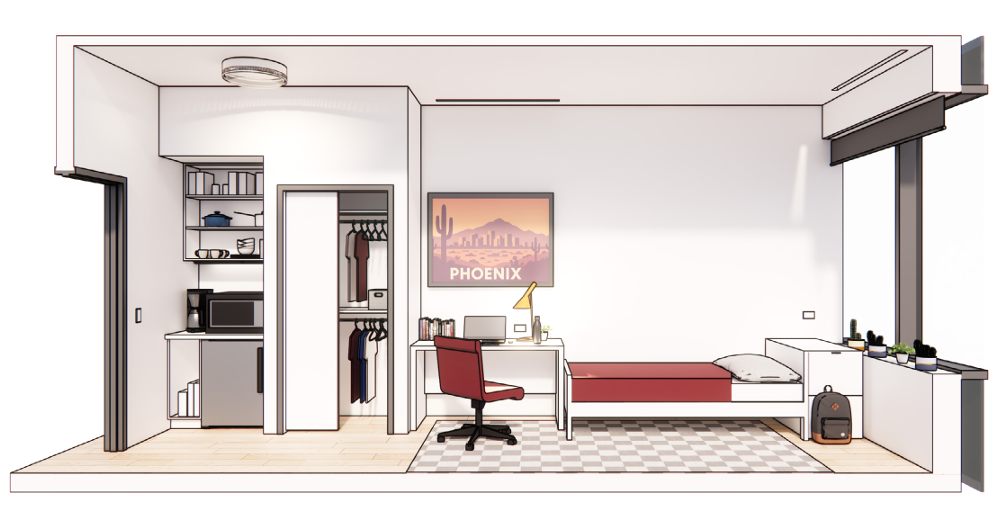
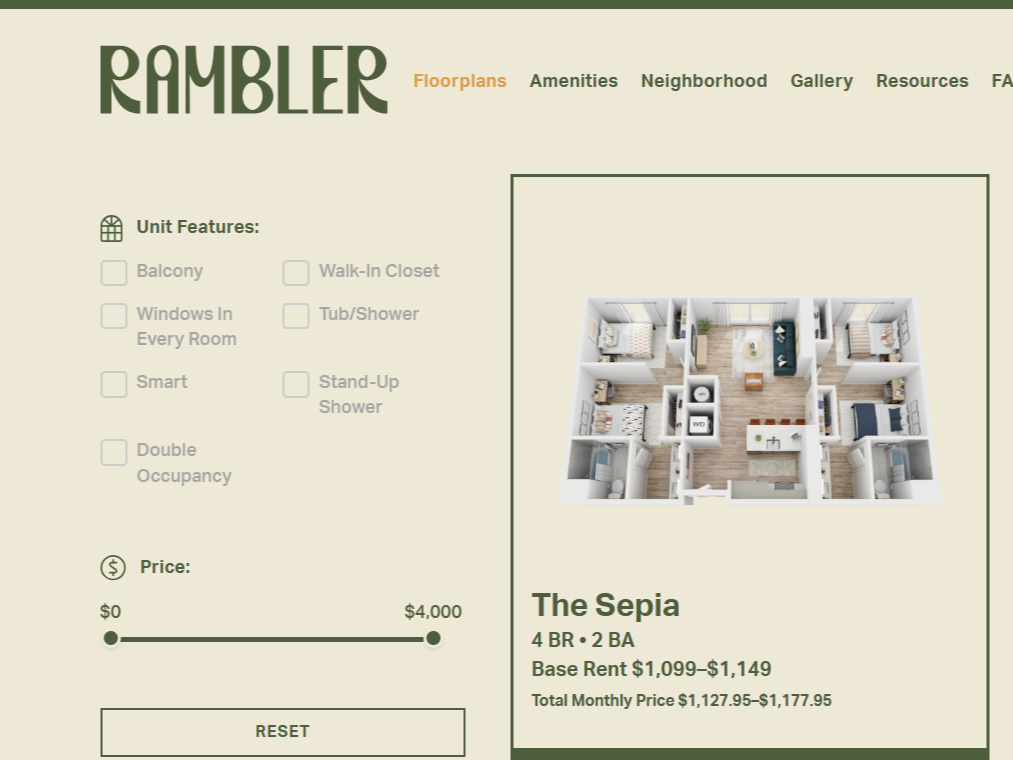
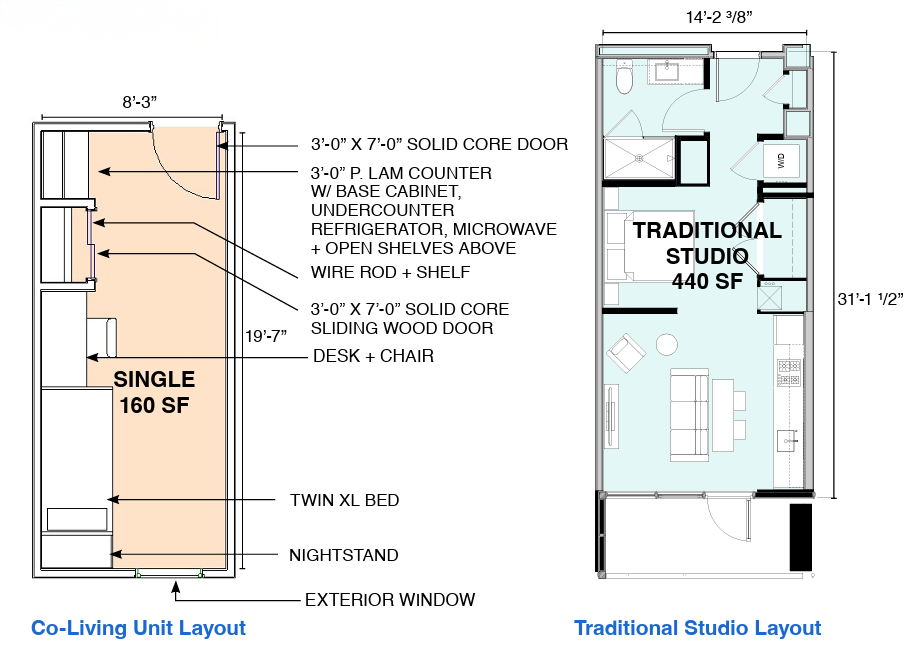
The report outlines how dorm-style microunits can be designed and financed to provide lower-cost homes for people earning well below the area median income. Co-living arrangements offer small, private micro-apartments with shared kitchens, bathrooms and living rooms. The micro-units would range in size from 158 to 252 square feet versus 440 square feet for a traditional studio apartment layout with a full kitchen and bathroom, Gensler notes.
“Our findings show that thoughtful design, with smaller private units paired with shared spaces, can make conversions both cost-effective and livable,” Terry Hogan, market and data analyst with Gensler, told Multi-Housing News. “It is a practical way to bring more housing to city centers and reimagine empty office buildings.”
Office vacancy, rents on the rise
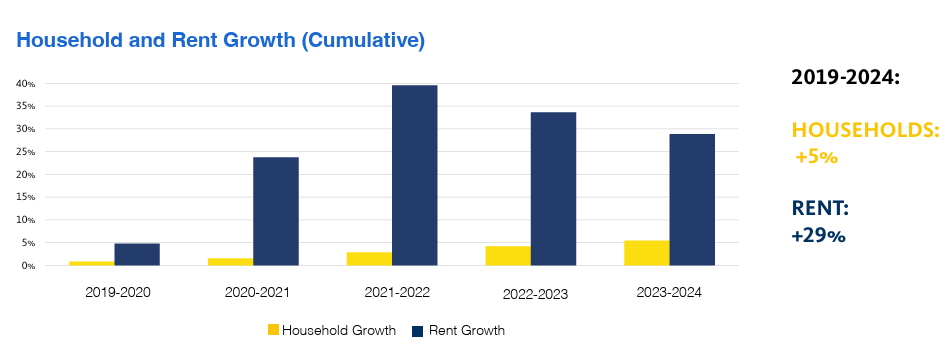
According to data from Cushman & Wakefield, the office vacancy rate in Phoenix is currently about 28 percent, higher than the national average. Meanwhile, the average asking rent in metro Phoenix has risen to $1,553 per month as of July, according to data from Yardi Matrix. Rents have risen by an average 29 percent over the past five years in downtown Phoenix alone, according to the report.
The report notes Phoenix has a number of office buildings that are ripe for conversion. The study focused on high-rises in the downtown business core that were built between the 1960 and 1990s, which make up more than half the downtown office inventory. The researchers identified 28 buildings that are over 50,000 square feet each, with an average of 18 floors and floor plate size of 20,000 square feet. They total about 9 million square feet of space that could be converted to housing.
READ ALSO: How the Nation’s Largest Office-to-Residential Conversion Came to Life
Pew and Gensler note recent policy changes offer a clear path to pursue office-to-residential conversions, including a recent zoning change that removed density rules for downtown properties. The city has flexible parking requirements that allow developers to eliminate parking for projects near transit and allow residential uses in the downtown business core. On the state level, Gov. Katie Hobbs signed legislation in April creating standards for adaptive reuse projects in cities with populations over 150,000. The law requires at least 10 percent of new units be designated for low- or moderate-income residents.
How it could work
Although the co-living model significantly reduces development costs compared to traditional office-to-apartment conversions, the study notes that some public funding would probably be needed to make projects financially viable. For example, a $25 million subsidy would create 294 apartments – 2.5 times more homes than traditional subsidized studios – with no ongoing funded needed. That’s based on a development cost estimate of about $169,300 for each co-living unit versus about $300,000 for a traditional studio apartment.
Gensler stated a building with floor areas of about 20,000 square feet that could each accommodate 50 beds across 8,845 square feet. An additional 4,085 square feet of floor area would be used for shared facilities, including bathrooms, kitchens, living areas and storage.

In a typical building with 38 floors, Gensler suggested 12 would be used for co-living, yielding about 600 residential units. The remaining space would include a ground-floor lobby, management office and approximately 5,000 square feet of retail space. An additional floor could be dedicated to 5,000 square feet of shared amenity space, including a fitness center and 5,000 square feet of Class B office space. There would be no on-site car parking but there would be 500 spaces for bike parking.
Rents, including utilities, would be about $850 a month, making these micro-units accessible to students, service workers, recent graduates and others earning about 43 percent of the AMI.
The study suggests the model could be used for a variety of institutional needs as well including universities leasing entire floors for supplemental dorm space; hospitals and airlines housing traveling staff and school districts leasing space for early-career and hourly employees. The city could also use space to provide supportive housing for residents transitioning out of homelessness