OPTECH Special Report: Security Before Efficiency
In an era of growing technological uncertainty, it’s important to stay vigilant.
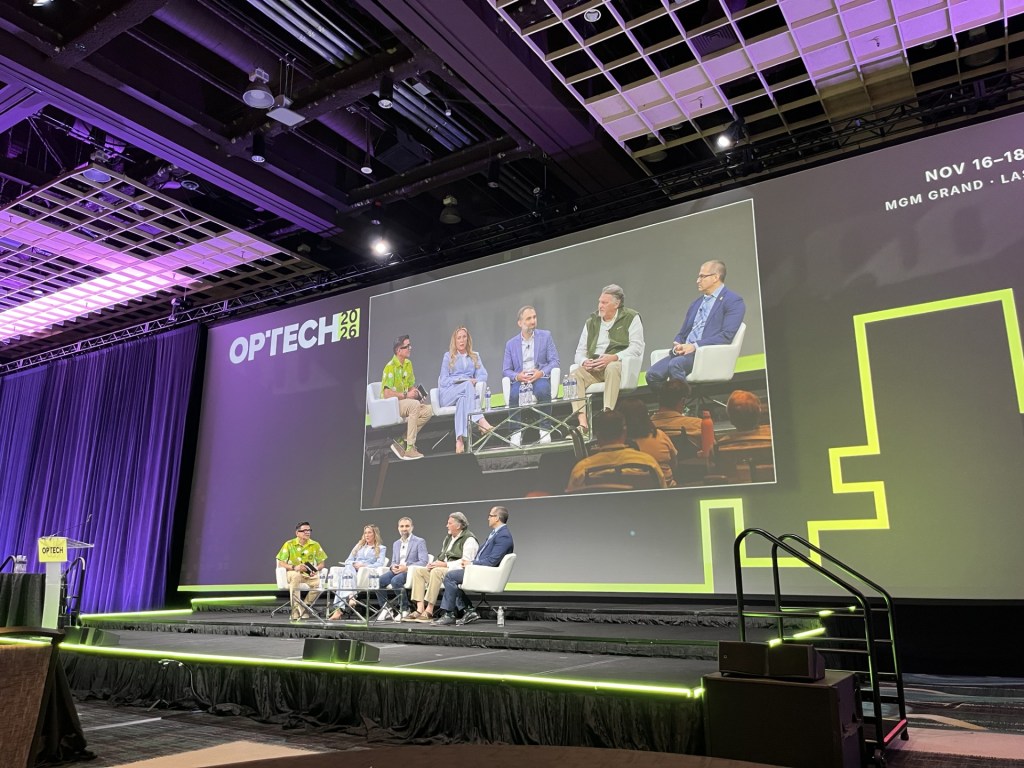
While discussions on the first day of OPTECH 2026 focused on discipline and restraint in AI use, those on the second day centered on security and resiliency.
The subject was a timely one, too, given the numerous outages and breaches reported across the aviation, banking and government sectors over the past week. Although there’s no indication that any one of these has been caused by a malign actor, panelists stressed the importance of vigilance, particularly when adopting and using AI tools.
Trust, but verify
For many multifamily owners, operators, developers and proptech vendors, security means knowing exactly what information an AI tool uses and how employees use it.
At a session titled The Platform Shift: PMS, AI & the Future of the Rental Housing Ecosystem, panelists warned that the absolute worst thing anyone involved in the above could do is blindly trust a GPT or agentic model, lacking an understanding of exactly where it’s getting its information from. “Autonomy needs to be earned,” emphasized Arik Kogan, vice president of Specialist Solutions Architecture at MRI Software. “Your agents will do a lot of stuff, but we as human beings and operators need to give that autonomy when we truly believe it deserves it.”
READ ALSO: AI Do’s and Don’ts for Listings and Leasing
In practice, this means making sure directly that the data the models use to draw conclusions from is complete and accurate. In Kogan’s mind, it may even help to have an industry-wide standardization protocol. “I don’t think any of us would see that as a bad thing,” he opined. “I still believe that it’s a solution, but it’s very much something we need to keep an eye on.”
Stakeholders should also know how a given AI model came to the conclusion that it did. This knowledge often comes directly from the employees and technology partners most exposed to it. “Know your customer and business, but also know your agent,” advised Chase Harrington, president at Entrata. “The accountability needs to be there from the start, meaning that I want to know what it’s accessing, how it came to the conclusion that it did and then documenting that for auditing purposes,” Harrington said.
Navigating the chaos
For some instances where AI could prove harmful, the cat may already be out of the bag. The final session on day two, titled Building Trust and Resilience Amidst Digital Chaos, gave attendees strategies to help navigate this unprecedented digital chaos. After all, the bad guys have access to Claude and ChatGPT too.
For starters, operators should devote as much attention to building safeguards for personally identifiable information into their AI models as they do to evaluating those models. In the past, unchecked AI models have exposed personal information or accessed company data without authorization.
“These models are changing almost daily, and once you have all that governance in place, you need to revisit it with a very frequent cadence,” said Whitney Kidd, senior vice president of Innovation and Technology at Preiss Co. “There shouldn’t be increased budgets on our side when something goes wrong. This needs to be preventative, because you can’t innovate your way out of bad infrastructure.”
It’s equally beneficial for stakeholders to imagine and plan for worst-case scenarios, something that falls more under the purview of company operations than technology. In case of a widespread cyberattack, “find what’s critical, see if you can operate without it,” advised Jeff Ewing, vice president of Security Operations & Engineering at 5Q. “(This means) turning something off if it shows the slightest sign of a problem,” Ewing concluded.