
AI Dos and Don’ts for Listings and Leasing
Strategies for Keeping It Real.

While visuals have always been key to attracting prospects, the advent of digital tools such as Photoshop made it easier for multifamily marketers to edit lighting and color, as well as add digital elements to spruce up units. Enter generative AI, which makes it faster—and perhaps more tempting—to completely transform images of spaces by directing a chatbot to change paint color, add furniture, remove clutter and much more.

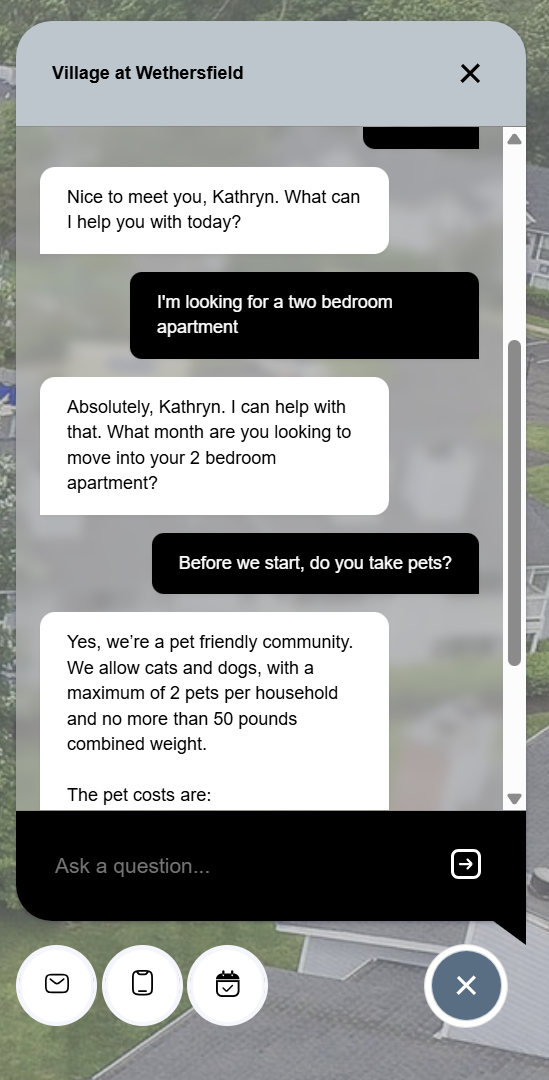
AI is also touching parts of the leasing journey well beyond marketing materials. More properties are integrating AI-powered leasing chatbots that answer questions 24/7 and schedule tours.
New tech always raises questions—both operational and ethical. How much editing is too much? How transparent do you need to be with prospects about image editing? Which parts of leasing should remain strictly human-centric?
READ ALSO: How Apartment Marketers Are Putting AI to Work
Policymakers across the U.S. are addressing some of the same conundrums. States including New York, New Jersey, California and Wisconsin have either passed or are considering legislation requiring real estate brokers to disclose when they use AI to significantly alter listings, according to The New York Times.
AI raises the stakes for the trust between a prospect and a property. Whether a prospect is interacting with a chatbot or viewing an interior image, the throughline is the same: You never want a potential resident to feel duped, and technology is making that progressively easier.

Do: Use AI to enhance images
While not deceiving potential residents is a clear imperative, using AI for enhancements that preserve the overall features of a unit can be helpful, said Izzy Carunungan, industry principal at Yardi and former chief marketing officer of LCP Media.
Adjusting for the likes of exposure and color correction, or straightening a photo, is highly acceptable. These types of edits have long been standard—AI just speeds them up, Carunungan added.
It’s OK to enhance the visual, but you cannot change reality.
—Izzy Carunungan, Industry Principal, Yardi
Even more intensive edits could be acceptable, and even beneficial for the prospect, noted Shelly Steitz, senior consultant at Cadence Marketing Solutions. AI can remove trash or eliminate film from windows in properties under renovation. The key is making sure that once a prospect arrives for a tour, reality matches the expectations set by the media.
These changes and improvements “help prospects focus on the apartment itself rather than the imperfections of a photograph,” said Scott Moore, chief technology officer at Cortland.

Don’t: Generate entire spaces or dramatically alter existing ones
Generating spaces from scratch and making heavy edits are clear no-no’s. Altering a room’s dimensions or the view from a window falls into this category, and the illusion collapses the second a prospect arrives on-site.
For instance, Cortland doesn’t alter finishes, flooring, paint colors, room sizes, layouts or views, according to Moore.
“A lot of times people want to go ahead and put a beautiful view,” pointed out Renee McIntyre, vice president of marketing at property management firm Scully Co. “If someone gets to your property and (online) it had this beautiful scenic park, but now you’re looking at a wall, it immediately breaks the trust.”
Of course, artificial representations of units are sometimes needed. When a project is still underway, for instance. In these cases, clearly disclose that the images are renderings and may not be representative of the final product.

Do: Have unedited photos available

To lock in a prospect’s trust, having both virtually staged or altered photos on a listing alongside the original, unedited images helps show you’re being transparent.
If you prefer not to publicize the originals—for instance, Scully Co. prefers not to emphasize a vacant unit in its media—have the unedited images available upon request. Another option is to have a video walkthrough or virtual tour of the space to demonstrate its “realness” alongside the edited media.
A different route is to use AI-assisted staging in person when the prospect arrives. Steitz said she’s heard of leasing agents taking photos of a space in the middle of a unit tour and feeding them into AI, adding furniture or other digital elements. That helps prospects envision themselves in a home without making them wonder if what they’re looking at is real or not.
Do: Verify that all virtual additions fit the room
If you’re going to be placing virtual couches, beds or other furniture in a space, it’s crucial to make sure these fit—both physically and visually. “You don’t want to show a king-size bed when only a twin will fit,” Steitz said.
READ ALSO: How to Build a Better Marketing Budget in 2027
Steitz also recommended choosing furniture that matches the overall vibe of the community. “For example, you don’t want to have all modern furniture in a suburban Class C apartment that looks completely out of place,” she added. “You want it to look like somebody actually lives there and that it looks true to that property’s brand.”
Don’t: Assume AI leasing chatbots are perfect
Leasing chatbots that work 24/7 can be a net positive, but having human oversight is paramount.
Steitz’s team, for example, once discovered that a client’s chatbot had prevented prospects from scheduling tours for over 60 days and wouldn’t connect them with a human to resolve the issue. Without oversight, that bug could have gone unnoticed much longer.
We want to show the truth, but we want to show it in the best light.
—Shelly Steitz, Senior Consultant, Cadence Marketing Solutions
AI implementation is never complete, especially since the technology is still evolving, McIntyre observed.
It’s definitely not an easy button that you can just press and let it run, she advised. “A weak knowledge base can really produce wrong answers and poor experiences, and that can really break down the prospect and resident life cycle.”
Do: Keep the customer experience in mind

When evaluating AI inclusion in leasing media and other prospect-facing products, put yourself in their shoes. What kind of images would help you best understand a unit’s appeal? How would you want your questions answered?
Moore said that Cortland evaluates its chatbot, Cortney, as if it were an employee. Beyond tracking answer accuracy and escalation rates, the firm wants to ensure that Cortney is leading to a markedly better prospect and resident experience.
In client-facing roles, AI’s endgame is not just to streamline. It’s also to let your teams do things they couldn’t or didn’t have time to do before. All AI integration should enable employees to take advantage of what makes them human: empathy and connection.
“The companies that get the most value from AI won’t necessarily be the ones that automate the most,” Moore said. “They’ll be the ones that use it to earn trust with every interaction.”