Multifamily Lending Light in Sight
Greater lender willingness to collaborate on challenged or distressed transactions offers reason for cautious optimism, says KeyBank's Samantha Miller.

There is light at the end of the tunnel for multifamily investors and developers. After several years in which demand for affordable capital far outpaced supply, conditions are beginning to shift in borrowers’ favor. Many of the sector’s most persistent challenges—elevated interest rates, constrained capital availability and broader economic uncertainty—showed meaningful signs of improvement throughout 2025, setting the stage for a more constructive lending environment.
Multifamily debt market efficiency
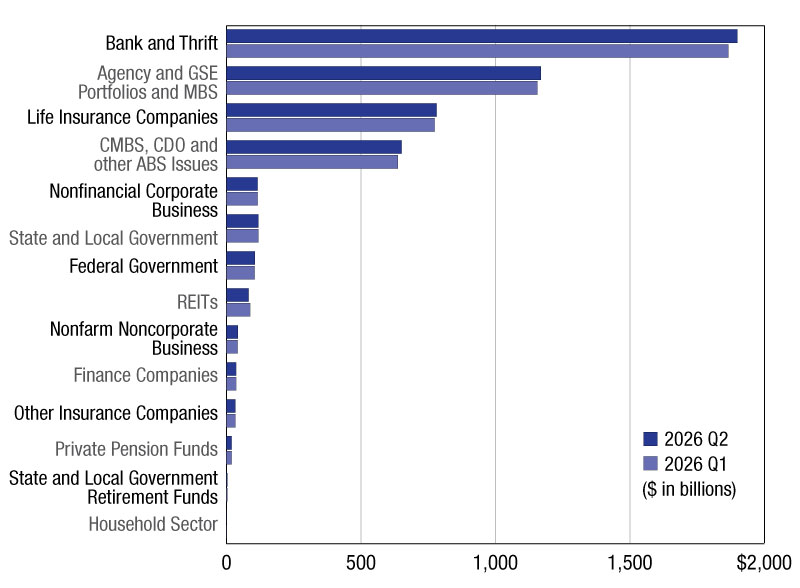
Over the past year, the volume of competitively priced debt capital has increased significantly. Traditional bank lenders, which largely pulled back in 2023 amid rising and volatile interest rates, have re-entered the market in a meaningful way. Their return has expanded overall capital availability and driven more favorable pricing and structures for both investment transactions and new construction loans. After an extended period on the sidelines, banks are now issuing highly competitive quotes, alongside increased participation from life companies, agencies and other private lenders—marking one of the strongest periods for capital markets activity in recent years.
Strong demand for multifamily assets, combined with greater interest-rate stability, has further supported this resurgence across both bank and private capital sources. In addition to higher volumes of traditional bank lending, there are emerging signs of increased CMBS activity. Historically, multifamily properties have accounted for roughly 10 percent of CMBS originations; that share is now showing potential to expand to 20 percent or even 30 percent of total issuance. As borrowers explore alternatives beyond the agencies and a broader mix of lenders steps in, the multifamily debt market is functioning more efficiently and offering borrowers greater flexibility than in recent years.
LIKE THIS CONTENT? Subscribe to MHN’s Finance & Investment Newsletter
Stabilizing balance sheets
While market conditions are improving, many multifamily borrowers continue to grapple with income pressures that emerged in 2023 and 2024, as noted by the Mortgage Bankers Association. In many cases, property operations were not the root cause of distress. Instead, rising interest rates (particularly on variable-rate debt) compressed cash flows and drove underperformance, while sharply higher rates at loan maturity created refinancing challenges. These dynamics have contributed to an uptick in defaults across the sector.
The good news is that distress has not translated into widespread asset liquidation. Borrowers are generally not handing back the keys, and banks are actively working with clients to stabilize balance sheets through constructive negotiations. At the same time, substantial capital remains on the sidelines, ready to be deployed should assets come to market. There is no shortage of liquidity willing to step into these situations, reinforcing confidence in the multifamily sector’s underlying fundamentals.
Optimism for the year ahead
The post-pandemic capital environment has presented the most significant challenge for multifamily investors since the liquidity crunch following the 2008 global financial crisis, but the market is beginning to stabilize. With bank capital, private debt sources and the agencies all committed to supplying capital to the multifamily market in the year ahead, and the expectation of lower interest rates, multifamily borrowers are finally seeing the light.
The resurgence of traditional bank capital emerged as one of the defining themes of 2025. Today, borrowers are encountering a more flexible and competitive market with a wider range of financing options, including renewed activity from private debt providers. Expectations for lower interest rates in 2026, combined with greater lender willingness to collaborate on challenged or distressed transactions, are further contributing to a reopening of the multifamily debt markets and a cautiously optimistic outlook for the year ahead.
Samantha Miller is a senior vice president and mortgage banker at KeyBank Real Estate Capital, based in Chicago. She leads multifamily debt origination efforts across the Midwest and is focused on new business development and relationship management for real estate owners, investors and developers.
Disclosure: This article is for general information purposes only and does not consider the specific investment objectives, financial situation, and particular needs of any individual person or entity. Banking products and services are offered by KeyBank National Association. All credit products are subject to collateral and/or credit approval, terms, conditions, and availability and subject to change.