Moody’s Update: Rising Vacancies and Revenue Pressures
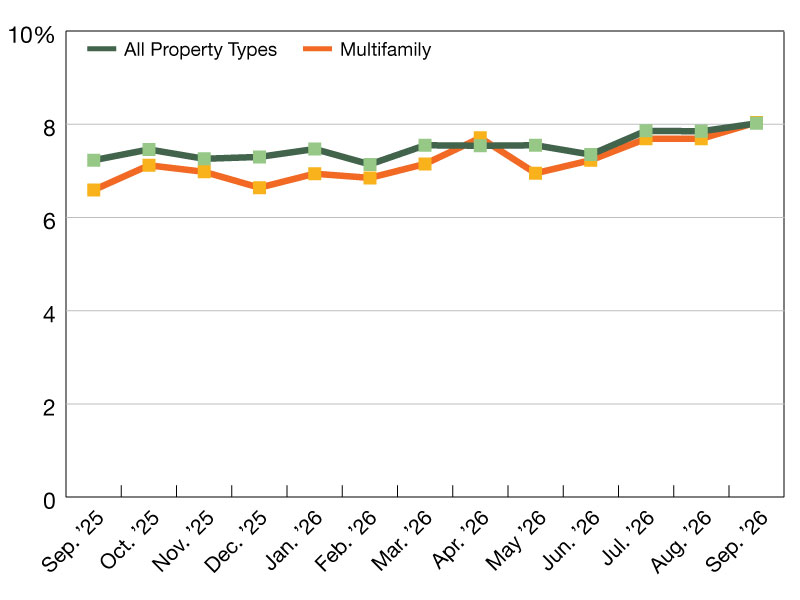
Elevated vacancy rates have led to higher concessions in tenant-favored markets.
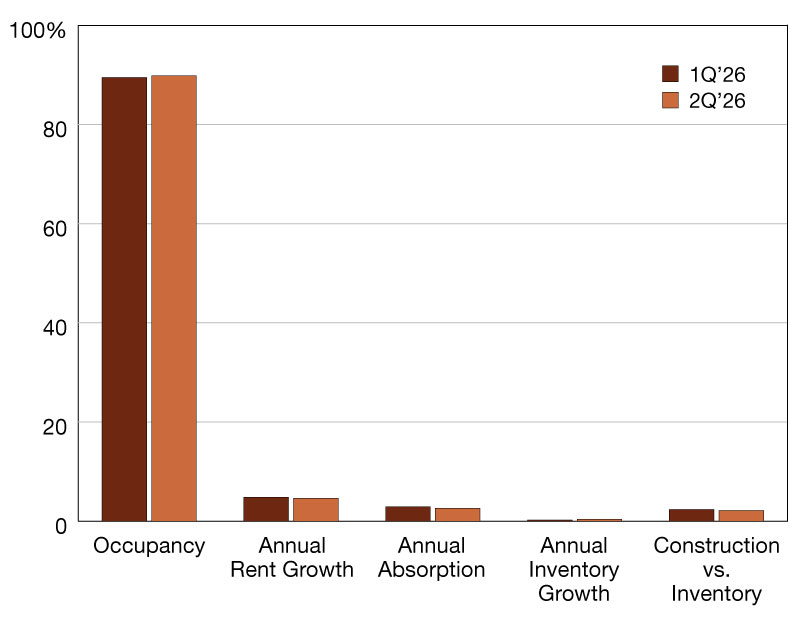
The multifamily sector continued to exhibit resilience despite ongoing supply-side pressure throughout the second half of the year, according to recent data from Moody’s. Notably, two-thirds of metros reported stable or improved vacancy and rent performances during the second quarter, highlighting the sector’s robust demand that maintained a stable vacancy rate of 5.7 percent, a modest 50-basis-point increase from the previous year.
This reflects the sector’s strong demand amidst a pre-pandemic housing shortage, further intensified by reduced construction and strong demographic growth which set the decade’s average vacancy rate slightly below 5 percent. Since 2023, even with asking rents reaching $1,838 per unit, a modest increase that did not surpass the prior year’s levels, indicating a nuanced shift in market dynamics.
This period also saw elevated vacancy rates, leading to higher concessions in tenant favored markets, with a record disparity between asking and effective rents, exceeding $90 for three consecutive quarters.
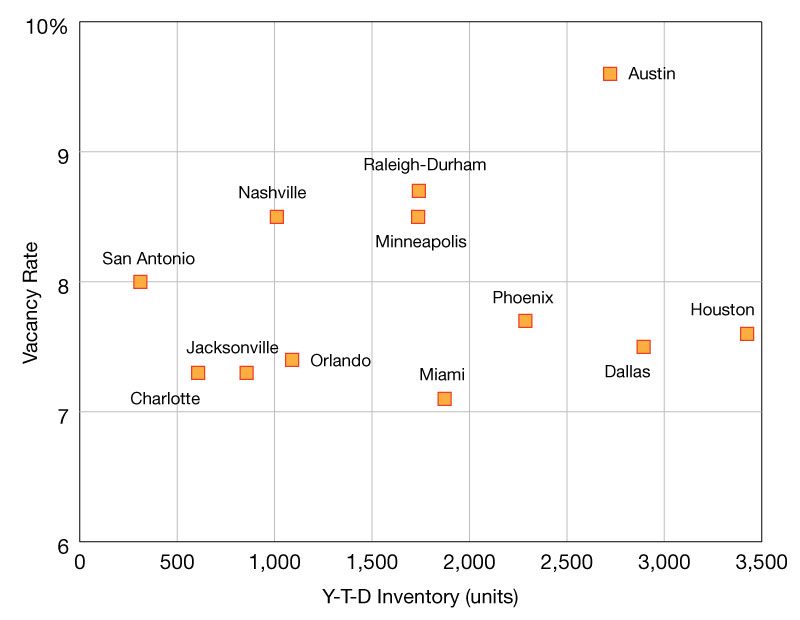
The era of “Pandemic Darlings”—metros that led the rental housing market with significant inventory and rent growth during the pandemic due to a surge in demand for remote work flexibility and a desire for more space—has seen a transformation. In the second quarter, Texas cities like Austin, Houston and Dallas led the inventory growth among the list of 79 primary metros by more than 2,500 units coming online. Florida cities such as Orlando, Jacksonville and Miami all recorded vacancy rates exceeding 7.0 percent due to supply-side pressure. These Pandemic Darlings illustrated the link between a surge in supply and higher vacancy rates.
This trend suggests ongoing affordability pressure especially among newly construction class A premium multifamily properties and deceleration in migration to these areas, adversely impacting effective revenue growth due to the income loss from unoccupied units and exacerbating the challenge of maintaining profitability amid rising operating expenses.