Inland Empire Multifamily Report – December 2025
Most metrics are outperforming across Riverside and San Bernardino counties.
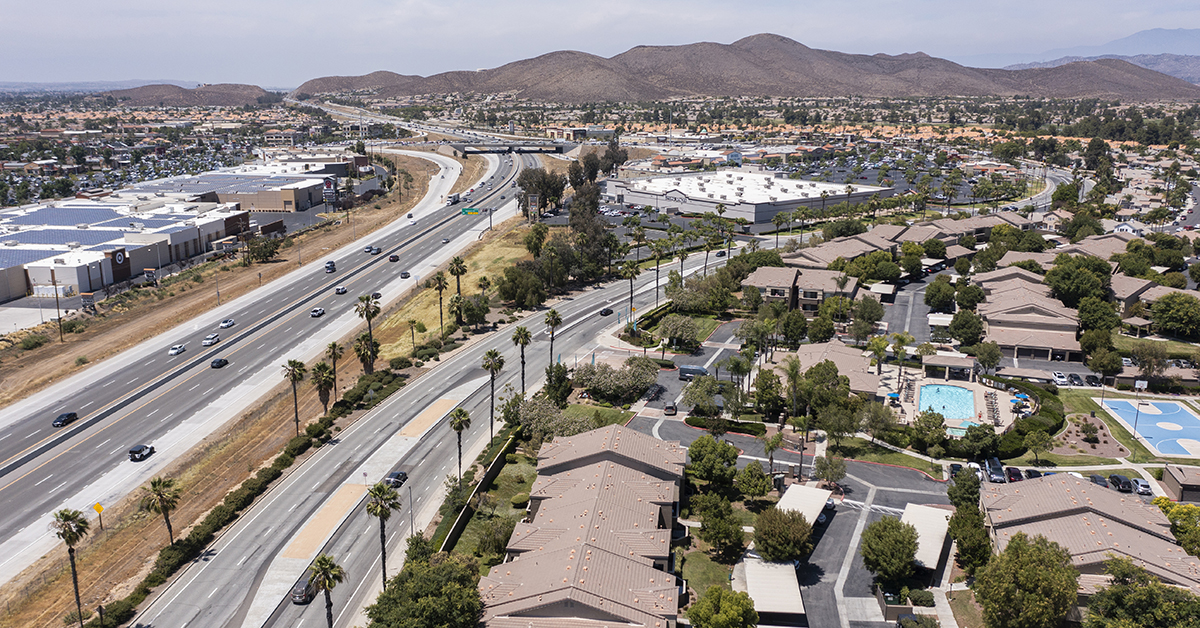
The Inland Empire’s fundamentals showed resilience going into the fourth quarter. Amid record supply, average advertised asking rents were unchanged on a trailing three-month basis through October, at $2,165, while the U.S. average slid 0.2 percent to $1,743. Year-over-year, rents improved 1.7 percent vs. 0.5 percent nationally. The area’s occupancy rate in stabilized assets inched up 20 basis points year-over-year, to 95.4 percent in September, even as deliveries shot up.
Employment growth stood at 0.7 percent through August, just below the 0.8 percent U.S. rate. Yet, unemployment rose to 6.1 percent in August, above the state (5.5 percent) and national (4.3 percent) rates. The Inland Empire added 14,600 net jobs over 12 months, led by education and health services (14,300), government (10,400) and leisure and hospitality (1,900), while the steepest losses were in construction (-6,600) and manufacturing (-2,800). Project advancements include the West Valley Connector, targeting a 2026 opening, SBCTA’s hydrogen-powered ZEMU, now in service on the Arrow corridor, and Brightline West, advancing field work at Rancho Cucamonga toward a projected 2028 or 2029 launch.
Developers delivered 6,030 units through October, 3.6 percent of inventory and nearly triple the metro’s 10-year pace. The construction pipeline had 7,235 units underway, with starts accelerating in 2025. Investment totaled $756 million through October, while the average price per unit climbed significantly.