How Specialization Can Strengthen Multifamily Operations
Moving administrative tasks to dedicated teams gives on-site staff more time with prospects and opens new paths for career growth.
For years, multifamily leasing has largely been organized around the individual property. Leasing professionals were expected to handle everything from responding to inquiries and conducting tours to processing applications, managing paperwork and reporting.
As portfolios have grown and technology has advanced, more operators are reconsidering whether every task needs to happen in the same place or be handled by the same person. Research from Funnel found that 80 percent of third-party multifamily managers are centralizing operations, with administrative functions seeing the greatest adoption.
Centralization is the mechanism people talk about, but on its own it doesn’t explain why the shift matters. The real opportunity is specialization: getting the right work in front of the person best equipped to do it, while creating opportunities for leasing professionals to build expertise and advance.
These lessons may help operators considering a similar change:
Start by looking at the work, not the org chart
We first reviewed how leasing professionals were actually spending their time. When we surveyed our leasing teams before changing the model, we found that less than 20 percent of their time was being spent on touring and direct prospect engagement. The other 80 percent was going toward reporting, administration and other work surrounding the leasing process.
That prompted a simple question: If we want leasing professionals to excel at leasing, how can we give them more time to do it?
In our case, lease administration and compliance now sit with a dedicated corporate team built for that kind of precision. Property-level leasing professionals spend more of their time understanding prospects, building relationships and helping a prospect find the right home, the work most directly connected to leasing performance and property revenue.
Decide what to specialize in and what to keep on-site
The harder question is which functions to move. One useful test is whether the work depends on local knowledge and in-the-moment judgment. Tours, prospect follow-up, renewal conversations and resident issues may be stronger when handled by someone who knows the community and generally should stay with the property staff.
Work that is repeatable, rules-based, or risky if done inconsistently, such as application processing or lease generation, is often better suited to a dedicated team that applies the same standards across the portfolio.
The bottom line is that specialization only works when property and corporate teams share clear ownership, define handoffs and communicate well with each other.
The operating model and the talent model are connected
Traditionally, leasing could be a relatively short career track. Advancement often meant moving into property management. But not everyone who excels at leasing aspires to become a property manager and there is no reason they should have to.
A more specialized model creates room for people to advance within leasing itself. For us, that has meant a defined progression from entry-level and part-time roles up through leasing director, with a bridge from there into corporate leadership. A visible path gives strong leasing professionals a reason to stay and grow.
The people who know leasing in and out often have the skills to translate that knowledge into broader business decisions, which makes them natural candidates for corporate roles.
Technology should expand capacity, not distance
Automation, lead management, communications and reporting tools can reduce repetitive work. What matters is whether they create capacity for people to spend more time where their expertise can have the greatest impact.
Self-guided tours are a good example. The question is whether implementing this option creates a better experience for the prospect, makes sense for the community and allows teams to focus their time on the interactions that matter most to leasing performance and the resident experience.
Technology should support service, relationships and the feeling of home, not create distance from them.
Build the model around where people create value
There isn’t one operating structure that will work for every portfolio. For operators starting out, piloting with one role or a small group of properties and adjusting before scaling can surface problems while they are still small.
Operators should ask: What work creates the most value? Who is best equipped to do it? And how can we give that person the capacity and expertise to do it well?
Executed thoughtfully, this approach can create stronger operations, better career opportunities, an improved experience for residents and communities and stronger property performance.
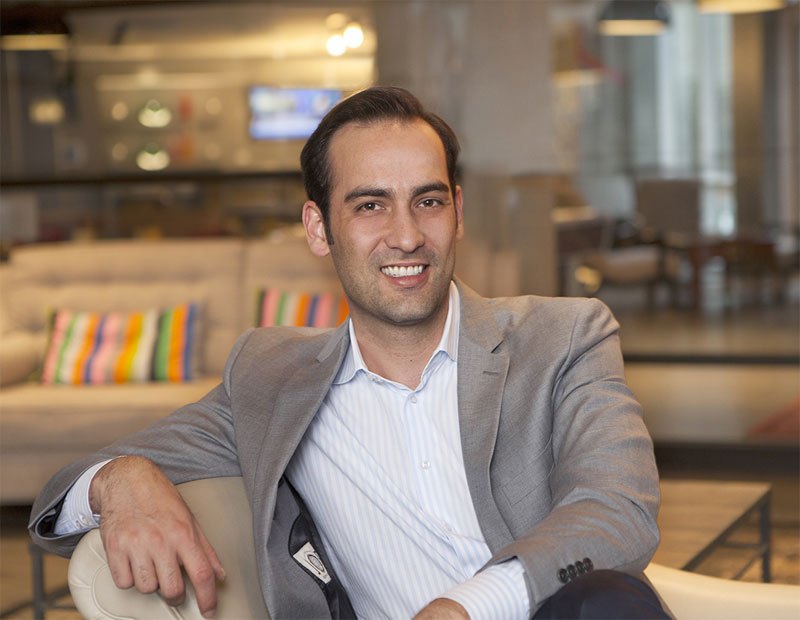
Alex Nunner is vice president of leasing & marketing at The Dermot Co., a vertically integrated multifamily owner, operator and investment manager founded in 1991 with an owned and/or managed portfolio of approximately $5 billion in assets.