How AI Is Reshaping Multifamily Construction
New tech covers everything from project management to safety compliance and quality control.
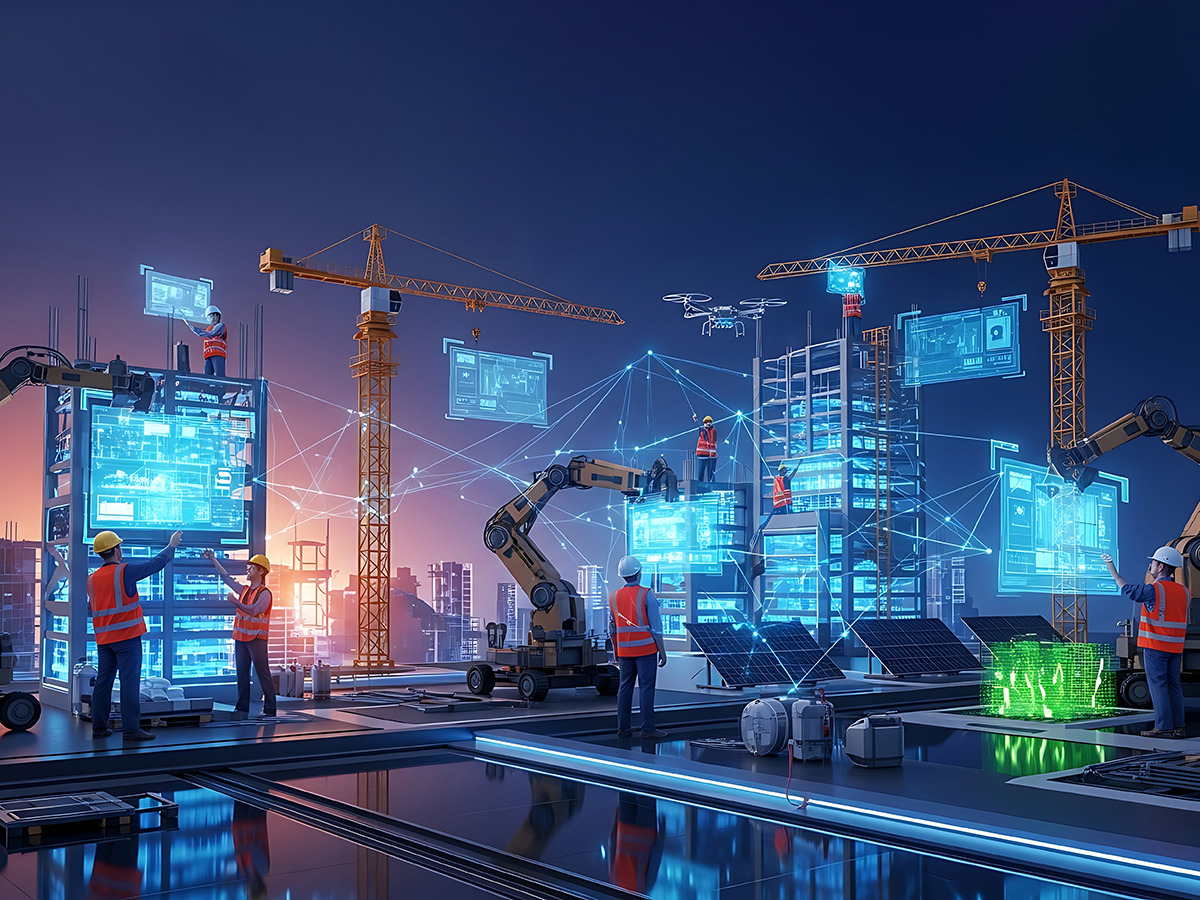
Workers building the next wave of multifamily communities might soon have a new coworker: an all-seeing robot that monitors construction sites and makes sure things are running smoothly.
While the use of artificial intelligence in multifamily marketing and operations is well documented, new use cases are emerging at the very beginning of the building life cycle: development and construction.

According to a 2025 survey from the Royal Institute of Chartered Surveyors, 45 percent of construction organizations reported no use of AI, while 34 percent said they were only piloting. However, the same survey revealed that the industry is generally optimistic about the new tech’s potential. Nearly 70 percent of project managers and quantity surveyors believed that AI would help the industry deliver greater value.
“We’re still very, very early in this journey, and a lot of people are in that kind of experimental phase with it,” James Garner, a member of the RICS Construction Professional Group Panel & head of AI and data at Gleeds, told Multi-Housing News in a recent episode of the Tech Pulse podcast.
AI at the jobsite
Keeping projects on track and on budget is crucial for any multifamily development. Project management is one area ripe for AI disruption, according to Stewart Germain, director of innovation and sustainability at Skanska USA Commercial Development.
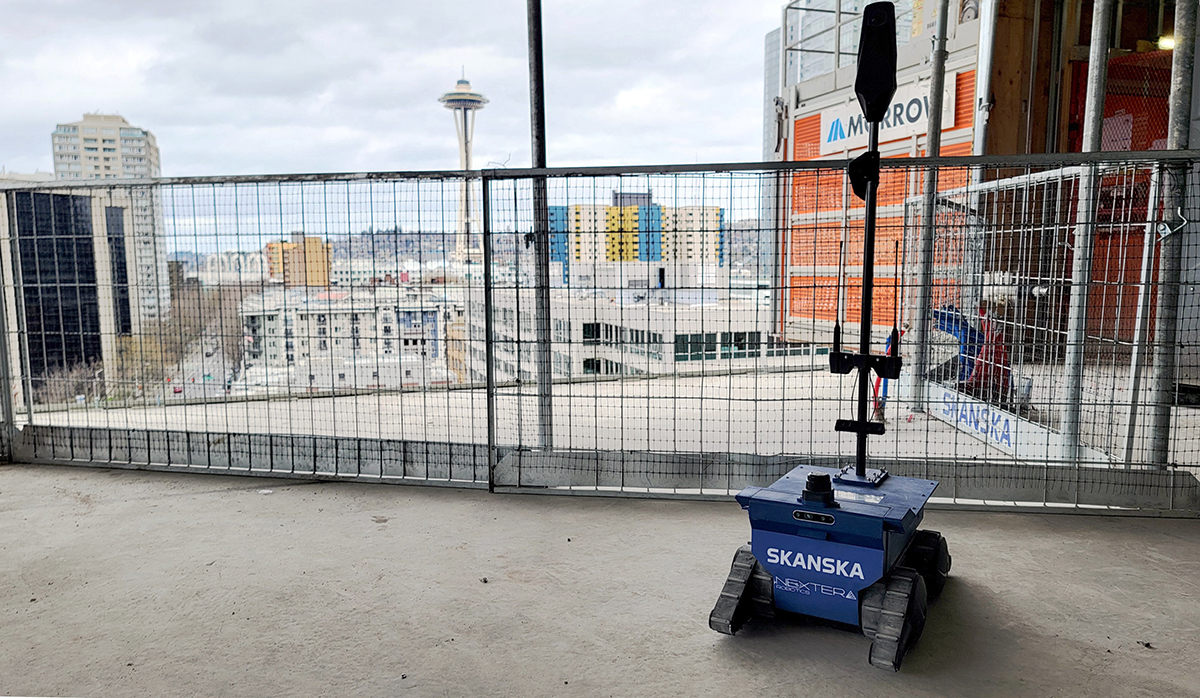
Skanska has begun deploying robots to its multifamily projects beginning with Kaye, a 31-story, 324-unit residential tower in Seattle. The firm broke ground on Kaye in November 2022 and completed construction in June 2025.

Skanska deployed DIDGE robots, a product from Nextera Robotics, at the construction site. The robots provided 360-degree photos and videos to track progress and collect safety data. Germain said not having a human worker capture images saved the team up to 40 hours per week.
“The problem with humans is they have a meeting that comes up or something else happens, or they don’t stand in exactly the same spot and they wiggle around a bit,” Germain opinioned. “The robot-mounted camera provides a level of consistency and fidelity in the image capture that allows you to do more with it.”
While AI can’t do our jobs for us, it can dramatically improve the efficiency of our human teams.
—Bryce Willardson, President of Construction, Cole West
The photos taken by the DIDGE robots are then compared to pre-construction schematics, including the project’s BIM model, to see how development is progressing. This also helps with quality assurance since the software can flag if a certain component, such as a fire extinguisher cabinet listed in the blueprints, hasn’t been installed.
Keeping an eye on safety

The DIDGE cameras also came in handy for construction site safety compliance. The robot’s software can analyze the images taken and flag safety violations, such as an exposed hole or a worker not wearing a hard hat.
The program would then generate reports detailing both positive and negative safety stats, such as the usage of personal protective equipment and presence of fire extinguishers. For emergency situations such as water leaks, the software can immediately notify project managers about the issue—even after hours.
“A lot of times, the safety observation report is a human walking around just noting the deficiencies,” Germain pointed out. With the DIDGE platform, the report also highlights what’s going well and how things are progressing.
Adopting AI and robotics can also improve construction safety by removing workers from high-risk tasks.
After all, construction remains relatively dangerous. More than 1,000 construction workers died on the job in 2024, according to the most recent data from the Bureau of Labor Statistics. Falls, slips and trips alone accounted for 389 of those casualties.
AI in the back office
Like most fields, construction still requires administrative tasks that workers may find tedious. Willardson said Cole West uses AI to solicit and help analyze bids, maintain spreadsheets, produce scheduling reports and draft subcontracts.
“The project manager can use a template and provide an AI platform with a few prompts and produce a subcontract in seconds that (they) can then spend a few minutes reviewing,” Willardson said. These technologies can shorten task times from several hours to a few minutes but still require human review.
Garner noted that construction professionals are increasingly dealing with massive volumes of project information, making AI particularly useful for administrative and analytical tasks. AI excels at reviewing large sets of documents, contracts and project records and quickly surfacing key details.
“We don’t have a shortage of data,” he said. “(We have) change orders, RFI logs, schedule durations, cost estimates. You name it, we’ve got the data.”

Where is the industry heading?

Architecture and design are parts of the construction process that many in the field believe will benefit from future AI applications, according to the RICS survey. The results revealed that 40 percent of construction professionals believe design optioneering is where AI’s “primary value proposition” in the industry lies.
Germain reported that new AI tools aim to better integrate parts of the design process across disciplines, including architecture, structural design, mechanical engineering and plumbing.
And expanding the use of AI for progress tracking, such as by flying drones above sites, will bring in even more quality control data to ensure that what’s being constructed and installed precisely matches the plans for a project.
Like with any application of AI, there are questions about how the technology will change labor needs for construction projects.
Germain said that, at least in the case of Kaye, the use of robots simply shifted the responsibility of on-site team members.
If we can put a humanoid robot in harm’s way rather than a human, that’s an obvious starting point.
—James Garner, Member of the RICS Construction Professional Group Panel & Head of AI and Data at Gleeds Cole West
“For future projects, we may end up looking at staffing a little differently,” he observed. “For this project, it turned out to be a benefit, where the individual who was originally tasked with (taking photos) was able to be more efficient with his time and do a little bit of higher-level work.”
Willardson also expects AI to augment the work of project managers, especially since AI outputs require a certain level of oversight and verification.
“We don’t have AI (tech) that can replace a project manager,” Willardson noted, “but it can make their life easier.”