Why the Fed’s Holding Rates Steady
The move was expected, but what comes next is less clear.
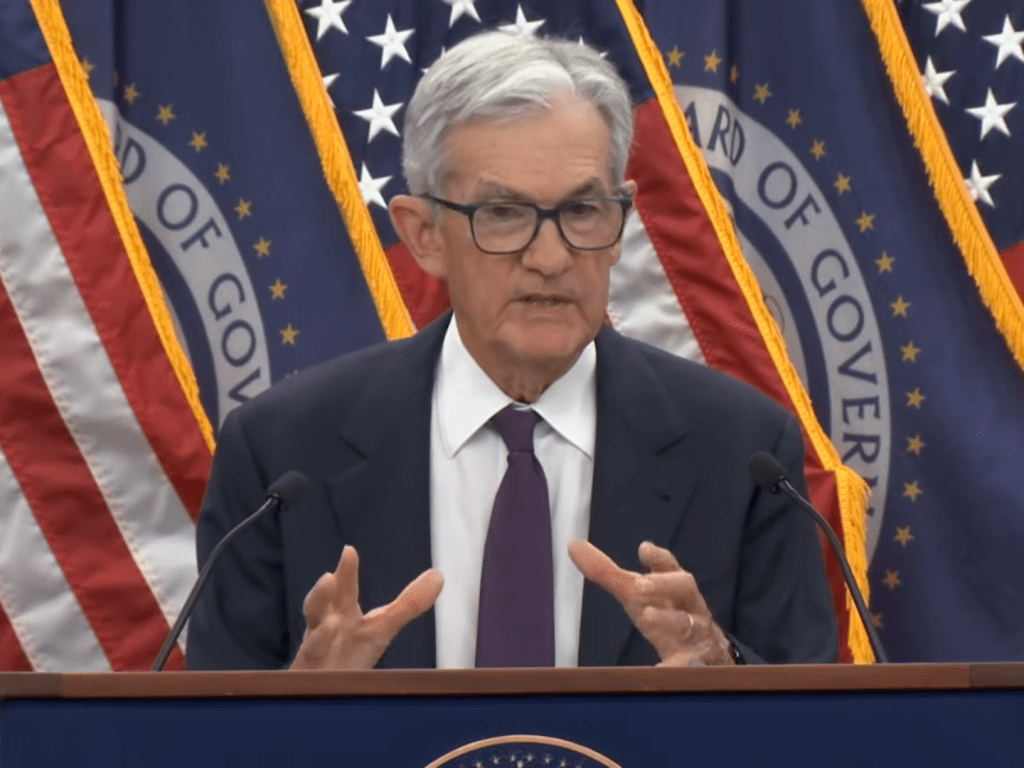
At the first Federal Open Market Committee meeting of 2026, the Fed decided to keep interest rates as they currently stand. Following a 25-basis-point cut in December, the federal funds rate remains at 3.5 to 3.75 percent, Federal Reserve Chairman Jerome Powell announced on Wednesday. The rate is now down 75 basis points from a year ago, when the target range was at 4.25 to 4.5 percent.
The decision comes as available data has shown economic activity is progressing at a solid pace. The labor market remains cool, with the unemployment rate 4.4 percent. Core inflation sits at 2.6 percent, a moderate elevation from the Fed’s 2 percent goal.
The decision to keep rates level was not unanimous as two committee members voted in favor of a 25-basis-point reduction. “We see the current stance of monetary policy as appropriate to promote progress towards both maximum employment and 2 percent inflation goals,” Powell said during the press conference following the announcement. “Since last September, we have lowered our policy rate 75 basis points, bringing it within a range of plausible estimates of neutral.”
An expected hold
Ahead of the Jan. 28 meeting, the CME Group’s FedWatch tool was predicting a 97.2 percent chance that rates would stay the same, and the industry was expecting this result.
While lower rates may improve transaction activity, the higher degree of certainty remains favorable for bridge and construction financing, said Andrew Pilchick, managing director with HKS Real Estate Advisors. Stable rates will help lower short-term borrowing costs and improve debt service coverage.
“Lenders remain cautious and highly selective,” said Ryan Brome, chief operating officer of investments at Forum Investment Group. “What tends to move the market is sustained clarity around the rate path and interest-rate volatility, which directly impacts underwriting assumptions, spreads and loan proceeds.”
READ ALSO: Why Insurance Costs Are No Longer High All Over
But the industry is still monitoring the long end of the yield curve. A cut in short-term rates would have been helpful, but if the Fed cuts rates due to concerns about jobs and inflation, that could steepen the yield curve and make long-term rates higher, Michael Frantantoni, chief economist & senior vice president of research for the Mortgage Bankers Association told MHN.
“Investor mood in multifamily is cautiously optimistic, with confidence slowly returning as fundamentals stay solid,” said Alissa Sieben, president of Souza Development. “Selective investors are focusing on high-quality assets and intentional developments that emphasize community connectivity and resident-focused amenities.”
Paul Rahimian, founder & CEO of Parkview Financial, is hoping that after this meeting the Fed will focus more on the data and less on this political pressure around the committee.
“There’s a lot in the background,” Rahimian said. “Powell is leaving in a few months, and there is a lot of chaos about his role right now with the investigation. We also have a new Fed chair that’s going to be announced shortly.”