Detroit Multifamily Report – August 2026
This market is a national leader for asking rent growth.
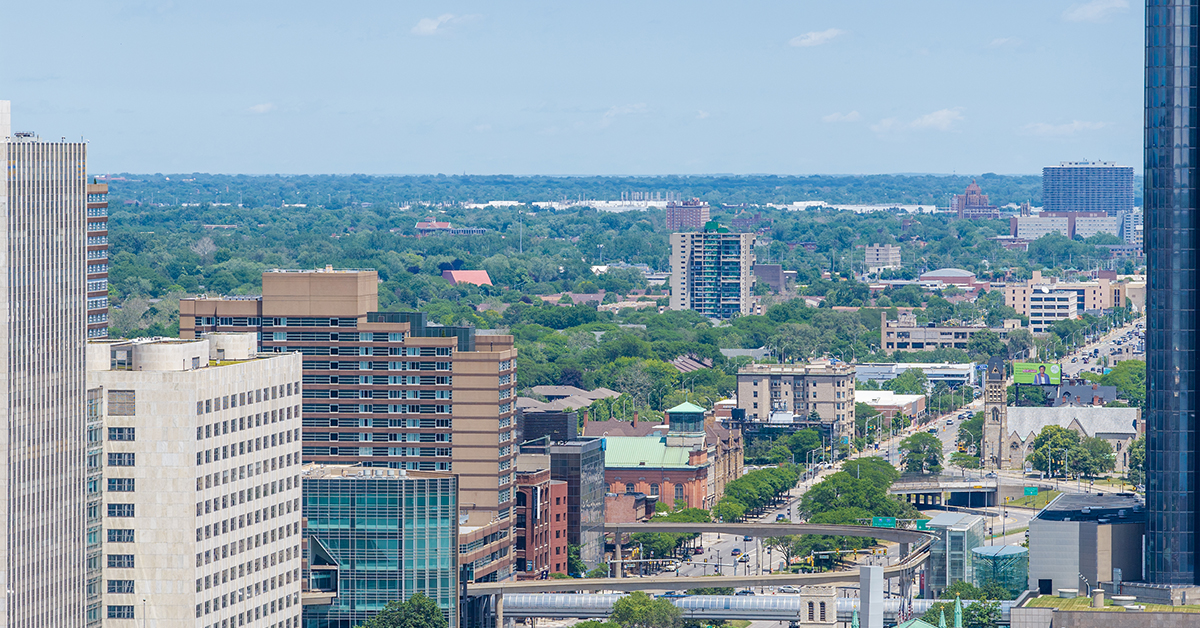
As of June, Detroit average advertised asking rents were up 0.4 percent, on a trailing three-month basis, to $1,363. The market posted slow but steady Midwestern growth, outperforming the nation’s 0.2 percent increase to $1,763. The divide was wider on an annual basis, as the U.S. average improved 0.2 percent year-over-year, while Detroit’s figure climbed 1.6 percent. This established the metro as a top performer, placing it sixth among Yardi Matrix’s top 30 metros. The market’s occupancy rate in stabilized assets was 94.4 percent as of June. Once again, the metro surpassed the national figure, which stood at 94.1 percent.
Metro Detroit’s unemployment rate was 5.5 percent as of May, according to preliminary Bureau of Labor Statistics data. The figure stood significantly above the 4.3 percent national average. Area employment also contracted 0.8 percent as of April, with the market shedding 18,900 net jobs over 12 months. Gains in education and health services and government, were not enough to offset the wider losses. Meanwhile, Henry Ford Health marked the topping out of the 20-story patient tower at the heart of its $2.2 billion Destination: Grand expansion project.
As of June, Detroit’s pipeline included more than 4,600 units under construction, on the heels of 363 units delivered in the first two quarters. During the first half of 2026, investment sales totaled $388.6 million. This was an improvement from the $284.8 million in multifamily assets that traded during the same period of 2025.