Can College Campus Conversions Ease the Senior Housing Shortage?
As academic institutions rethink their footprints, developers are exploring whether redevelopment could create much-needed senior living supply.
The U.S. is heading toward a senior housing shortage at the same time as some colleges are experiencing a shrinking pool of students. On paper, the overlap looks almost too convenient: An aging population needs more housing, while struggling institutions may soon have more buildings and land than they need.
The nation’s 65 and older cohort reached 61.2 million people in 2024, representing 18 percent of the total population, according to the U.S. Census Bureau. The first Baby Boomers turned 80 this year, ushering in a period of accelerating demand for senior living.
READ ALSO: Senior Housing Shines in Its Golden Years
At the same time, higher education is facing its own demographic reckoning. The Federal Reserve has warned that declining enrollment could increase college closures, with some scenarios projecting a 15 percent drop in higher education enrollment between 2025 and 2029.
The two trends create a potential adaptive-reuse opportunity, but the path from an underused college campus to a viable senior housing community is far from straightforward. Not every empty classroom, dorm or athletic facility can become housing, and the reasons why reveal where the real opportunity may lie.
Two demographic shifts converge
The senior housing market is already tightening. Occupancy across NIC MAP’s 31 primary markets reached 90 percent in the second quarter of 2026, marking the 20th consecutive quarter of increases.
“For years, the senior housing investment thesis was largely based on future demographic projections,” said Evan Serton, senior vice president at Cohen & Steers. “Today, that thesis is becoming reality. Demand is accelerating, supply remains limited and the operating environment continues to improve.”
Meeting the demand with ground-up development alone will be difficult. NIC MAP found that construction starts have fallen roughly 67 percent since 2021, to about 10,000 units in 2025. More than two in five existing senior housing units are also more than 25 years old, increasing the need for renovation, repositioning and adaptive reuse alongside new construction.
Meanwhile, demographic-driven enrollment declines are putting additional financial pressure on some colleges. The Federal Reserve’s research does not predict a guaranteed wave of shuttered campuses, but its simulations indicate that annual closures could increase.
Architects and planners are already examining whether campus real estate could help address both challenges. McMillan Pazdan Smith Architecture analyzed 46 private colleges to assess their suitability for senior housing redevelopment.
“The biggest takeaway at first was realizing just how many higher education institutions are struggling right now,” said Stuart Barber, director of Living Practice at McMillan Pazdan Smith Architecture. “Intuitively, we thought college campuses on the whole would be good candidates for redevelopment into senior living, and we found that to be mostly the case after digging in.”
That potential, however, depends on distinguishing between campuses with valuable redevelopment attributes and those with impractical locations, buildings or finances.
What makes a conversion work?
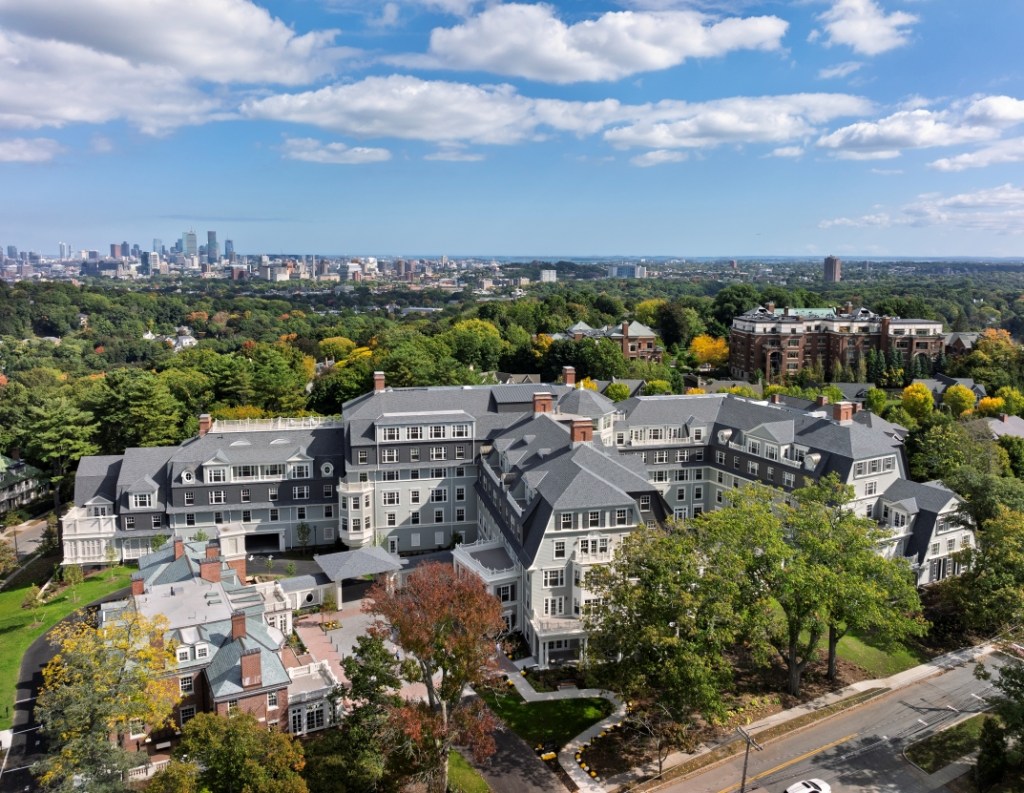
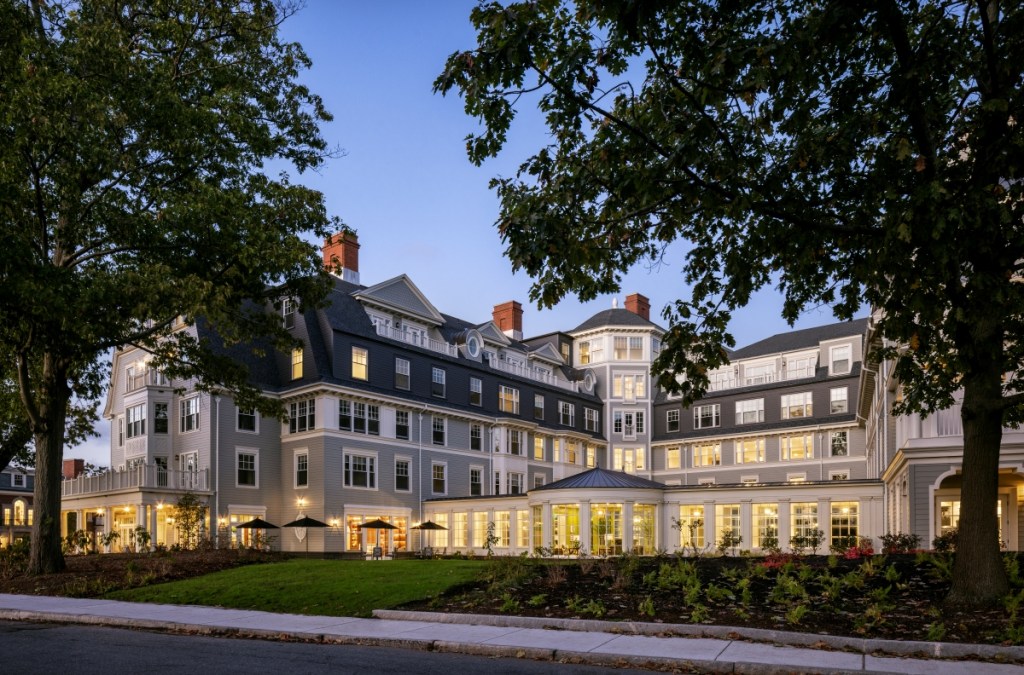
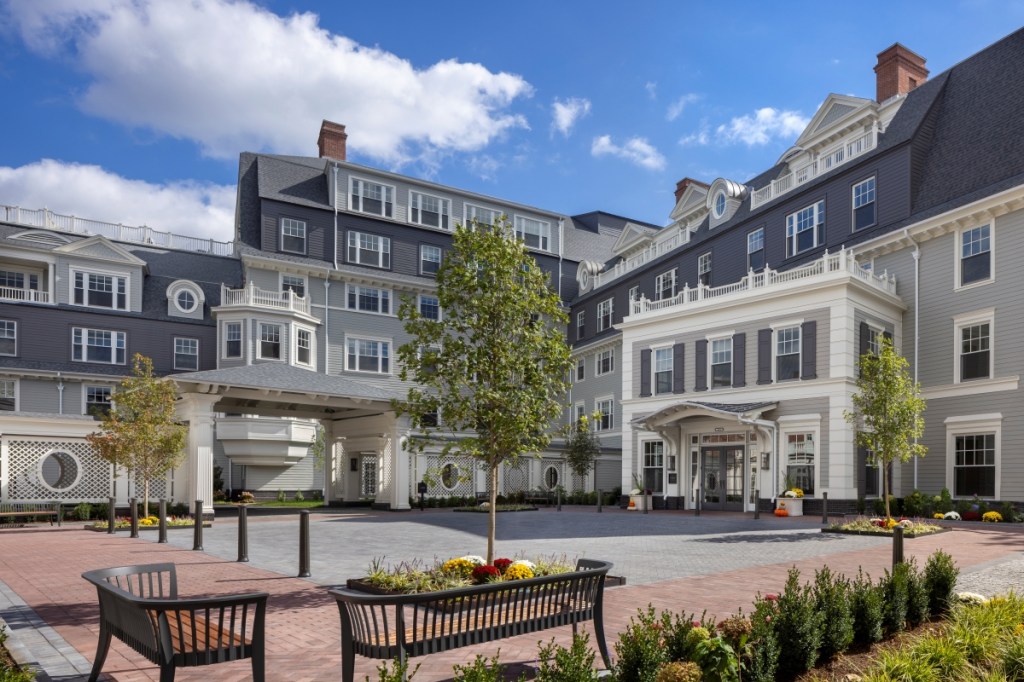
The Newbury of Brookline in Massachusetts illustrates how a former college campus can become senior housing when the right location and physical assets align.
“When Newbury College closed in 2019 and the Newbury of Brookline ownership acquired the site, the team saw a rare opportunity to thoughtfully reposition a college campus in a prime location in a way that addressed a real community need: senior housing,” said Doug Manz, partner & CIO at The HYM Investment Group.
The firm led the redevelopment of the 3.9-acre campus in Brookline, Mass. The Newbury opened in December 2024 with 159 units: 81 independent living, 38 assisted living and 40 memory care residences. The project combined roughly 190,000 square feet of new construction with the restoration of Mitton House, a historic 20,000-square-foot mansion dating to 1895. That approach allowed the team to retain some of the campus’ most valuable characteristics.
“The synergies between the former college campus and a prospective senior living community helped reinforce it as a clear fit,” Manz added. “Both benefit from expansive green space, walkability and natural opportunities for social connection.”
READ ALSO: Why and Where Is Senior Housing Investment Growing?
The location was equally important. The campus sits in Brookline’s Fisher Hill neighborhood, close to Boston and within an established residential community.
“Remote colleges may offer attractive grounds and a resort-like setting, but distance from family members and medical services can work against them,” said Joseph Alcock, director of Atlanta Studio and Living Practice at McMillan Pazdan. “Campuses near established communities and the families of prospective residents are more likely to succeed.”
The same selectivity applies to the buildings.
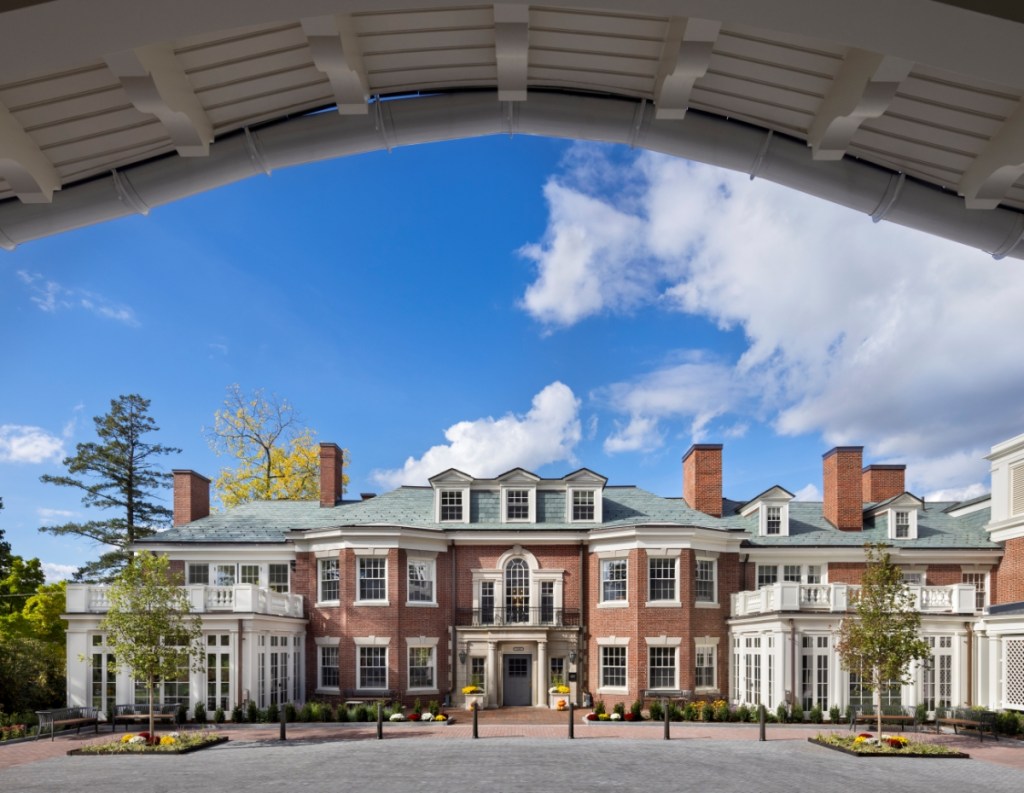
“Instructional properties and college building facilities specifically were often built to last generations with high-quality materials,” noted Matt Duggan, an associate at The Architectural Team in Boston. “These strong ‘bones’ make them great candidates for adaptive reuse so they can be enjoyed by future generations.”
Naturally, existing residential buildings are among the most adaptable, while athletic facilities and highly specialized academic spaces can be harder to repurpose. Deferred maintenance can further erode the financial advantages of reuse.
The intended senior housing product also shapes the redevelopment plan. Barber said independent living and active adult uses are typically the easiest to accommodate within existing student housing and amenity spaces. Assisted living and memory care often require more extensive renovation or new purpose-built additions.
The Newbury ultimately took a hybrid approach: preserving assets that contributed character and value, while replacing or supplementing those that could not meet the needs of a modern senior housing community. For many campuses, that strategy may prove more realistic than attempting to preserve an entire campus intact.
The opportunity before closure
Even if college closures accelerate, fully vacant campuses will remain a limited source of senior housing. The available inventory would represent only a fraction of the more than 1 million senior housing units NIC forecasts the industry will need by 2035. Consequently, the larger opportunity may lie in helping institutions reduce their footprints before financial pressure forces them to officially close.
“Most struggling college campuses will try just about anything before they shut their doors, so seeing a widespread shutdown of campuses is probably not realistic or desirable from any perspective,” Barber explained.
Instead, partial redevelopment could allow a college to sell or repurpose surplus property, raise capital and adapt to lower enrollment while keeping its core academic operations intact. Because retirement communities can operate at different scales, senior housing may fit into a broader campus real estate strategy.
“There are plenty of factors that can affect the success of a transition and, in many cases, partial redevelopment seemed to make more sense while allowing the school to downsize but remain operational,” Barber added.
That model is beginning to emerge as a viable solution to colleges’ growing financial pains. HYM is pursuing a preliminary senior housing opportunity at Regis College in Weston, Mass., even as the college continues to operate. Rather than waiting for the campus to become obsolete, this approach would introduce senior housing into an active educational environment.
Other projects are taking the concept a step further. In College Station, Texas, plans associated with Texas A&M University call for senior housing near the university’s main campus, creating potential access to its programming, amenities and social infrastructure, all possible without converting existing campus buildings.
Active campuses may also provide operational synergies. Colleges already employ workers in maintenance, food service, administration and billing, and some also provide health and wellness services. Those functions overlap with parts of senior housing operations, although they do not replace specialized staffing and care infrastructure required by the sector.
None of this advantages makes every struggling college a viable redevelopment candidate. Ownership restrictions, outstanding debt, zoning, deferred maintenance, location and construction costs can quickly complicate a deal. Nor can campus conversions, on their own, close the senior housing supply gap.
But as colleges reassess their real estate needs and senior housing developers compete for well-located sites, selective redevelopment could create value on both sides. The strongest opportunities may lie in institutions willing to turn underused portions of their properties into housing before both the assets and the colleges themselves fall into distress.