Why Senior Housing’s Recovery Is Gaining Traction
Transaction volumes are at a decade high, according to JLL.

The senior housing sector closed 2025 on a definitively optimistic note, marking a clear inflection point after several years of post-pandemic adjustment. JLL’s 2026 Seniors Housing & Care Investor Survey reveals a sector that has not only recovered but is positioned for sustained growth, driven by favorable fundamentals and unprecedented demographic tailwinds.
Perhaps the most striking indicator of the sector’s momentum is transaction volume, which reached just over $24 billion on a rolling four-quarter basis by year-end 2025, which is the highest level since Q2 2015. This represents a significant acceleration from recent years and includes 19 portfolio deals exceeding $100 million, led by the $826 million sale of EPOCH’s 10-asset portfolio. In addition, the price per unit for senior housing surpasses $182,000 in Q4 2025, representing a 29 percent year-over-year increase.
LIKE THIS CONTENT? Subscribe to MHN’s Finance & Investment Newsletter
What’s particularly noteworthy is the composition of this buyer pool. Private capital maintained its dominance at 50 percent of transactions by volume, though this represents a slight moderation from 60 percent in 2024. Meanwhile, REITs and public buyers increased their presence to 32 percent of purchases, suggesting renewed institutional appetite for the sector.
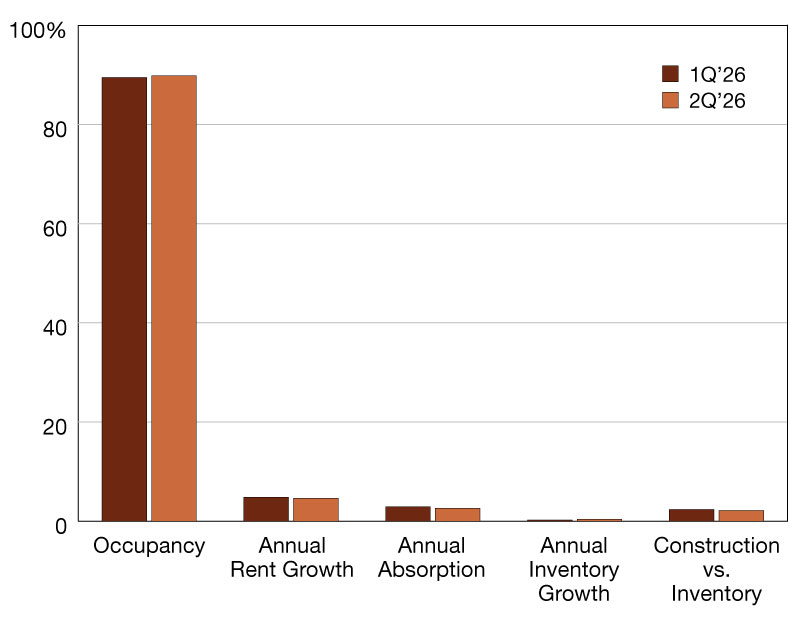
The operational picture has also improved dramatically. Primary markets achieved 89.9 percent occupancy in Q4 2025, while secondary markets reached 90 percent, marking a full recovery to pre-pandemic levels outside of major West Coast cities. This represents the 19th consecutive quarter of positive absorption since the sector bottomed out in Q2 2021 at 80.2 percent occupancy.
The recovery hasn’t been geographically uniform, however. Many West Coast markets continue to lag, presenting potential opportunities for investors willing to navigate those specific market dynamics.
A critical factor supporting performance is the dramatic slowdown in new construction. Starts in primary markets have declined 77 percent from recent peaks, while secondary markets are down 62 percent. Both markets have remained consistently below their 10-year averages since Q4 2021.
This supply constraint, combined with robust demand, has enabled operators to push rents aggressively. Average monthly rents reached $5,479 across primary and secondary markets, an impressive 28.8 percent increase from pre-COVID levels. While rent growth has moderated somewhat from the exceptional pace of 2022, it continues to exceed both historical norms for senior housing and recent multifamily trends.
Cap rates tightening
Market sentiment has shifted decisively toward cap rate compression. Our Q4 2025 survey revealed that 85 percent of respondents expect cap rates to decrease over the next 12 months, a substantial increase from just 57 percent one year ago. This optimism reflects improving fundamentals and growing investor confidence.
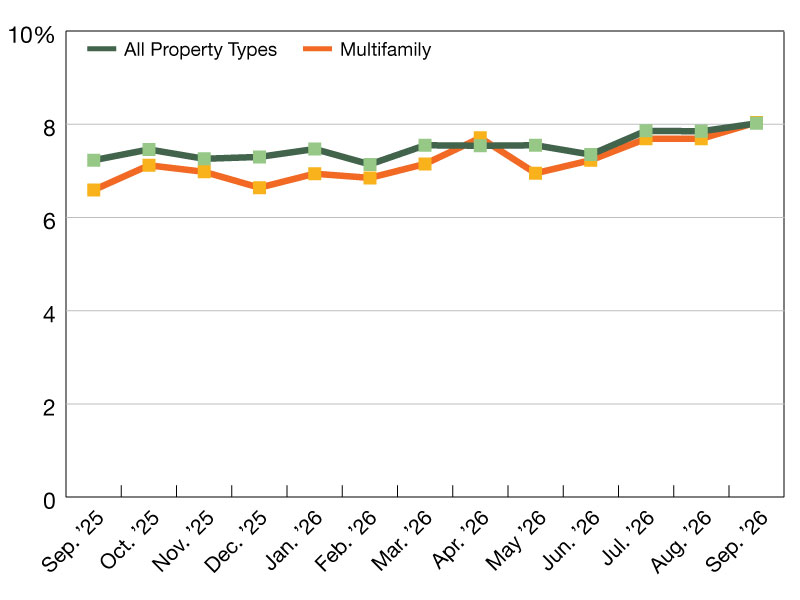
Average senior housing cap rates compressed to 6.2 percent in Q4 2025, though they remain at a significant premium to multifamily. The spread to 10-year Treasuries narrowed to 210 basis points, down from a long-term average of 416 basis points, as investors increasingly accept tighter yields for quality assets.
Notably, 68 percent of survey respondents now utilize discounted cash flow analysis in their valuations, up from 53 percent in our previous survey, with typical spreads between going-in cap rates and unlevered IRRs averaging 235 basis points on 10-year holds.
The long-term case for senior housing continues to strengthen. The U.S. population aged 80 and above is projected to grow 36.6 percent over the next decade rising from 14 million to 19 million, compared to just 5 percent total population growth. With more than 10,000 Americans turning 65 daily, the demand pipeline appears robust for years to come.
Perhaps most telling is investor positioning for 2026. Our survey found that 86 percent of respondents are actively seeking to increase their senior housing exposure this year. Assisted living remains the most targeted opportunity at 40 percent of respondents, while independent living interest has grown substantially to 29 percent, up from 19 percent a year ago.
The sector’s emergence as a leading alternative investment class reflects both its recovery trajectory and structural advantages. While challenges persist, particularly around economic volatility and workforce availability (both cited by 29 percent of respondents as top concerns), the combination of recovered operations, constrained supply and powerful demographics positions senior housing favorably as we move through 2026.
Bryan Lockard is executive managing director & head of health care and alternative real estate, JLL Value and Risk Advisory.