Apartmentalize Special Report: What Renters Need to See
On the first day of Apartmentalize, renters’ value expectations took center stage.
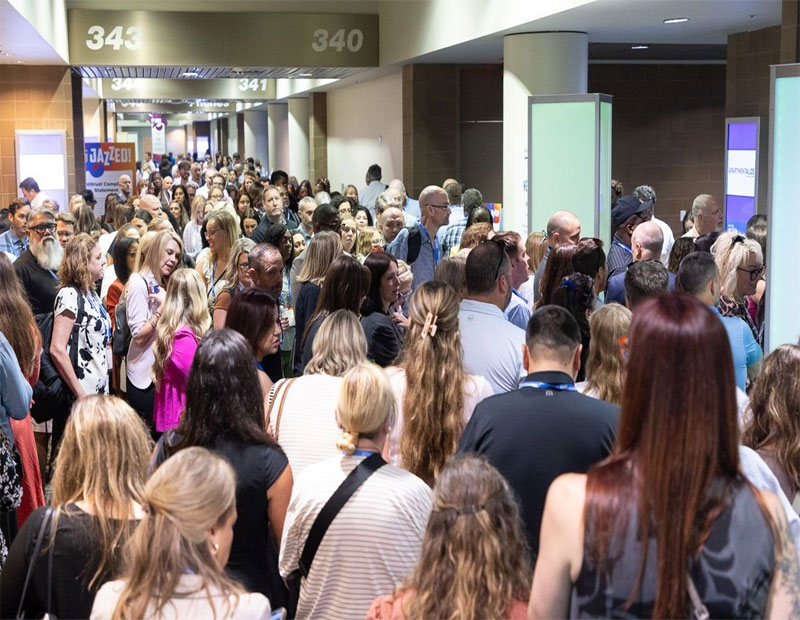
The first full day at the National Apartment Association’s 2026 Apartmentalize conference highlighted a familiar tension for owners and operators.
Demand is still healthy, but renters need to see value. And while renters are feeling the pressure of inflation and rising housing costs, operators are also working to control their expenses. This means they’re making important decisions about what technologies and amenities they should keep and what they can trim.
Across Wednesday’s sessions, one idea kept coming up. With renters being more cautious and owners more disciplined, how can operators show that what they offer is really worth it? They must provide value across pricing, amenities, marketing and the resident experience.
Renters feel squeezed
During a panel discussion titled The Economy and Rental Markets: Is This the Roaring ’20s?, Danielle Hale, chief economist at Realtor.com, noted that in today’s uncertain economy, inflation is eating into take-home pay and forcing renters to economize. Hale said renting remains the more cost-effective decision for most households in 2026.
There’s a gap between the market operators see and the market renters feel said Kara Ng, a senior economist at Zillow, during the discussion. Operators may be looking at soft or flat rent growth in some markets, but renters are thinking about increasing housing costs and everyday expenses.
READ ALSO: Apartmentalize 2026 Highlights
Brad Robins, Principal Evangelist of Flex, made a similar point in a background interview. His company works with operators to offer flexible payment options to renters. “Even if rent stays flat, everyone’s going to squeeze because everything else is now more expensive.” That pressure is changing how renters evaluate value.
Ng explained that operators may see flat year-over-year rent growth, while renters feel several years of cumulative increases. So, what is an operator to do in the face of softer rents? They need to be strategic and use concessions to attract renters, said Ng. She noted that 40 percent of the rental listings on Zillow are offering concessions, and residents are looking at this when they consider whether a property fits into their life.
Amenities need proof
As renters scrutinize properties more, amenities also need to prove their value to residents and to owners. During the session Pretty Doesn’t Pay the Bills: The Data Behind Amenity ROI panelists pushed back on the idea of choosing amenities based on what’s trending or to keep up with competitors. It shouldn’t just be because “all five of my comps all have this podcast room,” said Shana Whitehead, managing director of BTR property management at RangeWater Residential. Owners want to know what an amenity actually does. They want to know whether it affects retention, ancillary income, conversion ratios or days on market.
Josh Hinchley, vice president of leasing and marketing at Sentinel Management Co. shared that his team once built a large makerspace with a kiln in an artistic neighborhood, thinking it was the right fit. Prospects liked seeing it on tours, but residents weren’t using it. Hinchley’s team key fob data and resident behavior led the team to realize that the amenity needed to be repurposed. They wound up changing how they used the space and bringing in local artists to host programming. It became a place where residents could engage with more naturally.
Creative amenities aren’t a bad idea, but the takeaway was that interest during a tour isn’t the same as resident behavior after move-in. And amenities aren’t always physical either. “Good, quality human service is an amenity,” Hinchley noted.
Let data guide decisions
Turning data into decisions is the recommended approach for operators. Hinchley encouraged teams to move away from generalities and get comfortable using numbers in storytelling. This leads to better, data-backed decisions and reduces uncertainty about what’s working. Tying amenity performance into monthly financial reviews is another way to paint a picture of what amenities are paying off and impacting engagement and ancillary income.
Renters are also looking to reduce uncertainty when they’re looking for a new apartment. They want to see exactly what they’re getting, and they want it to be simple to tour a unit and to see what the space looks like. In a background interview, Sandy Jack, vice president of strategic relations for multifamily at Vingcard/Nomadix said because of that operators are also rethinking technology through the lens of simplification.
Media builds trust and earns leases
The session, Lights, Camera, Media: Data-Backed Ways to Win Renters examined how the search journey has changed and the importance of unit-level photos, videos and virtual tours as being essential. Unit-level media helps renters trust what they’re seeing before they ever visit the community in person.
It also gives you an advantage during the search process. “You really can’t separate the visual media from SEO and GEO anymore,” said Esther Bonardi, vice president at Yardi. Marketing is part of building that trust with renters through media content and through search engines. AI-powered search, Google Business Profiles, ILSs and property websites are all looking for signals that help establish credibility. Visual media is part of that. “I’m not just writing content for a user. I’m writing content for an engine,” said Kyle Jones, a manager at REACH by RentCafe.
Jack noted that technology has to support how people actually live now, and self-guided tours are a big part of that. Today’s renters are remote all around, and they need that visual proof that they’re making the right decision about where they want to live.
Bonardi shared survey findings that 88 percent of renters say unit-level tours are important, 50 percent say media made them more likely to apply and 15 percent leased without visiting in person after seeing a virtual tour.
Renters are going beyond browsing communities, and looking to validate. If a website talks about a farmers’ market or neighborhood feature, the imagery should prove it. “It can’t be an ‘if you have a chance.’ It has to be a new step that becomes part of the process,” said Bonardi.
The leasing journey has become more digital and more fragmented. Justin Godwin, director of marketing strategy & innovation at Cushman & Wakefield said at one of his properties the value of media showed up not just in clicks but also in where prospects spent time and where they dropped off while they were watching the media. In one example, his team used virtual-tour behavior to identify potential objections in kitchens and bathrooms, turning media engagement into a clue about what might be helping or hurting conversion.